About Craesus septentrionalis (Linnaeus, 1758)
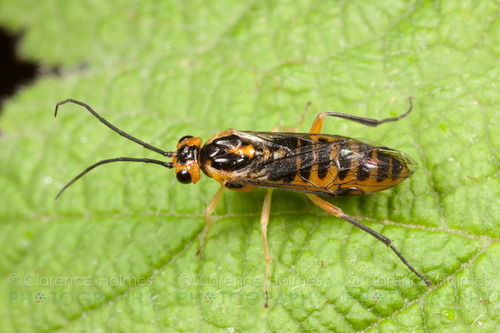
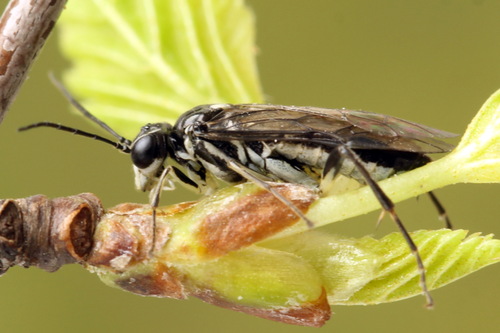
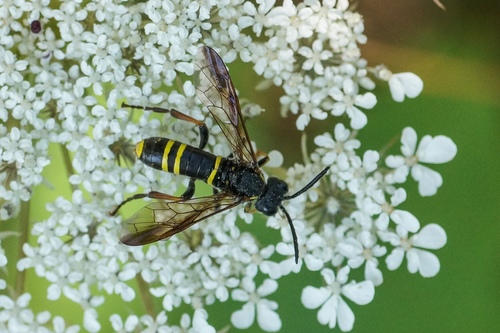
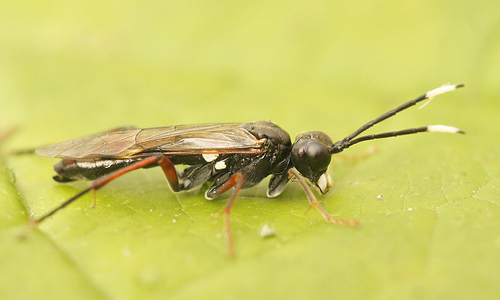
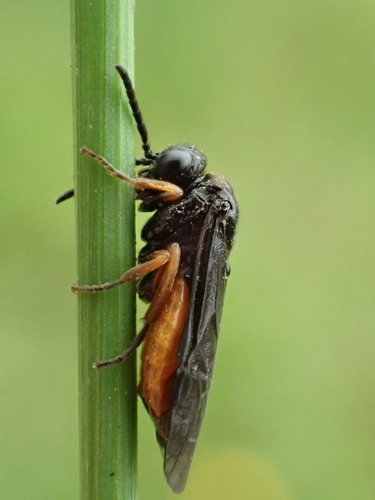
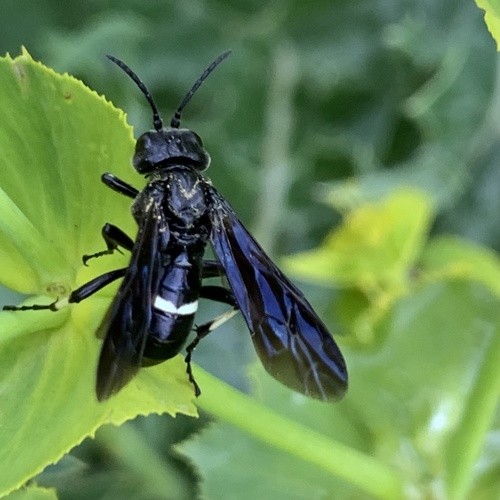
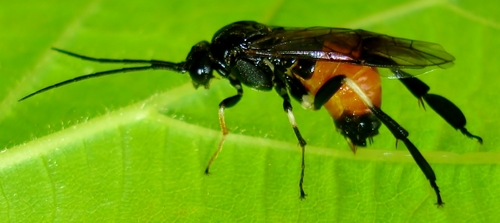
Adult Craesus septentrionalis have a black head, black thorax, and a black anterior abdomen, while the posterior abdomen is chestnut brown. Their wings are clear, and their legs are broader near the feet than they are close to the body. The larva of this species has a black head, a yellow collar, and a slender greyish-green body that bears longitudinal rows of black spots. This is a species of sawfly that lays eggs on a wide range of host trees, including alder, ash, birch, hazel, hornbeam, maple, poplar, rowan, wild service tree, whitebeam, and willow. Larvae live and feed together in groups, eating along the margins of leaves. When disturbed, they show a characteristic defensive posture: they cling to the leaf with their front three pairs of legs and curl their bodies upward into an 'S' shape. When larvae are present in large numbers, they can completely defoliate young trees. Once mature, larvae drop to the ground and pupate inside the soil. There can be several generations of larvae between spring and autumn, and the species overwinters underground as a pupa. The larval integument is easily damaged, and oozes hemolymph when injured. Researchers have hypothesized that this hemolymph contains harmful substances, which may be derived from the host plants the larvae feed on. This hemolymph has been found to repel Myrmica rubra ants, but many species of vertebrate and invertebrate predators still feed on these larvae.