About Cracticus cassicus (Boddaert, 1783)
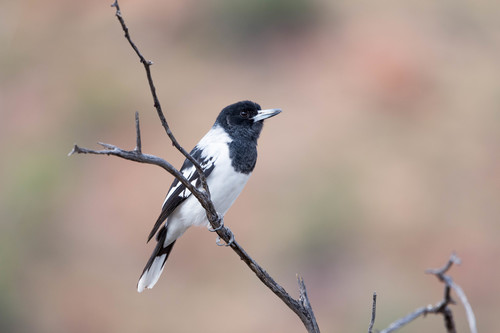
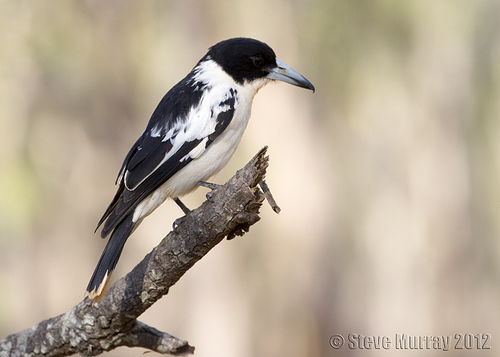
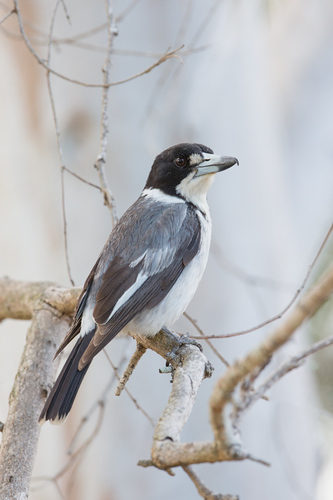
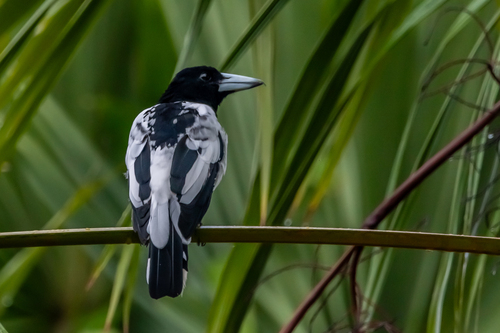
Cracticus cassicus (Boddaert, 1783), commonly known as the hooded butcherbird, measures 32–35 cm in length. Males and females have similar appearance. Its plumage is predominantly black and white: it has a black head, nape, and throat, with white underparts, rump, and back, and a black and white mantle. Its tail is black with a broad white tip. The bird has a robust, pale bluish-grey bill that is hooked, with a black tip. Its iris is black or dark brown, and its legs and feet range from dark grey to black. It can be told apart from the black-backed butcherbird by its black throat. The hooded butcherbird has a complex fluting song formed from many varied components. Individuals may duet with each other, or mimic other species including the rusty pitohui, little shrikethrush, spangled drongo, and helmeted friarbird. This species is found on New Guinea and its surrounding islands. It inhabits forested areas, mainly in lowland regions up to an elevation of 650 m, and occasionally reaches elevations of 1450 m. It is fairly common, and can also be found near human settlements in coconut groves.