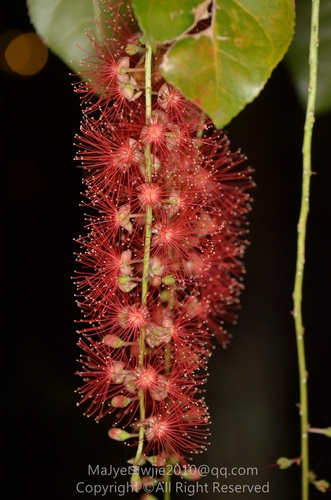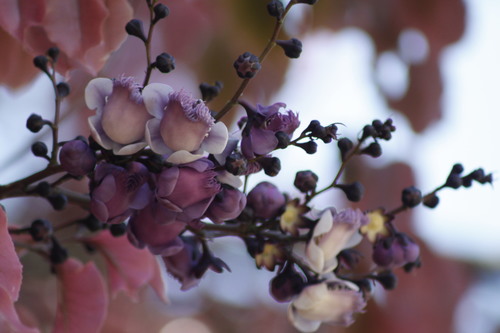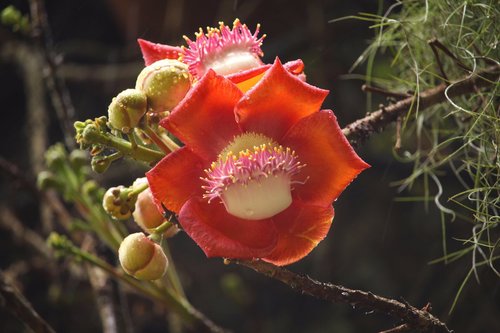
About Couroupita guianensis Aubl.
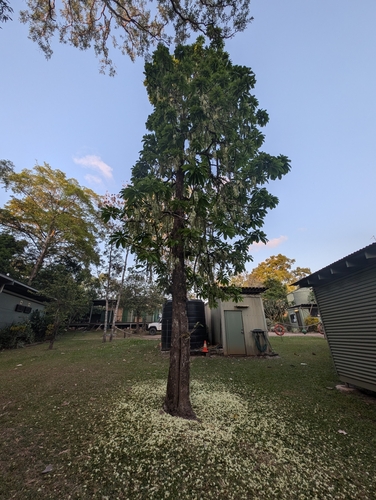
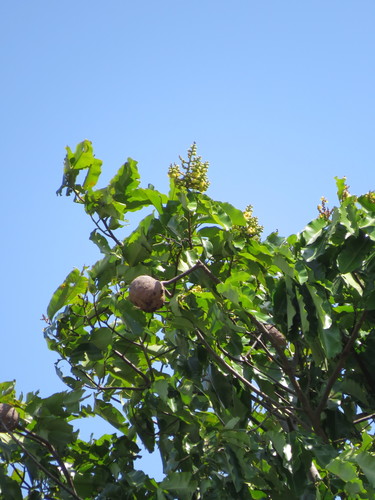
Couroupita guianensis Aubl. is a tree that grows up to 35 metres (110 ft) tall. Its leaves grow in clusters at the ends of branches; they are usually 8 to 31 cm (3.1 to 12.2 in) long, and can reach a maximum length of 57 cm (22 in).
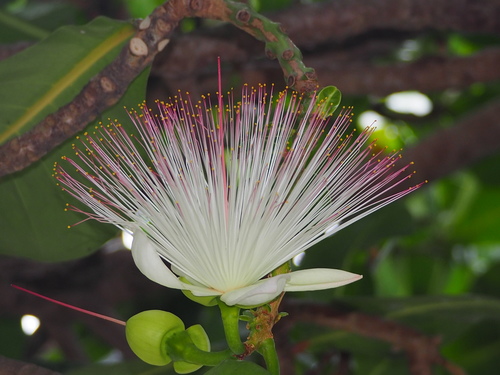
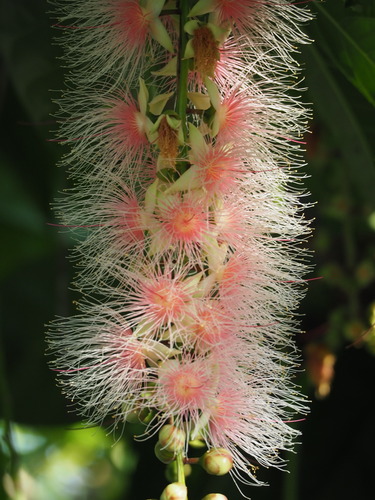
While the flowers of this species do not produce nectar, they are still very attractive to bees, which visit to collect pollen. The flowers produce two different types of pollen: fertile pollen from the ring stamens, and sterile pollen from the hood structure. Pollinators must move between the two stamen regions as they gather pollen. Outside of the tree's native range, the carpenter bee Xylocopa brasilianorum is a common pollinator for cultivated C. guianensis trees in Rio de Janeiro. Other flower visitors include the carpenter bee Xylocopa frontalis, as well as wasps, flower flies, and bumblebees.
Couroupita guianensis is planted as an ornamental tree for its showy, fragrant flowers, and grown as a botanical specimen for its fruit. Its fruit is edible, but it is not commonly eaten by people because it can have an unpleasant odor, which contrasts sharply with the strong, pleasant fragrance of its flowers. Parts of this plant have been used in traditional medicine to treat hypertension, tumors, pain, inflammation, the common cold, stomachache, skin conditions and wounds, malaria, and toothache, though there is currently a lack of data confirming its efficacy. The fruit and flowers of C. guianensis contain the chemical compounds indigotin and indirubin, which are the same blue dye compounds found in the indigo plant (Indigofera tinctoria). Research is currently ongoing into the possible use of C. guianensis as a natural dye for fibres.