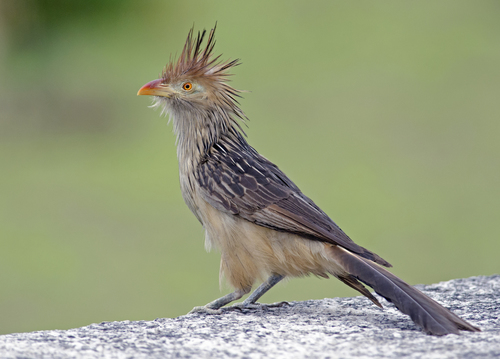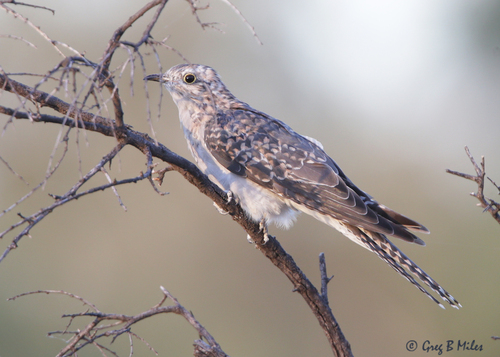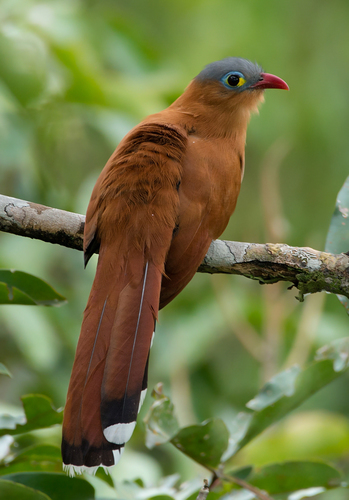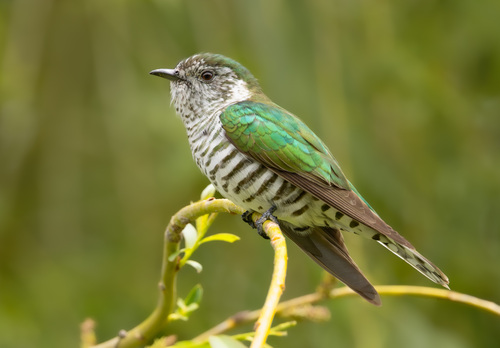
About Coua gigas (Boddaert, 1783)
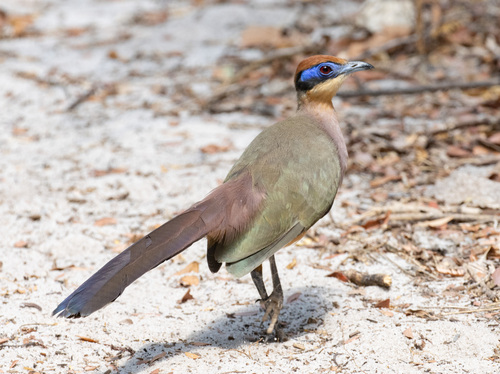
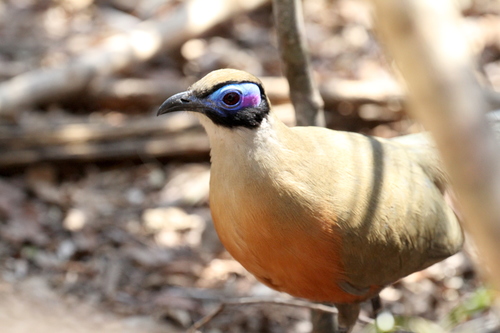
The giant coua (Coua gigas (Boddaert, 1783)) is approximately 62 cm (24 in) in length, which is nearly double the size of Coua coquereli. It has a blue patch surrounding its eyes, a trait characteristic of the coua genus that is also similar to African turacos. As a member of the cuckoo family, it has a reversible third toe. Like coucals, it scrambles through entangled vines to find food, and observations confirm it can climb up to 10 meters above the ground. Giant couas feed on seeds from Capurodendron madagascariensis and Buxus madagascariensis, insects, and small vertebrates such as chameleons of the Furcifer genus. This bird is most often found in large unlogged gallery forests that lack dense shrub layers, a habitat that gives it greater mobility and indicates a preference for undisturbed forest with tall trees. Studies show that in logged forests, giant couas usually glean for food during dry seasons, and leap and sally more often during rainy seasons. In unlogged forested areas, they show the opposite pattern: they glean more often during rainy seasons and probe more often during dry seasons. This difference suggests that environment plays a significant role in shaping their foraging behavior. In logged forests, giant couas tend to use microhabitats with greater canopy cover, foraging in logged gallery forests with higher canopies than surrounding areas, and avoiding sites with more stems and obstacles. Coua gigas occurs in the lowlands of western and southern Madagascar, up to elevations of 700 meters. This species has a large range, with an estimated global extent of occurrence of 50,000 to 100,000 km2. The global population size has not been quantified, but it is believed to be large because the species is described as common in at least parts of its range. Global population trends have not been assessed. While the species is not believed to be approaching the IUCN Red List threshold for population decline (a decline of more than 30% over ten years or three generations), there is evidence of ongoing population decline. This combination of factors leads the official Red List Authority for birds for IUCN to evaluate the giant coua as a species of least concern.