About Cotyledon tomentosa Harv.
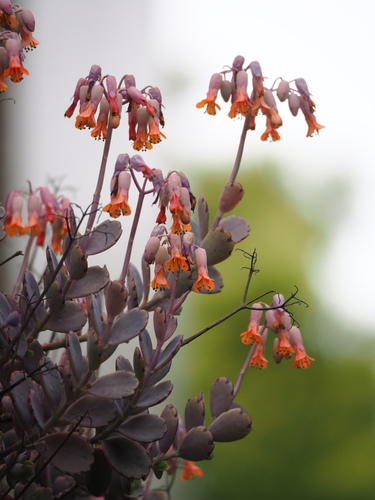
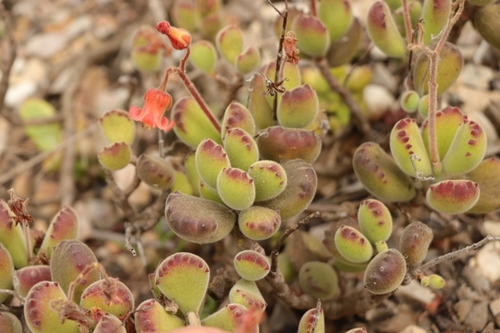
Cotyledon tomentosa Harv. is a perennial evergreen succulent flowering shrub belonging to the Crassulaceae family. It produces bell-shaped flowers in shades of red, orange, or yellow between July and September, and has two currently recognized subspecies: subsp. tomentosa and subsp. ladismithiensis. The autonymous subspecies, Cotyledon tomentosa subsp. tomentosa, is a small, freely branched shrublet that reaches up to 70 cm in height. It has thick, green tomentose (hairy) leaves that are oblanceolate to oblong in shape, with 3 to 8 reddish teeth at the leaf tip. In contrast, the other subspecies, Cotyledon tomentosa subsp. ladismithiensis, has long cylindrical leaves that generally do not have teeth. This subspecies also tends to be smaller and less branched than subsp. tomentosa. Additionally, subsp. ladismithiensis has brown peeling bark, while subsp. tomentosa has green hairy branches. Cotyledon tomentosa is native to the semidesert Little Karoo region of southern South Africa, ranging from Ladismith to Steytlerville. Cotyledon tomentosa subsp. tomentosa occurs near Calitzdorp, Willowmore, and Steytlerville, growing in gravely soil on the slopes of sheltered ravines within arid thicket vegetation. Cotyledon tomentosa subsp. ladismithiensis is found on rocky outcrops in the southern Western Cape, between Laingsburg, Ladismith, and Muiskraal. As of 2006, both subspecies are listed as vulnerable on the SANBI Red List of South African Plants. They are only known to occur in small subpopulations, and are threatened by habitat degradation and illegal collection for the succulent trade. Subspecies tomentosa is found in just five subpopulations, while subsp. ladismithiensis occurs in seven subpopulations and has experienced a 10% population decline over the past 90 years. While C. tomentosa is at risk of damage from trampling by livestock, it is also known to be poisonous to livestock, dogs, and humans. All Cotyledon species contain cardiac glycosides including bufadienolides, which are highly toxic to cattle, sheep, goats, and other livestock. The bufadienolides found in this genus cause both acute and chronic poisoning. On the World Health Organization toxicity scale, cardiac glycosides are classified as Class Ia, "extremely hazardous." For a related species, Cotyledon orbiculata, a dose of just 1.0 g per kg of body weight was lethal when fed to sheep. Bufadienolides are classified as neurotoxins because they strongly inhibit sodium potassium pumps, which are critical to the function of animal nervous systems. Acute poisoning causes cardiac irregularity and heart failure, with additional acute symptoms including apathy, hypersalivation, and tremors. Chronic poisoning in sheep and goats causes a paraplegic disease called krimpsiekte, which means "shrink disease" in Afrikaans. The name comes from the fact that poisoned individuals may arch their backs and bend their necks to one side. Krimpsiekte can have a mortality rate as high as 90%. These toxins remain in the flesh of livestock that have krimpsiekte, even after cooking. Dogs that eat this contaminated meat can develop the same neuromuscular symptoms. This secondary poisoning could also affect humans, but it has not been thoroughly investigated. In cultivation, C. tomentosa grows best with bright light and ample airflow. Water the plant thoroughly when the soil is dry to the touch. Water should be applied cautiously in winter, because the plant can lose its roots if soil remains cold and wet for long stretches. This species is dormant in summer. It should be protected from frost to prevent permanent scarring. In the United Kingdom, Cotyledon tomentosa subsp. tomentosa has been awarded the Royal Horticultural Society's Award of Garden Merit. It cannot tolerate temperatures below 5 °C (41 °F), so it must be kept under glass for protection throughout winter in temperate climates. It can be placed in a warm, sunny outdoor position during the summer months.