About Coturnix pectoralis Gould, 1837
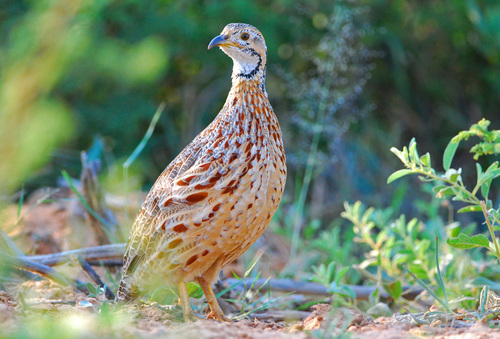
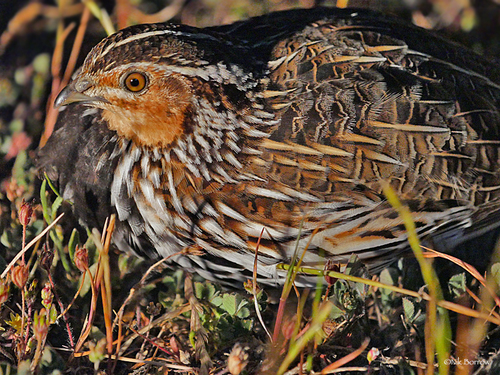
The stubble quail (Coturnix pectoralis) is a ground-dwelling bird. Its distinctive dark brown feathers each have a cream stripe running down the center, creating longitudinal stripes along the bird's body. This species is plump in build and larger than other native quails. Mature males measure 18.0–18.5 cm in length, while females are generally slightly larger. Adult males weigh approximately 100g, and adult females around 110g; all individuals have a wingspan between 25–33 cm. Stubble quail can also be identified by the loud whirring sound their wings make when they take off after being disturbed on the ground. Stubble quail occupy a diverse range of habitats across Australia, from very dry regions to alpine grasslands. They are more common in high-rainfall areas of southeastern and western Australia, but often appear in the arid zone following years with above-average rainfall. The species was present in all Australian states, including Tasmania, until the 1940s to 1960s, when it went extinct in Tasmania. On the Australian mainland, stubble quail live in a variety of biomes but generally avoid wooded areas, because tree canopy blocks the growth of the thick grassy undergrowth they prefer. They favor habitats of tall grassland containing either native or introduced grasses, as well as cropland. The density of ground cover is extremely important for stubble quail habitat, as the birds prefer very dense vegetation. High populations of grazing animals such as kangaroos and rabbits can reduce the height and density of grassland vegetation, making the habitat unsuitable for stubble quail. They are often found in agricultural areas after cereal crop harvest, where they feed on grain and insects.