About Coturnix coturnix (Linnaeus, 1758)
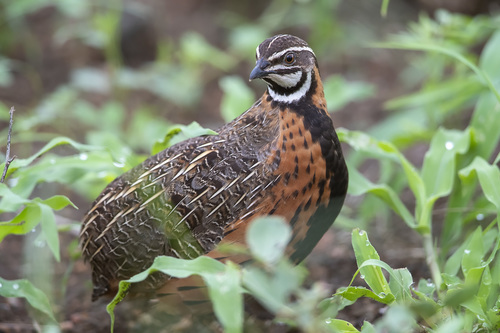
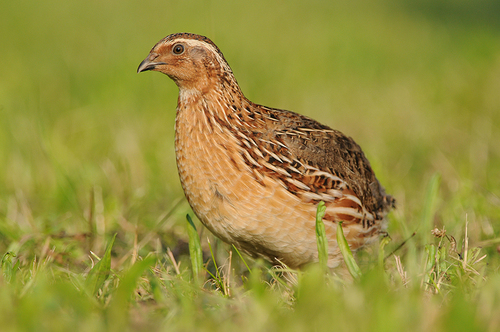
The common quail (Coturnix coturnix (Linnaeus, 1758)) is a small, compact gallinaceous bird. It measures 16–18 cm (6+1⁄2–7 in) in length, has a wingspan of 32–35 cm (12+1⁄2–14 in), and weighs 70 to 140 g (2+1⁄2 to 5 oz). Individuals reach their maximum weight just before migration, at the end of the breeding season, and females are generally slightly heavier than males. Its plumage is streaked brown, with a white eyestripe; males also have a white chin. As a migratory species, it has long wings, which differs from most other gamebirds that typically have short wings. According to the Online Etymology Dictionary, the English word 'quail' refers to this small migratory Old World game bird, and the term dates to the late 14th century (it appeared earlier as the surname Quayle in the early 14th century). The word comes from Old French quaille (Modern French caille). It may have reached English via Medieval Latin quaccula, which is also the source of terms in Provençal, Italian, Portuguese, and Old Spanish, or it may come directly from a Germanic source, comparable to Dutch kwartel, Old High German quahtala, German Wachtel, and Old English wihtel, all imitating the bird's call. It is also possible that the English word developed independently from Proto-Germanic. The common quail is a terrestrial ground-feeding species. Its diet consists of seeds (including weed seeds and gleaned cereal grains), insects (including beetles, true bugs, ants, earwigs, and orthopterans), and insect larvae. It is famously hard to spot, as it stays hidden in crops, avoids flying, and prefers to creep away from disturbance. Even when flushed out of cover, it flies low and quickly drops back into hiding. Often, the only sign of its presence is the male's distinctive, repetitive 'wet-my-lips' song, which the male calls most often in the morning and evening, and sometimes at night. Unlike most game birds, it is strongly migratory. It has been introduced to the island of Mauritius multiple times, but it never became established there and is now probably extinct on the island. If a common quail has eaten certain plants (the identity of these plants remains under debate), the quail's meat can be poisonous. When people consume this poisonous meat, one in four people develop coturnism, a condition marked by muscle soreness that can sometimes lead to kidney failure.