About Cottus caeruleomentum Kinziger, Raesly & Neely, 2000
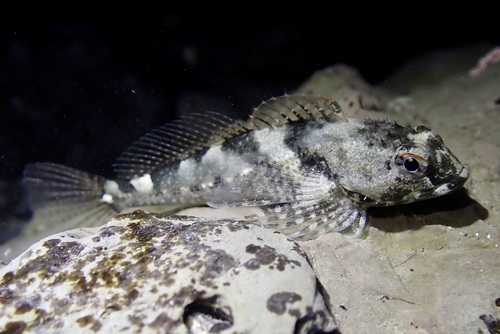
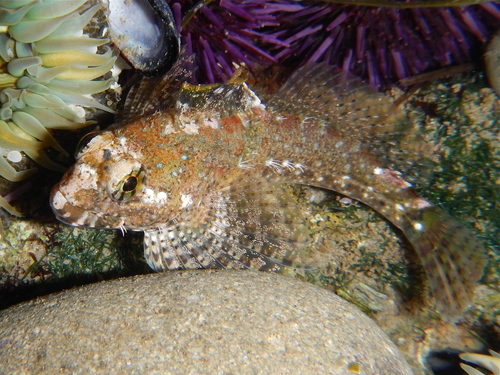
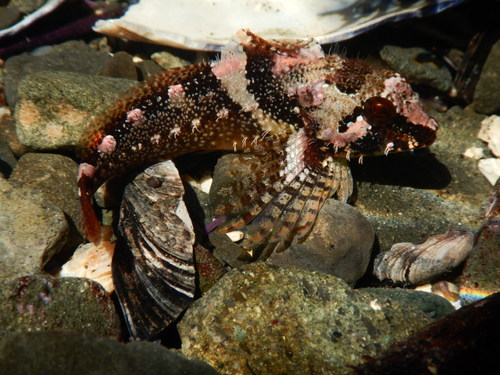
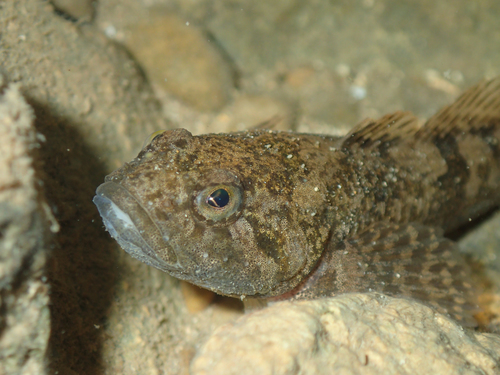
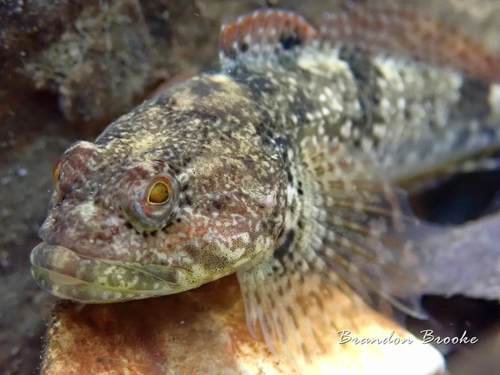
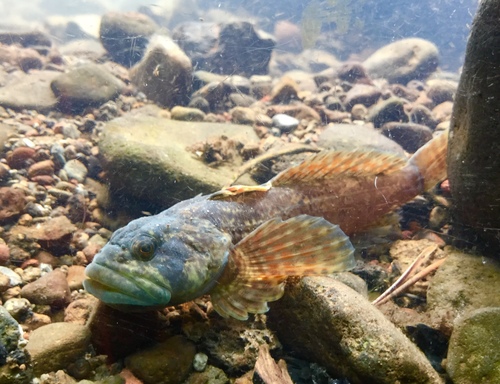
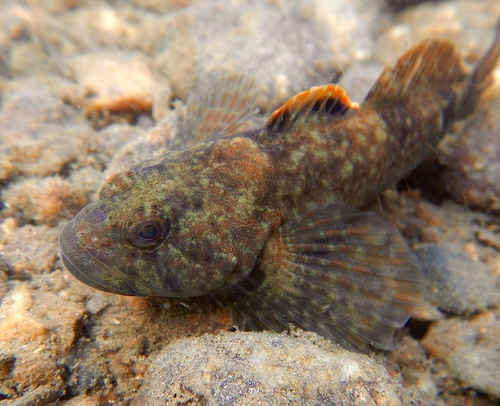
The Blue Ridge sculpin, with the scientific name Cottus caeruleomentum, is a sculpin species belonging to the family Cottidae. It is native to the eastern United States, occurring in multiple river systems that drain into the Atlantic Ocean, specifically in the states of Delaware, Maryland, North Carolina, Pennsylvania, Virginia, and West Virginia. It can be found in the Elk, Susquehanna, Bush, Patapsco, Patuxent, Potomac, Nanticoke, James, and Roanoke river drainages. This fish species has variable morphology, reaching a maximum length of approximately 6.3 centimeters (2.5 inches). Generally, the species has dark saddle-shaped markings on its body and an incomplete lateral line. It has small spines on the preoperculum and small prickles in the area behind the pectoral fin. Breeding males, at least in some regions, develop blue to blue-green coloration on the chin, mouth, the bases of some fins, and the membrane that connects the bones around the gills. This species is very similar to its close relative Cottus bairdi, particularly the subspecies C. b. bairdi. Cottus bairdi has notches in the band that marks the base of the tail, while C. caeruleomentum lacks these notches on one or both sides of its tail base. Cottus bairdi also does not have the blue breeding coloration seen in C. caeruleomentum, and its chin is blackish. The two species occur in the same range and are known to hybridize. Blue Ridge sculpins are common in upland habitats, and less common in lowland areas. They live in creeks, springs, and riffles, and are only found in cold streams in coastal regions. Their diet consists of invertebrates. Researchers have studied the parasite load of this species. The nematode Rhabdochona cotti lives in the intestine of the Blue Ridge sculpin. Another nematode found in this fish's intestine was later described as a new species, named Freitascapillaria laticauda, which can grow to over one centimeter in length.