About Cotinga nattererii (Boissonneau, 1840)
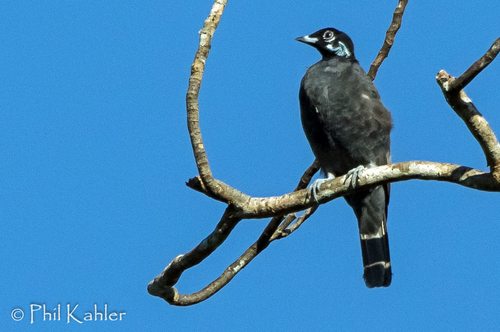
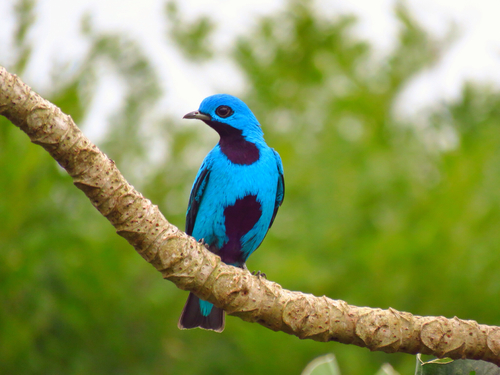
Blue cotinga (Cotinga nattererii) is a plump, dove-like bird with a small head. It reaches an adult length of approximately 7 inches (18 cm). Males have glossy blue plumage, a black bib with a purple iridescent sheen on the throat and breast, a black ring around the eye, and black wings and tail with broad blue margins. Males also have a circular purple patch on the belly. Females differ noticeably in appearance: they are dark brown on the upperparts, with each feather edged pale to create a scaly look, and pale brown on the underparts, with each feather edged buff. This species can be confused with the similar turquoise cotinga (Cotinga ridgwayi), which has a separate different range. This cotinga is native to Central and South America, with a range stretching from central Panama south to northwestern Ecuador and Venezuela. It inhabits moist woodland borders, the canopy of primary forest, and tall secondary forest, and occurs at altitudes up to around 900 metres (3,000 ft). Blue cotingas stay mostly high in the forest canopy. They are typically solitary, but may gather in small groups at fruiting trees. Their diet consists of fruit, which they pluck while hovering briefly. Males often perch stationary on a high open branch of an emergent tree; in this position, their bright blue color is often hard to see, as the bird appears as a silhouette against the sky. The species does not appear to have a distinct song or call, but males may produce a whirring or rattling sound with their wings during flight, likely as a form of display.