About Cotesia glomerata (Linnaeus, 1758)
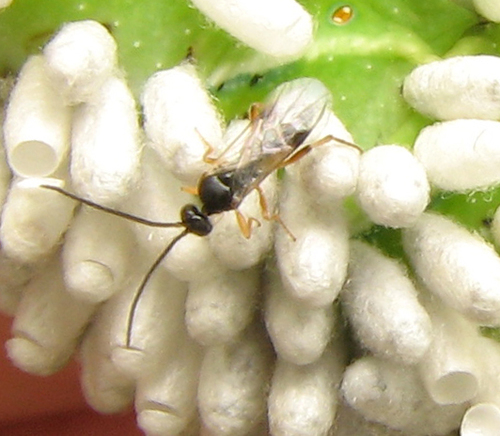
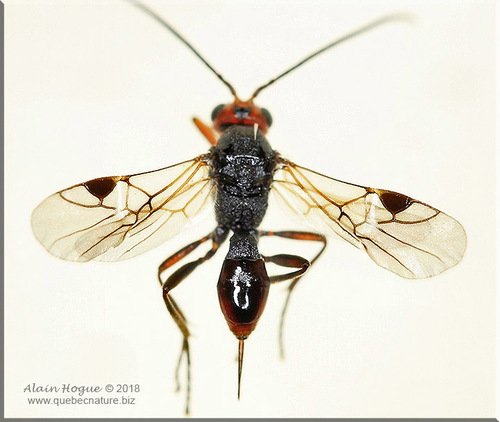
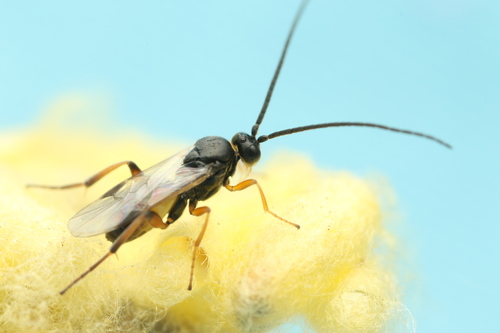
Adult Cotesia glomerata, a small braconid wasp, reach a length of 3–7 millimetres (0.12–0.28 in). They are black and have two pairs of wings. Adults feed on nectar. This wasp can parasitize a wide range of Pieris butterfly species as hosts, with the large white (Pieris brassicae) and small white (Pieris rapae) being its main hosts. This species is present across most of Europe, as well as in the Afrotropical, Australasian, Nearctic, and Neotropical realms. After hatching from pupae, adult females mate almost immediately and begin laying eggs. They lay 16 to 52 eggs at a time inside butterfly caterpillar larvae, where C. glomerata larvae develop. After 15 to 20 days, the larvae emerge from the host, which usually kills the parasitized caterpillar. Newly emerged larvae spin cocoons in a cluster on or near the dead host caterpillar. Imago adult wasps hatch from these cocoons 7 to 10 days later. Males typically emerge before females and disperse away from the cocoons. Overall, development from egg to full adulthood takes between 22 and 30 days. Cotesia glomerata itself is parasitized by two species of hyperparasite wasps: Lysibia nana and Gelis agilis.