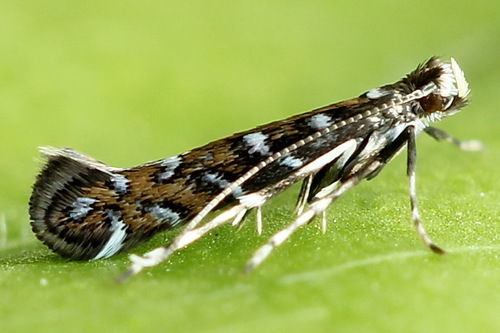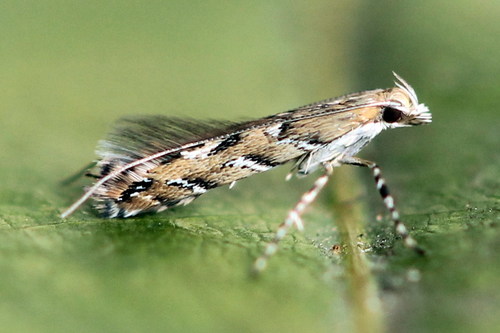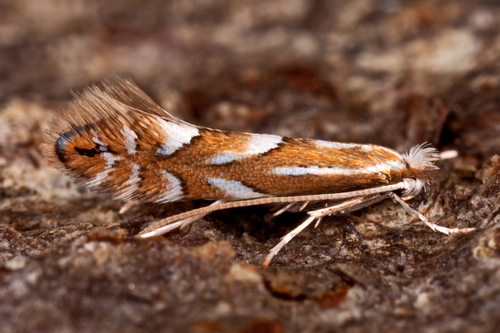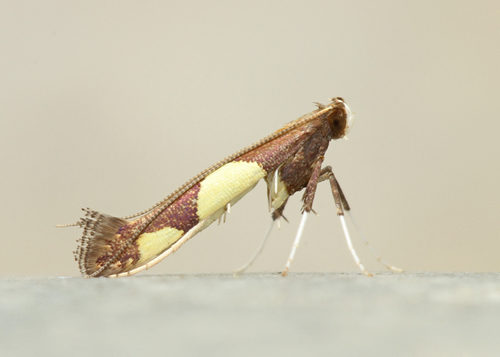
About Corythoxestis zorionella (Hudson, 1918)
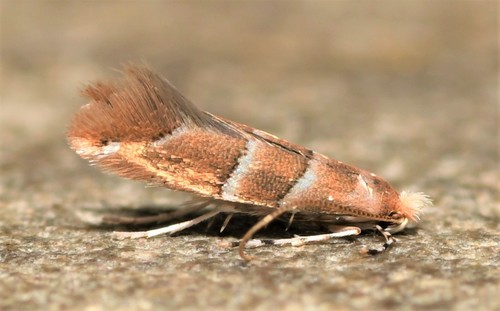
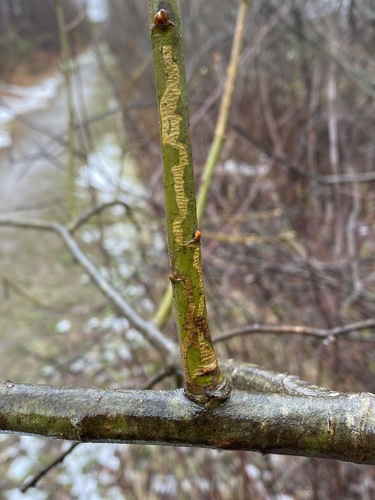
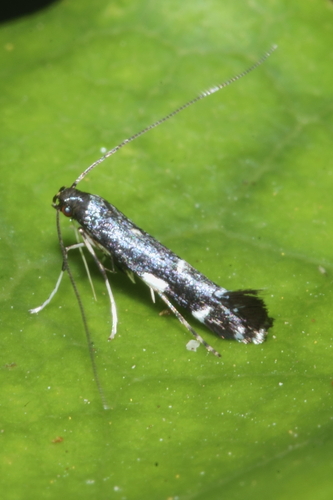
Corythoxestis zorionella, commonly called the karamu leafminer, is a species of moth in the family Gracillariidae. This species is endemic to New Zealand. The larvae of Corythoxestis zorionella feed on six species of Coprosma: Coprosma arborea, Coprosma grandiflora, Coprosma lucida, Coprosma retusa, Coprosma robusta, and Coprosma tenuifolia. Larvae of this species create mines inside the leaves of their host plants. A larva mines directly into a leaf through the bottom of its egg. The mine begins as a long, slender, slightly winding gallery that gradually widens as it grows. The first section of the mine lies on the undersurface of the leaf, pressed close against the cuticle, and appears white and silvery when viewed in reflected light. The rest of the mine is located on the upper surface of the leaf. In the final larval stage, the gallery expands more or less suddenly into a large, irregular blotch. For most of its length, the mine usually follows the leaf’s midrib or margin, and is sometimes deflected by thicker leaf veins. This path remains only slightly winding, and is rarely strongly curved. The midrib acts as an impassable barrier to the mine, except at the upper end of the midrib. The mine is characteristically distinct in color, being white or light green, and sometimes develops patchy bright reddish-brown discoloration. In fleshy host leaves, the area of the leaf covering the mine blotch is more or less mottled in different shades of green, depending on how close the mine is to the outer cuticle. Frass (waste) from the larva is extremely sparse, black, and finely granular. It is deposited in a thin line along one side of the gallery, and sometimes shifts abruptly from one side to the other. After the larva’s first moult, these granules are scattered irregularly across the floor of the mine. Seldom does a single host leaf hold more than two of these mines.