About Corystes cassivelaunus (Pennant, 1777)
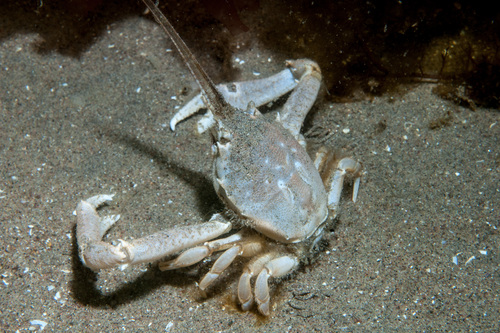
Corystes cassivelaunus, commonly known as the masked crab, helmet crab, or sand crab, is a burrowing crab species found in the North Atlantic and North Sea ranging from Portugal to Norway, with populations also present in the Mediterranean Sea. It is the only species classified in the genus Corystes. The maximum recorded carapace length of this species is up to 4 centimetres (1.6 inches). The common name "masked crab" comes from patterns on its carapace that resemble a human face, an example of pareidolia, similar to the patterns seen in heikegani. C. cassivelaunus lives buried in sandy substrates, where it feeds on infaunal invertebrates including polychaete worms and bivalve molluscs. It uses its two antennae to form a breathing tube that delivers oxygenated water down into the sediment where it burrows. Male masked crabs have chelipeds that are much longer than their entire body, while female chelipeds are approximately the same length as their carapace.

