About Coryphella capensis Thiele, 1925
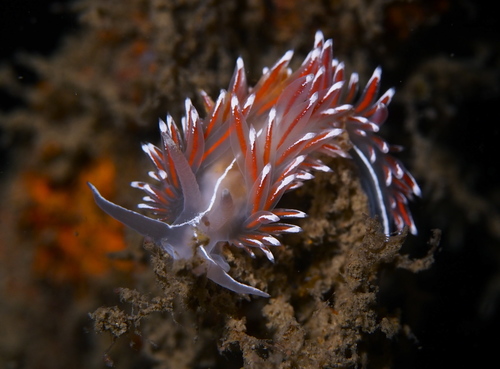
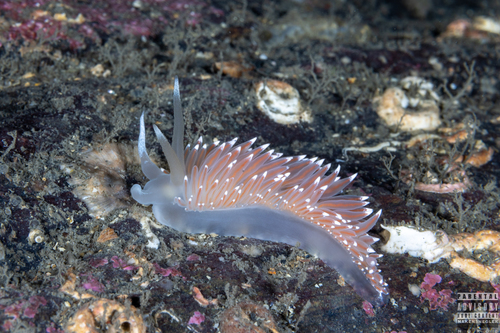
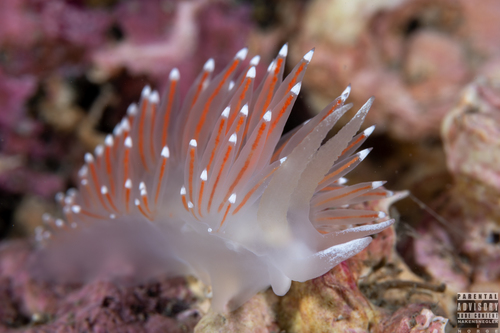
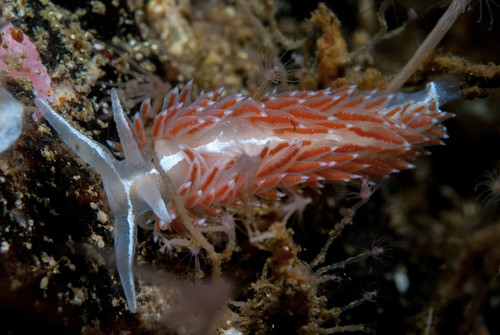
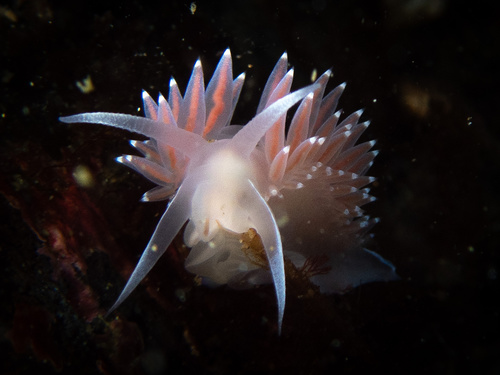
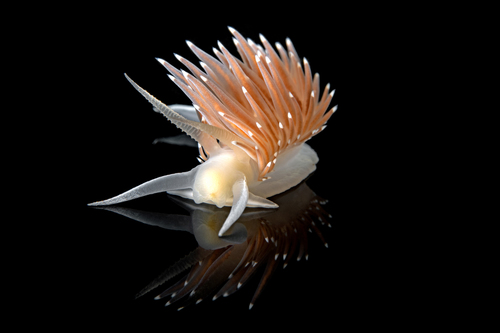
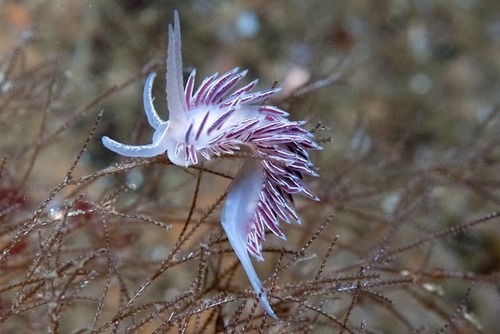
Coryphella capensis Thiele, 1925, commonly called the white-edged nudibranch, is a slender aeolid nudibranch with a pale body. It has many dark red cerata, each edged with white, and typically grows to less than 40 mm in length. It has pale, rugose rhinophores, and a pair of elongated oral tentacles that each bear an opaque white stripe. This species is endemic to the South African coast, and is only found between the Atlantic coast of the Cape Peninsula to Port Elizabeth, in water between 10 and 30 m deep. This aeolid nudibranch feeds exclusively on hydroids that belong to the genus Eudendrium. Like other aeolid nudibranchs, its cerata function in respiration, and also hold extensions of the animal's digestive system. After the nudibranch eats hydroid tissue, it passes the hydroid's nematocysts unharmed through its digestive tract to the tips of its cerata. These nematocysts mature in the cerata, and the nudibranch then uses them for its own defense. It is thought that the nudibranch's bright coloration acts as a warning signal to predators that it is toxic. This species is hermaphrodite, and produces a highly convoluted, creamy white egg mass.