About Corynorhinus townsendii (Cooper, 1837)
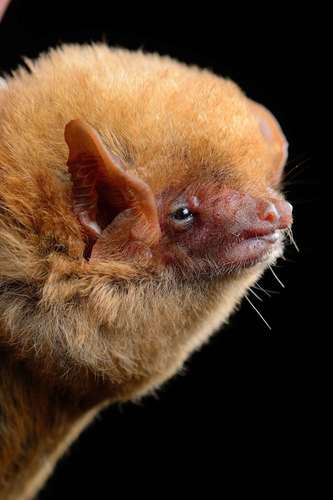
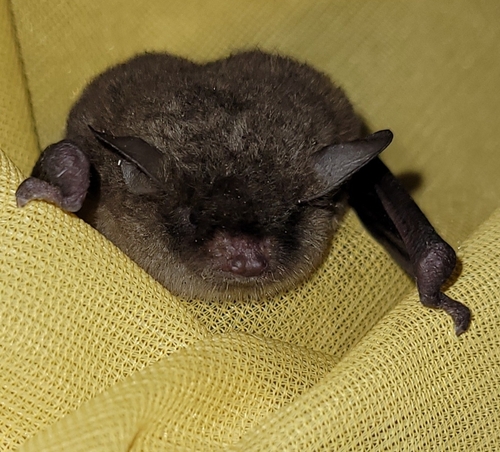
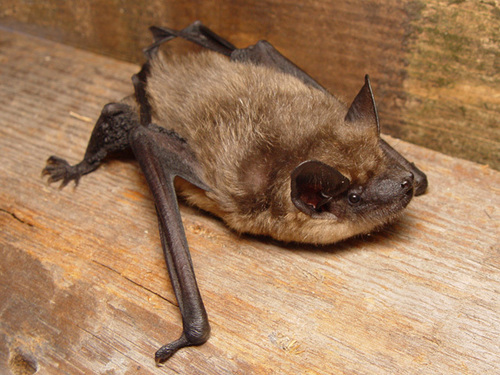
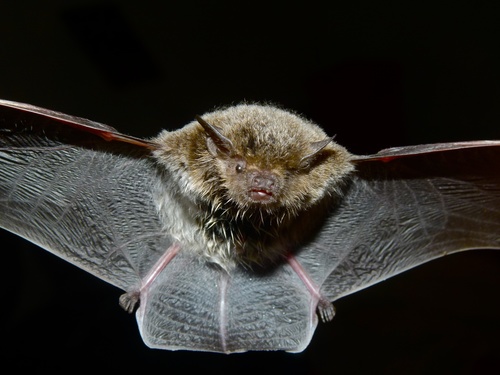
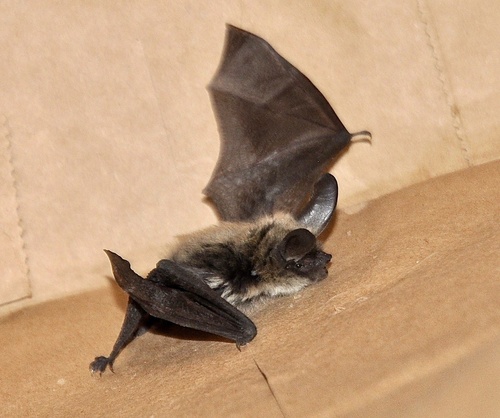
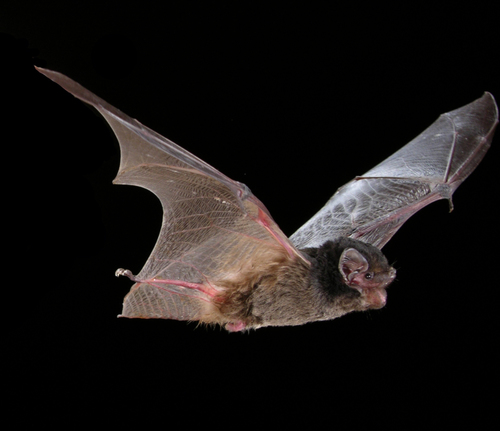
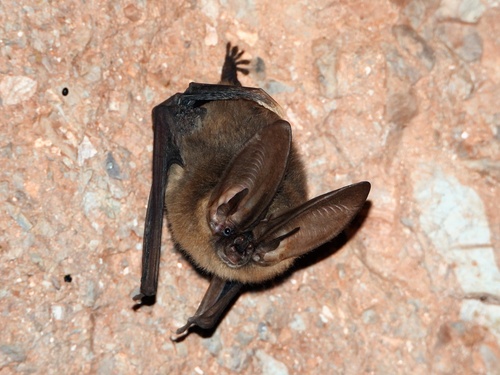
Townsend's big-eared bat, with the scientific name Corynorhinus townsendii (Cooper, 1837), is a medium-sized bat weighing 7–12 g. It has extremely long, flexible ears, and small but noticeable lumps on each side of its snout. Its total body length is around 10 cm (4 in), its tail measures around 5 cm (2 in), and its wingspan is approximately 28 cm (11 in). The dental formula for this species is 2.1.2.3 / 3.1.3.3 × 2 = 36 total teeth. C. townsendii and its close relative C. rafinesquii both have low wing loading, meaning they have a large wing area to body mass ratio. This morphology allows the bats to generate a large amount of lift, achieve high maneuverability, fly at low speeds, and hover during flight. Their large pinnae usually align with the body during flight, indicating the pinnae help impart lift during flight. The ears also transmit sound into the bat's external auditory meatus, effectively distinguishing between ambient noise and the sounds of predators or prey. C. townsendii can be found in Canada, Mexico, and the United States. Its main continuous range extends from southern British Columbia down the Pacific Coast, into the Great Plains and Central Mexico. It also has two isolated populations located in central and eastern United States, respectively. A well-documented colony of Townsend's big-eared bat resides on Santa Cruz Island, the location where the species was originally described, and this is the only known colony of the species in the Channel Islands. Originally, a 300-bat colony from Santa Cruz Island was known to roost in a historic ranch house, but the colony was displaced in 1974 when the building was removed. Since before 1991, a colony has continuously resided in the Scorpion adobe building on the island. This colony is one of the few known coastal colonies located south of Point Conception. The mating season for Townsend's big-eared bat occurs in late fall. Like many other bat species, females store sperm in their reproductive tract after mating, and fertilization takes place in the spring. Gestation lasts between 50 and 60 days. Like other bat species, newborn pups do not have the ability to fly. Each female gives birth to only one pup per breeding cycle. One study found the average lifespan of a Townsend's big-eared bat to be 16 years. This bat requires large cavities for roosting, which can include abandoned buildings, mines, caves, and basal tree cavities. During summer, these bats inhabit rocky crevices, caves, and derelict buildings. In winter, they hibernate in a variety of shelters, including rocky crevices, caves, tunnels, mineshafts, spaces under loose tree bark, hollow trees, and buildings. During summer, males and females occupy separate roosting sites: males are typically solitary, while females form maternity colonies to raise their pups. Maternity colony sizes can range from 12 to 200 bats, though colonies of 1,000 or more bats have been recorded in the eastern United States. During winter, these bats hibernate, often when temperatures are between 32 to 53 °F (around 0 °C to 11.5 °C). Townsend's big-eared bats roost singly during hibernation, and only rarely form small clusters. Males often hibernate in warmer locations than females, and are more easily aroused and more active in winter than females. These bats are frequently interrupted from hibernation sleep, as they tend to wake up frequently to move around within their cave or relocate entirely to a different cave. Before hibernation, individual C. townsendii increase their body mass to compensate for the lack of feeding during the winter. This species has 2–3 separate feeding periods between dusk and dawn, with resting periods between feeding events. They rest in different locations than their daytime roosting sites. During straight-line flight tests, C. townsendii flew at speeds ranging from 2.9 to 5.5 m/s (6.4 to 12.3 mph).