About Corydalis pumila (Host) Rchb.
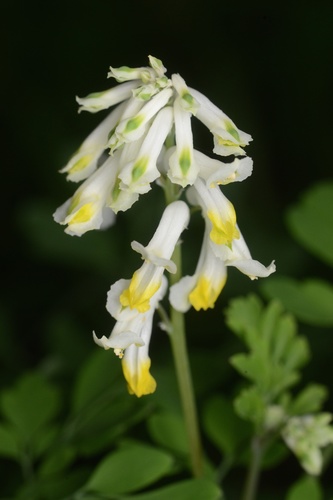
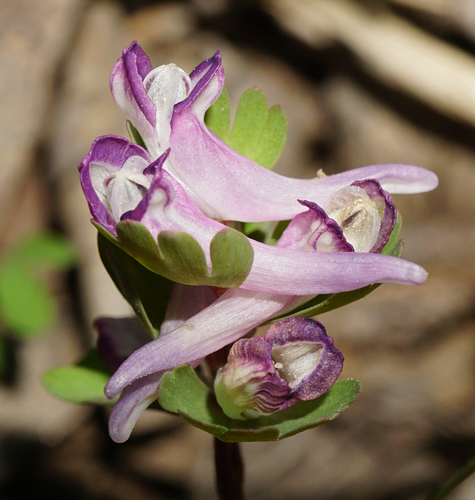
Corydalis pumila (Host) Rchb. is a plant species belonging to the family Papaveraceae. It is native to Central Europe, with a small, fragmented overall distribution, and it is classified as a rare species restricted to western Poland. It grows primarily in fertile deciduous forests, and rarely occurs in cemeteries and parks. Its aboveground shoots only develop for two months during early spring. As a very rare species that continues to lose its habitats, Corydalis pumila is protected by law in Poland. The species' full distribution range is small and fragmented, spanning Central Europe from southern Scandinavia to Sardinia, the central Italian Peninsula, and northern Greece. It is more abundant in southern Sweden, the Harz Mountains region of Germany, and western Hungary; across the rest of its range, its habitats are typically sparse and scattered. In Poland, the species is restricted to the western part of the country and is very rare overall. The highest number of habitats are recorded in the upper and middle Parsęta river basin and its tributaries Wogra and Dębnica in Western Pomerania, where around 20 sites exist, as well as in Greater Poland in the regions around Śrem, Borek Wielkopolski, and the Lutynia river basin. The largest single population grows near Kamieniec on the Lower Oder river, within the Professor Janina Jasnowska's Kamienieckie Wąwozy nature reserve. Additional scattered habitats include the Krępiela river valley in Western Pomerania, the area near Owczary in Lubusz Voivodeship, Borek and Jeżewo in Kuyavian–Pomeranian Voivodeship, Kowanówko and Sulmierzyce in Greater Poland, and Głogów and Wrocław in Lower Silesia. The species has not been located in recent decades at many sites where it was recorded historically, including Świnoujście and Połchow in Western Pomerania, and the areas around Słubice, Krosno Odrzańskie, and Sława in Lubusz Voivodeship. Corydalis pumila grows in a range of forest and shrub communities on fairly rich, humus-rich soils, and does not grow in areas with a thick layer of poorly decomposed leaves. It is often found on the slopes and bottoms of river and stream valleys, on uplifted sediments that are occasionally flooded. It is also common on forest edges, where fallen leaves are blown away by wind. Soils at its growing sites are usually fairly moist in early spring, but often become very dry by late spring and summer. The species tolerates frost well, but a prolonged period of hot, dry spring weather causes its aboveground shoots to wither, preventing seed production and sometimes killing the plants themselves. Corydalis pumila typically inhabits forests and thickets of Carpinion betuli, and less often grows in riparian forests and scrublands. It is sometimes found in suburban secondary robin forests with maple, ash, and elm trees, as well as in parks and cemeteries. It can also spread into forest-adjacent xerothermic grasslands, wet meadows, and even regularly mowed lawns. The species consistently avoids beech forests, with the only exception being the Apennine Peninsula, where it grows in beech forests at elevations between 800 and 1,500 meters above sea level, and it also avoids coniferous forests. In Central European plant community classification, Corydalis pumila is a characteristic species of O. Fagetalia, though it grows in a wide variety of forest communities across its full range. The most common species that grow alongside Corydalis pumila in the forest undergrowth include pilewort (Ficaria verna), ivy-leaved speedwell (Veronica hederifolia), wood bluegrass (Poa nemoralis), and numerous geophytes from genera including Gagea, Adoxa, Anemone, Eranthis, Scilla, and other Corydalis species. Common nitrophilous forest and edge species that frequently occur with it are St. Benedict's herb (Geum urbanum), cleavers (Galium aparine), and garlic mustard (Alliaria petiolata). Overall, there is little competition from other plant species at Corydalis pumila habitats, and Corydalis pumila itself is usually the dominant species under optimal growing conditions. It does not grow in sites where nitrophilous species such as common nettle (Urtica dioica), ground elder (Aegopodium podagraria), and cow parsley (Anthriscus sylvestris) grow densely.