About Corydalis nobilis (L.) Pers.
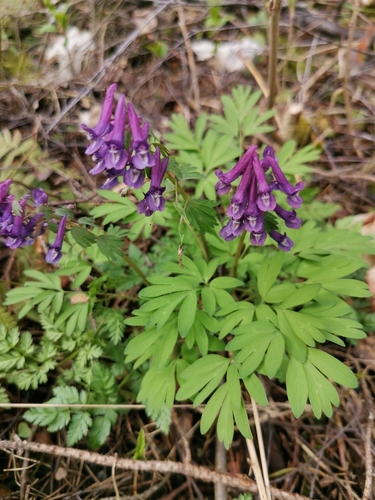
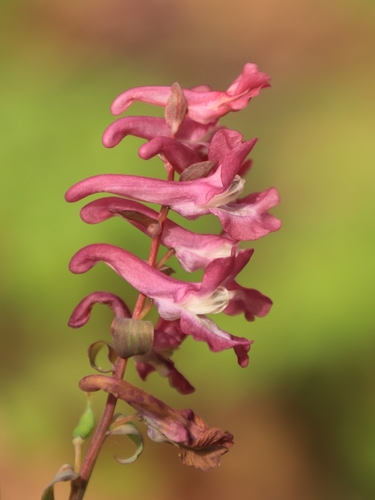
Corydalis nobilis (L.) Pers. produces upright stems that can grow up to 50 centimeters tall, with a compact cymose inflorescence borne on each stem. Its leaves are pinnate. The flowers are yellow or orange, with dark violet coloring at the tips of the inner petals; individual flowers resemble small snapdragons. The seeds of this species typically have elaiosomes, which are fatty bodies attached to the outside of the seed that are not part of the seed itself. Ants can eat these elaiosomes without harming the seed inside. Seeds of C. nobilis are dispersed by ants, which carry the seeds away to feed on their elaiosomes. This method of seed dispersal by ants, called myrmecochory, is also seen in other members of Fumariaceae, and has evolved independently in many other plant genera. Corydalis nobilis was first described from seeds sent to Linnaeus from Siberia, and is now distributed as an ornamental plant. It prefers soil that is moist in spring and drier in summer, grows well in full sun or partial shade, and is very hardy.