About Corydalis cava (L.) Schweigg. & Körte
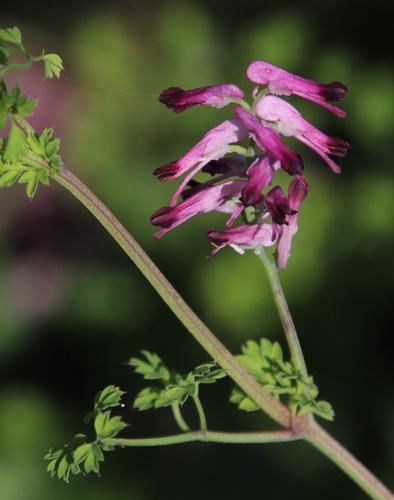
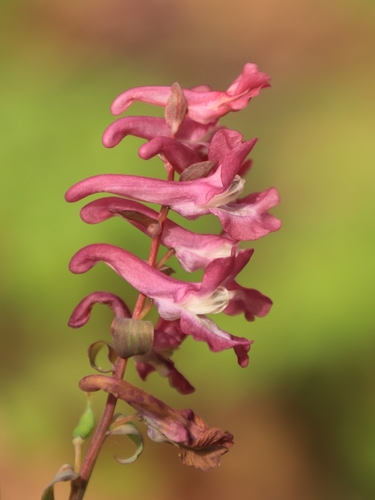
Corydalis cava (L.) Schweigg. & Körte grows between 15 cm (6 in) and 30 cm (12 in) tall. It is a spring ephemeral: foliage that emerges in spring dies back to its tuberous rootstock during summer. Its long-spurred flowers appear in spring, and can be colored mauve, purple, red, or white. The plant’s seeds have an elaiosome that attracts ants, which carry the seeds to their ant colonies. This method of seed dispersal is called myrmecochory. Many species in the genus Corydalis contain alkaloids such as canadine and corydaline, which are part of the isoquinoline alkaloid group and block calcium. All parts of Corydalis cava contain alkaloids, but the highest concentrations are found in its hollow root tuber. Corydalis cava and some other tuberous Corydalis species contain the alkaloid bulbocapnine. Bulbocapnine is occasionally used in medicine, but there is currently no scientific evidence to establish correct dosages or safe side effect profiles for it.