About Corvus leucognaphalus Daudin, 1800
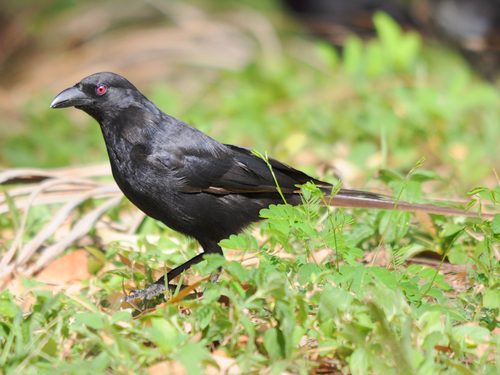
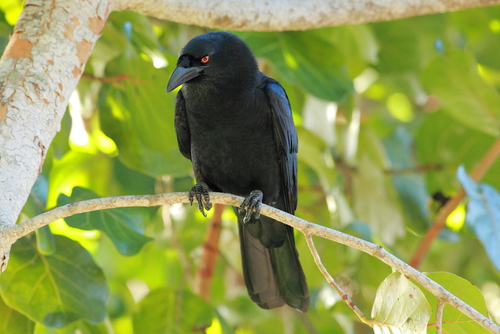
Description: This is a stocky bird, and it is the largest corvid species found in the Caribbean. It measures 42 to 46 centimeters (17 to 18 inches) in total length. Its overall plumage is black, with a bluish-purple sheen that is visible in good lighting. Despite its scientific name, the neck typically looks entirely black; the white that the name refers to is only found on the bases of the neck feathers, and is rarely visible when observing the bird in the field. Its black bill is long and deep, with a gentle downward curve toward the tip, which gives the bird a large-headed appearance. Unlike most other species in the genus Corvus, its nasal bristles do not fully cover the nostrils. There is a patch of dark grey bare skin behind the eye, and the base of the lower mandible has a bare strip of the same dark grey skin. The iris is a distinct crimson red, while the legs and feet are black. Unlike the palm crow, which rarely or never soars, this crow often flies high above the forest canopy and soars on thermals.
Distribution and habitat: The species inhabits both lowland and mid-elevation mountain forest on the island of Hispaniola. It can tolerate somewhat degraded areas used for agriculture, and also adapts to some urban landscapes.
Reproduction: The nest of this species is always solitary and built high up in a tall tree. Aside from this, little information about its breeding habits has been recorded to date.