About Corvus brachyrhynchos C.L.Brehm, 1822
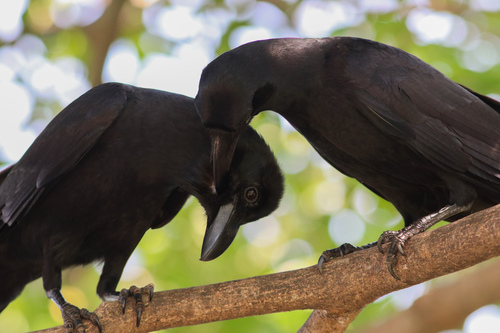
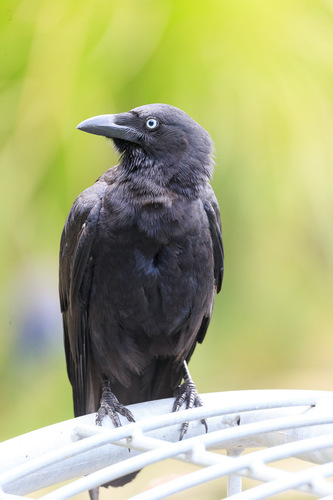
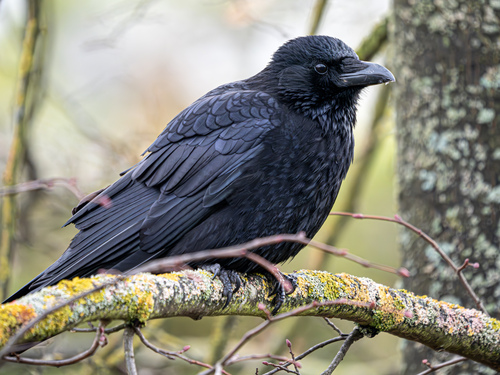
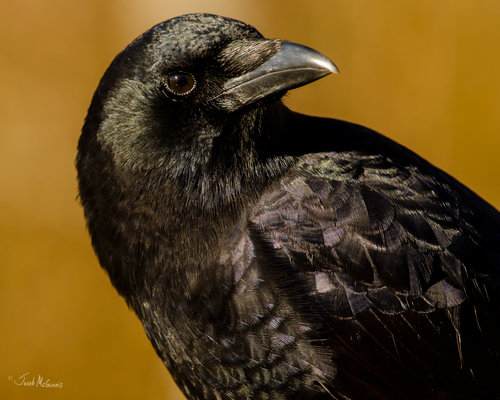
Corvus brachyrhynchos C.L.Brehm, 1822, commonly known as the American crow, is a large, distinctive bird with all-over iridescent black feathers; its legs, feet, and bill are also black. It measures 40–53 cm (16–21 in) in total length, with the tail making up approximately 40% of this length. The wing chord measures 24.5 to 33 cm (9.6 to 13.0 in), while total wingspan ranges from 85 to 100 cm (33 to 39 in). Bill length ranges from 3 to 5.5 cm (1.2 to 2.2 in), with strong variation by location. The tarsus measures 5.5 to 6.5 cm (2.2 to 2.6 in), and the tail measures 13.5 to 19 cm (5.3 to 7.5 in). Body mass varies between 316 to 620 g (11.1 to 21.9 oz), and males are typically larger than females. The American crow's most common call is a loud, short, rapid caaw-caaw-caaw, and birds usually thrust their heads up and down while making this call. This species can also produce a wide variety of other sounds, and sometimes mimics noises from other animals including other birds such as barred owls. Visually distinguishing American crows from fish crows (C. ossifragus) is extremely difficult and often inaccurate. Even outside of size, some differences do exist: fish crows generally have more slender bills and feet, may have a small sharp hook at the end of the upper bill, and appear to have shorter legs when walking. Most noticeably, fish crows tend to hunch and fluff their throat feathers when calling. When seen flying at a distance where size estimates cannot be trusted, the distinctly larger common raven (C. corax) can be told apart by its nearly lozenge-shaped tail, larger-looking head, and habit of fluffing throat feathers when calling (similar to fish crows). Ravens also soar for extended periods, unlike crows which rarely go more than a few seconds without flapping their wings. American crows are noted to be highly intelligent, with the same brain-weight-to-body ratio as humans. Studies have identified that American crows are self-aware, and young crows require time to learn from tolerant adults. While humans use a neocortex for higher cognitive functions, crows use a different brain region, the pallium, to carry out similar tasks. They can remember and identify individual people by their appearance. The average lifespan of an American crow in the wild is 7–8 years, while captive individuals have been recorded living up to 30 years. West Nile virus is a major cause of death for this species. The American crow has a large range, extending across Canada from the Pacific Ocean to the Atlantic Ocean, including the French islands of Saint-Pierre and Miquelon, south through the United States, and into northern Mexico. It has also been recorded in Bermuda starting from 1876. Over the past century, increased tree coverage across the Great Plains from fire suppression and tree planting has allowed the American crow and many other bird species to expand their range. This species occurs in virtually all types of terrain, from wilderness, farmland, parks, and open woodland to towns and major cities, and is only absent from tundra habitat. Most American crow populations in the United States are permanent residents, but most Canadian individuals migrate some distance south for winter. Outside of the nesting season, these birds often gather in large communal night roosts that can hold thousands or even millions of crows. Studying American crow behavior is difficult due to challenges in catching the birds, which means many aspects of their behavior including daily routine, migration, molting, survivorship, age of first breeding, nestling development, and the role of nesting helpers remain poorly studied. American crows are socially monogamous cooperative breeding birds. Mated pairs form large families of up to 15 individuals from multiple breeding seasons that stay together for many years. Offspring from earlier nesting seasons usually remain with the family to help rear new nestlings. American crows do not reach breeding age for at least two years, and most do not leave the family nest to breed until they are four to five years old. The nesting season starts early, with some individuals incubating eggs by early April. American crows build bulky stick nests, nearly always located in trees, sometimes in large bushes, and very rarely on the ground. They nest in a wide range of tree species including large conifers, though oaks are the most common nesting tree. Females lay three to six eggs, which are incubated for 18 days. Young crows usually fledge around 36 days after hatching. Predation most often occurs at the nest site, with snakes, raccoons, ravens, and domestic cats frequently eating eggs and nestlings. Adult American crows are predated less often, but may be attacked by great horned owls, red-tailed hawks, peregrine falcons, and both North American eagle species. When incautious while feeding at carrion, they may also be attacked by predators such as coyotes or bobcats, though this is even rarer. American crows have been shown to be more wary of disturbances in urban environments. Even though the American crow experiences inbreeding depression, research shows the species maintains a preference for inbreeding.