About Cortinarius clandestinus Kauffman
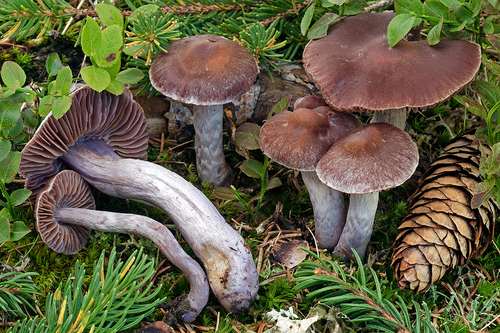
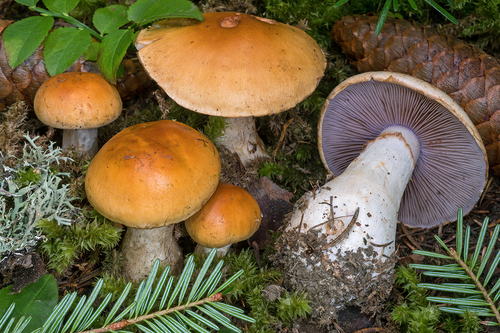
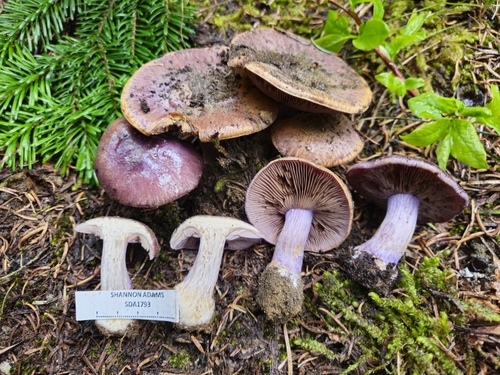
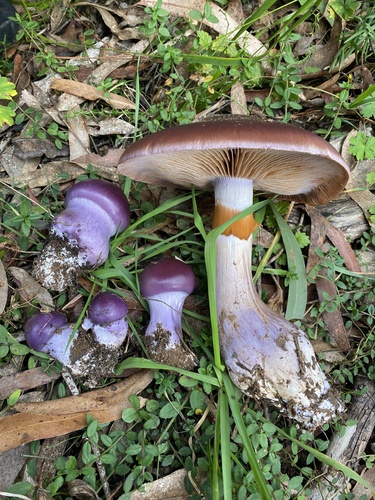
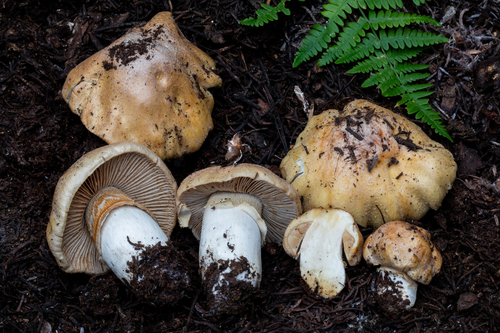
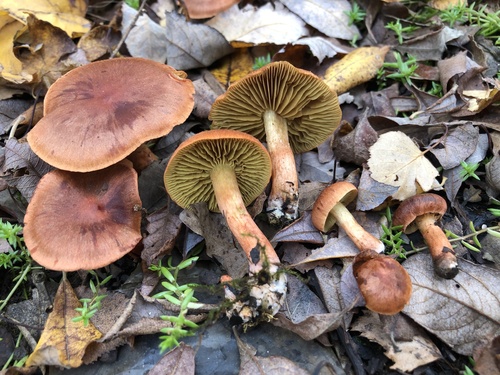
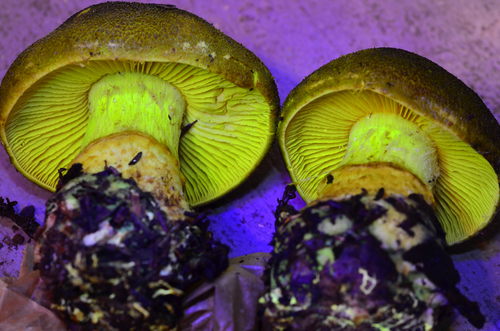
Cortinarius clandestinus is a species of fungus belonging to the Cortinariaceae family. It was first formally described in 1932 by Calvin Henry Kauffman, based on a specimen collected growing among moss under Douglas firs and hemlock at Lake Cushman, Washington. According to Kauffman's record, this species occurs in the U.S. states of New York, Colorado, and Washington. The cap of Cortinarius clandestinus is golden brown and dry, covered with dark brown fibrillose scales. Its flesh is yellowish, darker when fresh, and has a fairly fragile texture. The fungus has an odor similar to radish. Its gills are closely spaced and yellowish. The stem is equal in width along its length, or somewhat club-shaped, and bears yellowish veil fibrils; it may also have a visible ring demarcation. Several related species are compared to it here: the European species Cortinarius melanotus is similar, and has a brownish veil on its stem; C. cotoneus is tougher than C. clandestinus, and has lighter-colored fibrils; C. venetus var. montanus is greenish, has a yellow veil when young, and bears a tomentose cap.