About Cornus obliqua Raf.
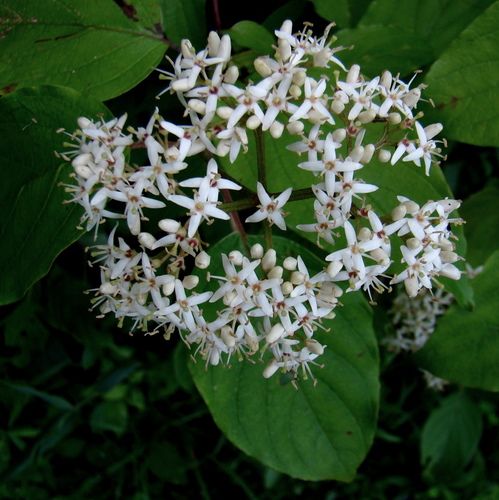
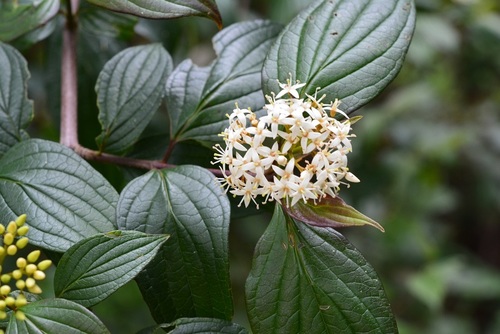
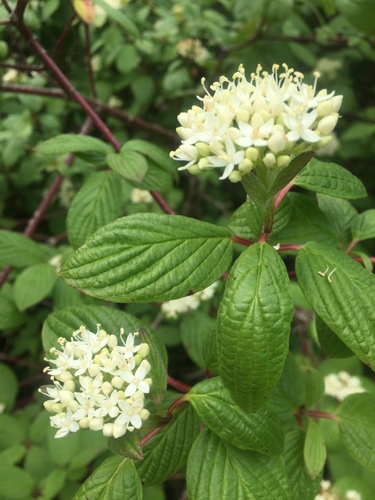
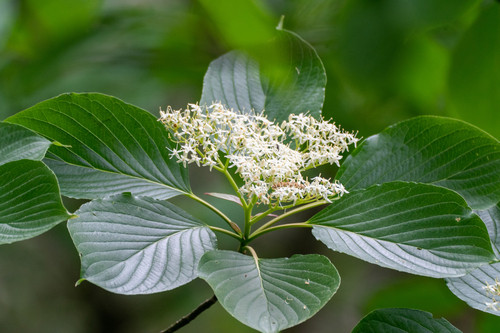
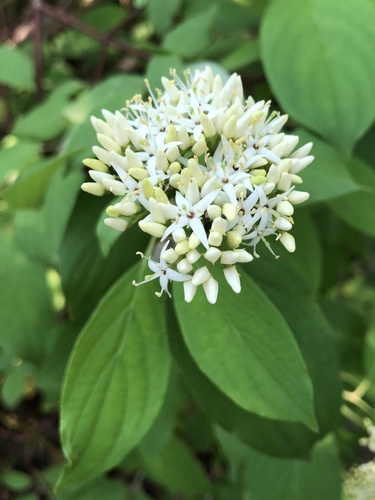
Cornus obliqua Raf. is a medium to large shrub that typically reaches 6 to 12 feet (1.8 to 3.7 meters) in height, with a spread of a similar size. It has slender, arching stems and oval-shaped leaves. The leaves are simple, opposite, and arranged in an alternate pattern along the stems; they are dark green, and turn shades of red and purple in autumn to create a striking fall display. The most distinctive feature of Cornus obliqua is its small, creamy white flowers. These flowers grow in flat-topped clusters called cymes, and bloom from late spring to early summer. The flowers attract pollinators, especially butterflies and native bees. After flowering finishes, the plant produces clusters of small, bluish-black drupes that act as a food source for many types of wildlife, including birds and small mammals. Silky dogwood, the common name for this species, is native to a broad area of eastern North America, ranging from eastern Canada south to Florida, and west to Texas. It grows in multiple types of wetland habitats, including swamps, bogs, and riparian areas. Cornus obliqua is well adapted to wet conditions, and is often a valuable species for stabilizing soil along streambanks and reducing erosion. In landscaping and horticulture, Cornus obliqua is commonly used for its aesthetic qualities. It is planted in a variety of settings, including naturalized plantings, rain gardens, and wildlife gardens. Its showy flowers, colorful foliage, and attractive fruit make it a popular choice for adding visual interest to gardens and landscapes. It is also relatively low maintenance, which makes it suitable for both beginner and experienced gardeners.