About Cornus florida L.
Cornus florida L., commonly called flowering dogwood, is a small deciduous tree. It typically grows to 10 m (33 ft) high, with a trunk diameter of up to 30 cm (1 ft), and mature plants are often wider than they are tall. A 10-year-old tree is usually around 5 m (16 ft) tall. Its greatest size and growth potential occurs in the Upper South of the United States, where it may reach 12 m (40 ft) in height; at the northern end of its range, 9–10 m (30–33 ft) is more typical. Hot, humid summer weather is required for new growth to harden off in autumn. The maximum lifespan of this species is about 80 years.
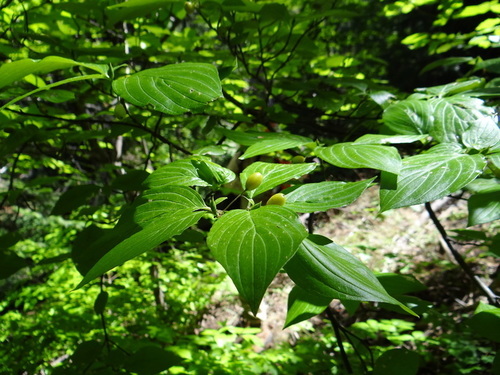
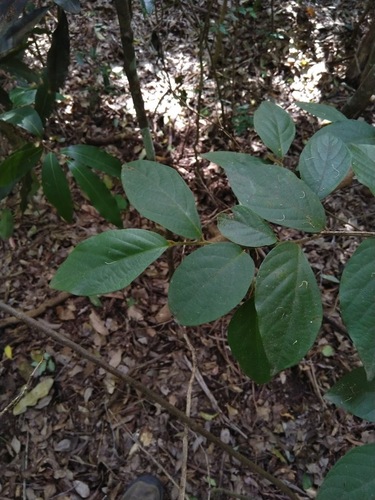
Its leaves are opposite, simple, and ovate, measuring 6–13 cm (2.4–5.1 in) long and 4–6 cm (1.6–2.4 in) broad. The leaf margin appears entire, but is actually very finely toothed when viewed under magnification; leaves turn a rich red-brown in autumn.
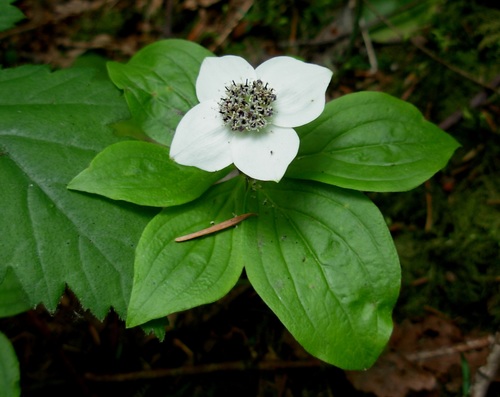
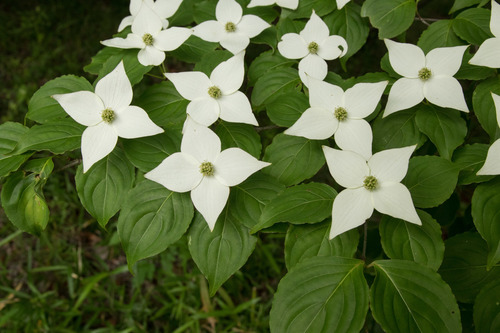
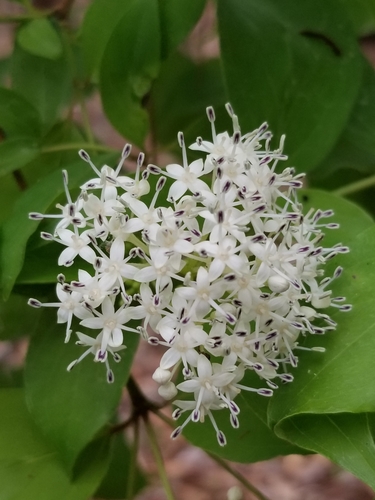
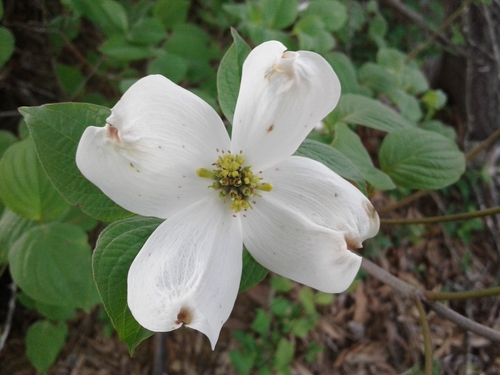
The individual true flowers are small, inconspicuous, and hermaphroditic, with four greenish-yellow petals (not bracts) 4 mm (0.16 in) long. Around 20 flowers form a dense, rounded, umbel-shaped inflorescence 1–2 cm (0.39–0.79 in) in diameter. This central flower head is surrounded by four large, conspicuous bracts (often mistaken for petals) that may be white, pink, or red. Each bract is 3 cm (1.2 in) long and 2.5 cm (0.98 in) broad, rounded in shape, and often has a distinct notch at the apex. Flowering occurs from early April in the southern part of its range to late April or early May in northern and high altitude areas; the related Asian species Cornus kousa (Kousa dogwood) flowers around one month later. Wild plants almost always have white bracts, but selected cultivated cultivars can have pink to nearly true red bracts.
In the wild, flowering dogwood is typically found at forest edges and frequently occurs on dry ridges. It can grow in a range of habitats from moist and dry forests to wetlands, and is most often found in woodland understories. It tolerates seasonal dry periods, but cannot survive severe drought or saturated soils. It is sensitive to rapid changes in soil temperature, and prefers the moderated temperatures of woodland soils.
The fruit is a cluster of two to ten separate drupes (they are fused in C. kousa). Each drupe is 10–15 mm (0.39–0.59 in) long and about 8 mm (0.31 in) wide, ripening in late summer and early autumn to a bright red, or occasionally yellow with a rosy blush. The fruit is extremely sour and unpleasant-tasting, and poisonous to humans. The fruit is an important food source for dozens of bird species, which distribute the seeds. Flowering dogwood is a larval host plant for multiple moth varieties, including Eudeilinia herminiata (dogwood thyatirid moth), Antispila cornifoliella, stinging rose moth, grand arches moth, pecan bark borer, dogwood borer, rosaceous leaf roller, diamondback epinotia moth, spring azure, cecropia moth, and Io moth. This species is monoecious, meaning an individual tree bears both male and female flowers, so all trees can produce fruit.
Flowering dogwood is widely cultivated in temperate regions around the world. For horticultural growth, it performs best in moist, acidic soil with a pH between 6.0 and 7.0, in a location that gets good morning sun and some afternoon shade. It does not tolerate exposure to intense heat sources such as adjacent parking lots or air conditioning compressors, and has low tolerance for salinity. Its recommended hardiness zone is 5 to 9. In urban and suburban settings, mower damage to the trunk or roots should be avoided, as it increases the tree's vulnerability to disease and pests. It is listed as an endangered species in Ontario. For planting, sites with reasonably well-drained, fertile soil are preferred; full sun is recommended for high-hazard areas such as stream or pond banks. New plantings should be mulched to a depth of 5 to 10 cm (2 to 4 in), keeping mulch away from the stem. Dead wood and leaves should be pruned, fully removed, and destroyed every year. Trees should be watered weekly during droughts, with watering done in the morning and avoiding wetting the foliage. Registered fungicides may be applied when needed, following manufacturer instructions and advice from the local Extension Service. Common selected cultivars include: 'Amerika Touch-O-Pink', with large pink-tinged bracts, large leaves, and good disease resistance; 'Appalachian Spring', with large white bracts, red fall foliage, and resistance to dogwood anthracnose; 'Autumn Gold', with white bracts and yellow fall color; 'Barton', with large white bracts, early blooming, and resistance to stem canker and powdery mildew; 'Bay Beauty', with double white bracts, heat and drought resistance, and suitability for the Deep South; 'Cherokee Daybreak', with white bracts and vigorous growth with variegated leaves; 'Cherokee Chief', with red bracts and red new growth; 'Cherokee Brave', with darker red bracts than 'Cherokee Chief', smaller bracts, and consistent resistance to powdery mildew; 'Cherokee Princess', a vigorous cultivar with white bracts, and the industry standard for white-flowered flowering dogwood; 'Cherokee Sunset', with purplish-red bracts and variegated foliage; 'Gulf Coast Pink', the best pink-flowering cultivar for northern Florida; 'Hohman's Gold', with white bracts and variegated foliage; 'Jean's Appalachian Snow', with large, overlapping white bracts and green flowers, and very high resistance to powdery mildew; 'Karen's Appalachian Blush', with delicate white bracts edged in pink, and some powdery mildew resistance; 'Kay's Appalachian Mist', with stiff, creamy white bracts, red fall foliage, and good resistance to powdery mildew; 'Plena', with double white bracts and resistance to spot anthracnose; 'Purple Glory', with red bracts and purple foliage, resistant to spot anthracnose but susceptible to stem canker; and 'Weaver White', with large white blooms, large leaves, and a candelabra shape, suitable for north-central Florida.
The Houma people of modern-day Louisiana and Mississippi used scrapings from the bark or roots as a remedy for malaria. Compounds isolated from the bark have shown moderate antiplasmodial and antileishmanial activity in laboratory experiments, which partly supports its traditional use as a quinine substitute. Many other Native American groups used root bark as a fever reducer, pain reliever, antidiarrheal, and skin astringent. Bark was used to treat headaches, backaches, and sore throats, and made into an infusion for diseases such as measles. Flowers were used to relieve colic pain and as a fever reducer.
Other human uses include production of inks and scarlet dyes. Its hard, dense wood has been used for golf club heads, mallets, wooden rake teeth, tool handles, jeweler's boxes, and butcher's blocks. A historical use to treat mange in dogs may explain its common name. The species is also used in restoration projects for urban areas and abandoned strip mines. It acts as a soil improver, because its leaf litter decomposes faster than leaf litter from most associated tree species.