About Cornus amomum Mill.
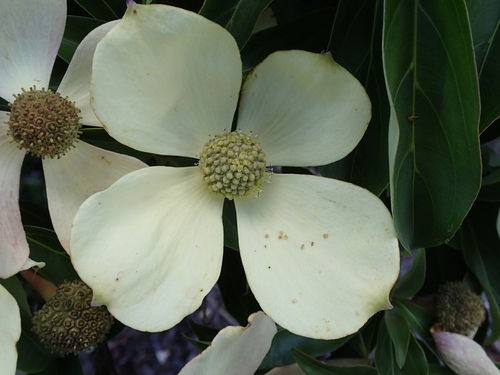
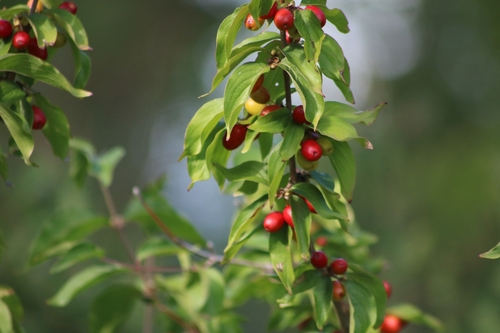
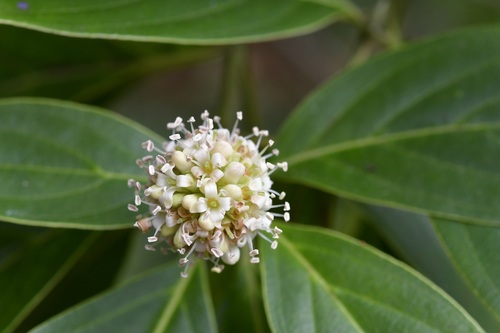
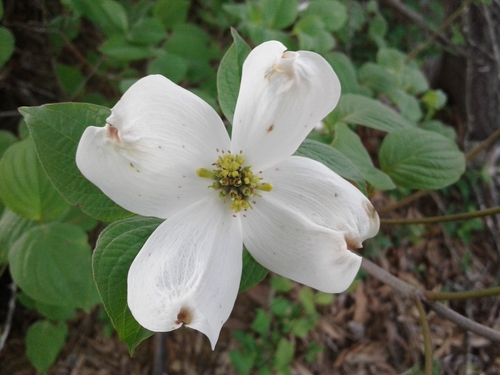
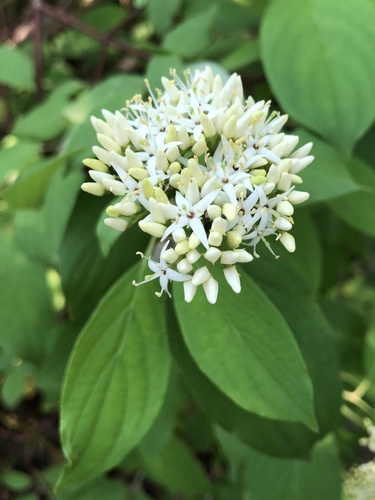
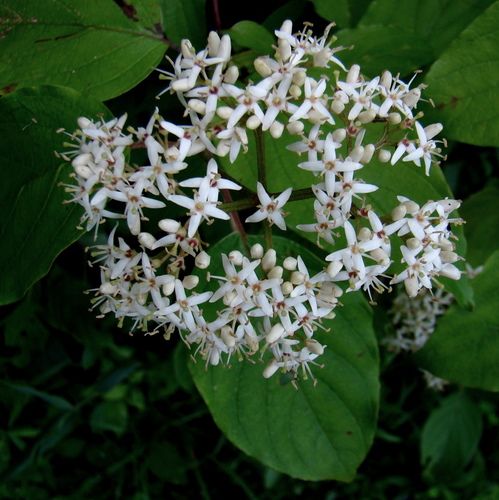
Cornus amomum Mill. is a deciduous shrub that grows to 5 metres (16 1/2 feet) tall. Its leaves are opposite, medium green, pubescent, oval with an acute apex, growing up to 10 centimetres (4 inches) long and 7 centimetres (2 3/4 inches) broad, with usually 4 to 5 veins per leaf side. Twigs are rusty brown. Flowers are four-petalled, showy, yellowish-white, produced in cymes, and typically bloom between May and June. The fruit is a small blue drupe. If left unmanaged, this species grows to form dense thickets and thick vegetative areas. This shrub is native to eastern North America, and grows only within the United States, where it occupies wetland habitats such as swamps, marshes, and bogs, and also grows near creeks and other water systems. Its range extends west past the Mississippi River to the eastern borders of Kansas, Nebraska, and parts of northern Oklahoma. It has been recorded in the following U.S. states: Alabama, Connecticut, Delaware, District of Columbia, Florida, Georgia, Illinois, Indiana, Iowa, Kentucky, Maine, Maryland, Massachusetts, Michigan, Mississippi, Missouri, New Hampshire, New Jersey, New York, North Carolina, Ohio, Pennsylvania, Rhode Island, South Carolina, Vermont, Virginia, and West Virginia. It grows at elevations from 0 feet to 1500 feet. It prefers partial shade but can tolerate full sun, and thrives in moist to wet soil; adding organic material to maintain a wet environment helps the shrub survive periods of insufficient water. Ecologically, the summer fruits of Cornus amomum are eaten by songbirds, insects, rodents, white-tailed deer, and elk, which the species relies on for seed dispersal. When the fruits decay, frugivores typically only select ripe fruit and seeds, which destroys viable seeds that would otherwise be dropped to grow. Cornus amomum is classified as a pollinator plant that supports and attracts bees, butterflies, and flies; it is also a host plant for butterflies, providing food for their larval stage. As a member of the dogwood family, Cornus amomum is grown as an ornamental for landscapes across the United States. Gardeners value dogwoods for their spring flowers, summer foliage, fruit, and autumn leaf color, and each dogwood species has a distinct appearance. This shrub can be planted in landscapes in areas with excess runoff or water collection, since it adapts well to moist to wet soil conditions, and it provides attractive color throughout spring, summer, and fall. It is also used outdoors for erosion control on slopes and steep inclines. Farmers and landowners can plant it to create windbreaks for homes and agricultural fields, build natural borders between properties, support wildlife conservation, and provide habitat for many types of wildlife. When planted alongside other deep-rooted woody plants like willows, it reduces stream bank erosion and adds stability to stream banks. When used as a natural border, particularly for wildlife and livestock areas, one common issue is that grazing wildlife and livestock often damage large portions of the shrub when its fruit is ripe. Aside from this, there are no major diseases or pests that threaten this shrub. Historically, the bark of Cornus amomum was used in kinnikinnick, a Native American smoking mixture; it was scraped into a fine powder to be used as an alternative to tobacco.