About Cornufer papuensis (Meyer, 1875)
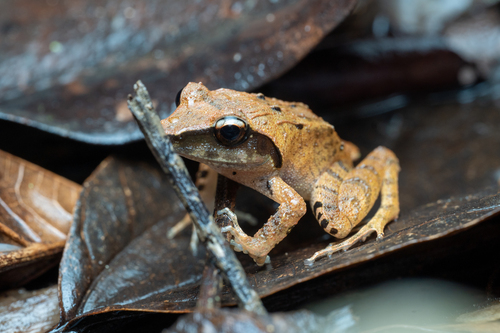
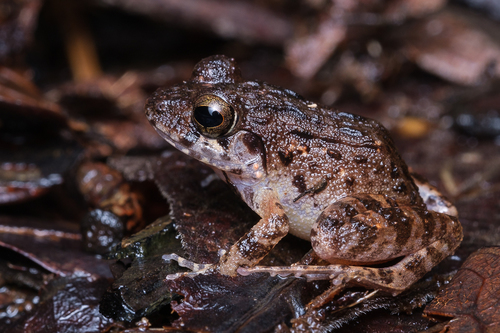
Cornufer papuensis (Meyer, 1875) exhibits notable sexual size dimorphism in snout–vent length: males reach a maximum length of 46 mm (1.8 in), while females grow up to 64 mm (2.5 in). Its toes have only a small amount of basal webbing, and the dorsum is covered in numerous short skin folds. This species displays three distinct dorsal color pattern morphs: unicolored, two-striped with dorsolateral stripes, and one-striped with a vertebral stripe. The loud male advertisement call is made up of partially clustered pulses. Individual notes last between 96 and 157 ms, with intervals between notes ranging from 130 to 306 ms, and the note repetition rate is relatively low at 4 notes per second. Cornufer papuensis is a very common species across most of its range. It occupies a wide variety of habitats, including primary rain forest, secondary regrowth, gardens, and other heavily disturbed environments. It is exclusively a lowland species, found only at elevations below 1,200 m (3,900 ft). Males typically call at night, though they sometimes begin calling well before sunset. Calling occurs on the rain forest floor, with males most often positioned in exposed or slightly sheltered spots on leaf litter; they may occasionally call from low shrubs instead. This widespread and adaptable species faces no known identified threats, and it is found within many existing protected areas.