About Coriomeris denticulatus (Scopoli, 1763)
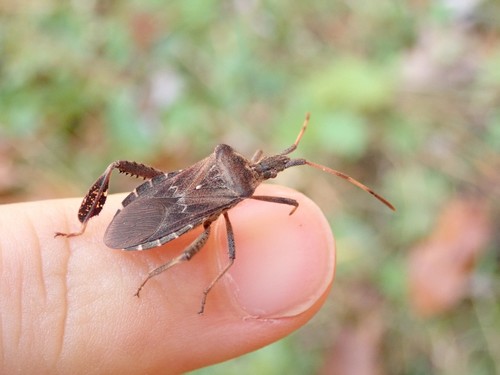
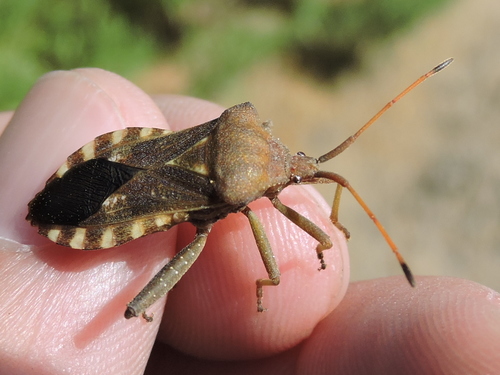
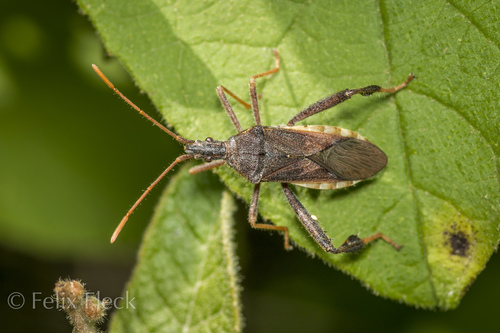
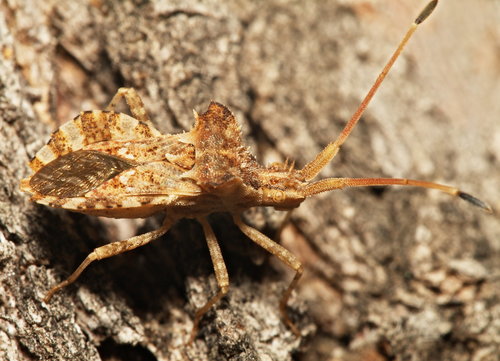
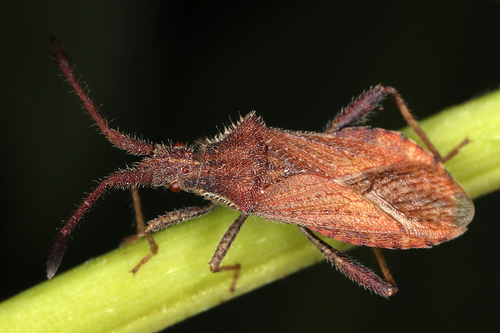
Coriomeris denticulatus is a small, brownish bug that measures between 8.5 and 10 mm in length. It has a quadrangular head, a short distance between its eyes, and a toothed posterior pronotal edge. Its antennae have four segments, and the third segment is the same length as the second segment; its hind femora bear two large teeth. Distinguishing this species from similar relatives such as Coriomeris affinis requires identifying moderately difficult characteristics. It can be observed from April to September, with activity peaking in May. It is polyphagous, feeding on more than 20 plant species, and is most commonly found on clovers and melilotus. Adults and nymphs overwinter in leaf litter or moss; eggs are laid between June and July, and the new generation of adults emerges from mid-July to mid-September. This species is native to Western Europe, and its range extends east to the Ural Mountains, and also includes Turkey, Israel, and North Africa. It prefers dry, sandy areas, forest edges, and sunny, warm locations.