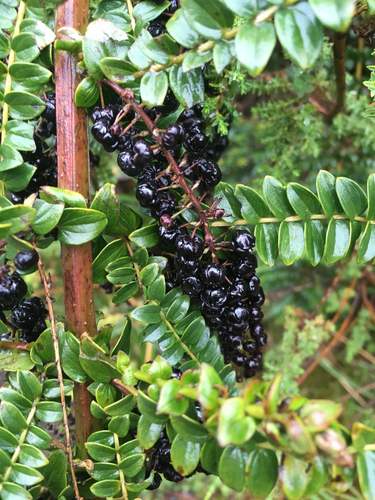
About Coriaria ruscifolia L.
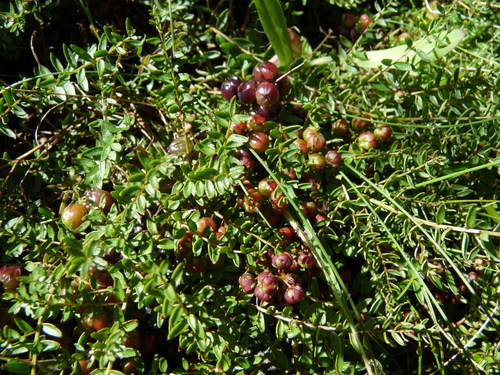
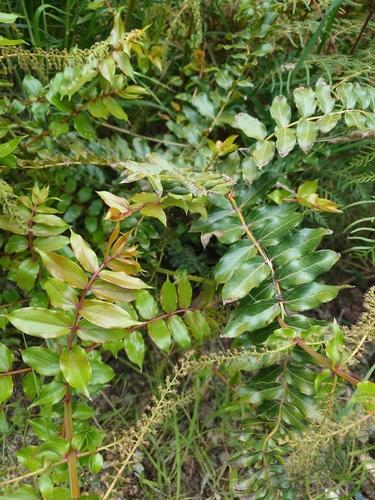
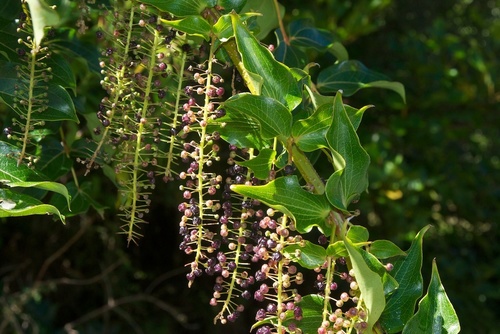
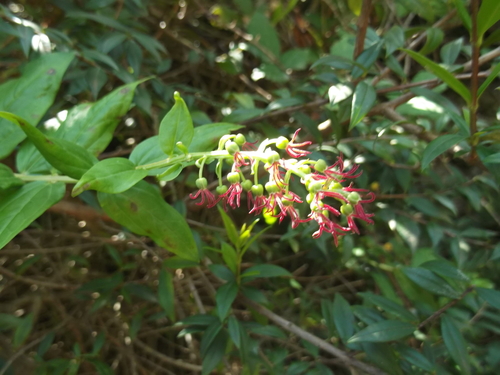
Coriaria ruscifolia is a deciduous shrub. The edible part of the plant that is commonly referred to as fruit is actually made up of petals; all other parts of the plant are poisonous. The plant contains catechol derivatives, and likely contains multiple sesquiterpenes. The toxic compound coriamyrtine, which is a sesquiterpene, has been isolated from this species. Other sesquiterpenes found in Coriaria ruscifolia include coriatine, tutine, and pseudotutine. Toxic effects of the plant are initially stimulating, before becoming unpleasant, and death from nervous exhaustion can occur. In Chile, this species is known by the common names deu, dewü, huique, huiqui, and matarratones, and is reputed to be a toxic hallucinogen. Its fruits are used to make rat poison there, and are reported to be lethal for small children. The Mapuche people of Chile prepare a tea from the plant's leaves to use as an emetic. In Ecuador, the fruits are reportedly consumed to produce an inebriated state, where eaters experience sensations of soaring through the air. These effects are described as similar to the effects produced by Petunia violacea. Coriaria ruscifolia also grows in Mexico, and it has been suggested that this species was the Aztec inebriant known as tlacopétatl. In the Las Huaringas region, a lake plateau in the northern Peruvian Andes, local healers called curanderos call Coriaria ruscifolia contra-alergica, meaning 'against allergies'. They use the plant's herbage to make a bath additive, which is used to wash patients experiencing allergic reactions.