About Coriaria myrtifolia L.
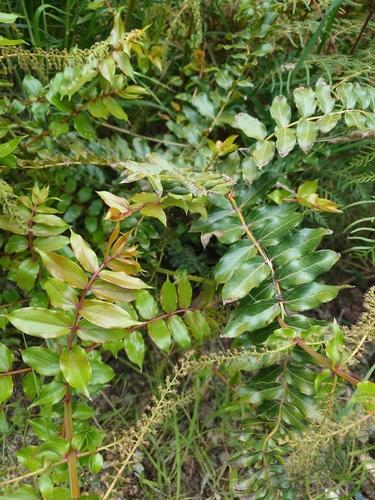
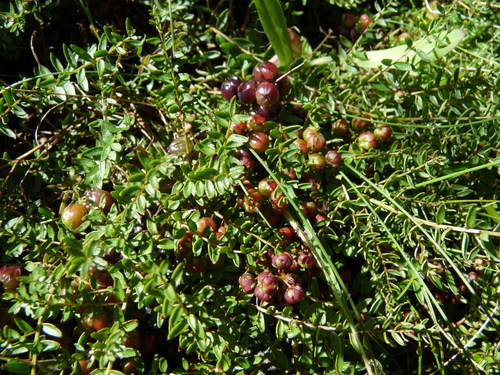
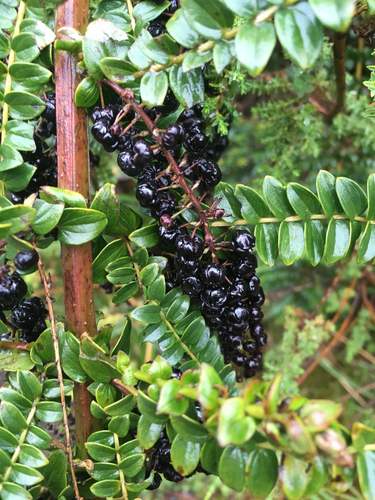
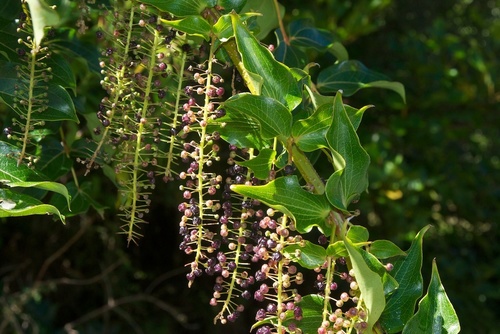
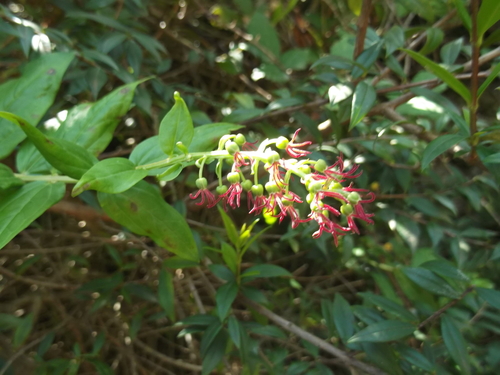
Coriaria myrtifolia L., commonly called redoul, has root nodules that carry out symbiotic nitrogen fixation, and it is one of 13 known Coriaria species that bear actinorhizae. Redoul is a shrub with greyish, square-shaped branches. Its leaves are sessile, most often opposite but sometimes growing in groups of three or more, shaped oblong with acuminate tips, and marked with three ribs. The small greenish flowers grow in racemes from April to June, with five styles that have reddish highlights, five sepals, five petals, and ten stamens. Its black fruits are formed of five fleshy carpels, each containing one seed.
Geographically, this species is native to the northern Mediterranean coastal region of Spain and Southern France, ranging from the Gironde to the Alpes Maritimes, and extends into Italy as far as part of the Apennines. It also grows in the western Rif and Algeria, and in the Balearic islands it is only found in Ibiza. The oldest known mention of this plant, dating to 932, appears in a place name that indicates its presence in the County of Manresa, northwest of Barcelona. Across its entire range, this plant plays an important role in preventing soil erosion and serves as understory vegetation. It is extraordinarily abundant in the less dense woodlands of the eastern Spanish provinces of Girona and Barcelona at altitudes between 200 and 600 m, and occasionally grows as high as 1,000 m.
The leaves and fruits of Coriaria myrtifolia contain coriamyrtin, a convulsant picrotoxane sesquiterpene that was first isolated in 1864. Toxic effects from this plant include digestive symptoms: nausea, vomiting, and abdominal pain; neurological symptoms: obnubilation, convulsions, and complications from convulsions; respiratory disorders: polypnea, respiratory problems, apnea, and short, superficial respiration; along with pupil myositis. Treatment for this poisoning is purely symptomatic; rapid resuscitation in an intensive care unit is necessary when convulsions occur. Coriamyrtin also has pharmacological activity. Honeydew produced by redoul is also toxic.
Traditionally, redoul leaves were intensively collected for their tannin content to use for tanning and dyeing. During the medieval period, ecclesiastical institutions and aristocracy sought to establish royalties on this resource, particularly governing the initial distribution and sale of the material. These uses rely on the high tannin content of Coriaria species: tannins are most concentrated in the root and stem bark, but are also present in leaves, where they coexist with yellow flavonoid dyes. These tannins are hydrolyzable tannins, in the same group as gall tannins. Redoul's chemical composition makes it an effective tanning substance that can transform fresh animal hides into rot-resistant, flexible, relatively impermeable leather called Basil leather, leading to widespread use across many industries. Additionally, the well-known reaction of tannins with iron salts that produces black precipitate is the basis for some inks manufactured since the Middle Ages, and it is also used to dye a variety of textiles black or gray. Until the mid-14th century, redoul material was widely traded between northern Catalonia and Languedoc. Māori peoples use New Zealand Coriaria species to produce traditional tattoo ink from fruit juice, make musical instruments from hollow stems, and despite the extreme toxicity of these plants, they occasionally ate the fruit sparingly for its sweet taste, using it to sweeten drinking water or seaweed jellies. Coriaria myrtifolia is also grown as an ornamental plant.