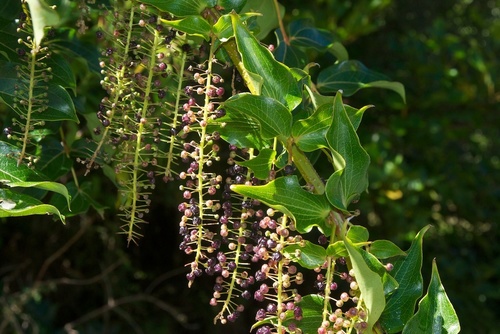
About Coriaria arborea Linds.
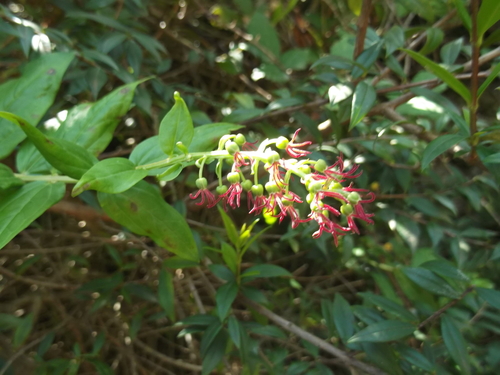
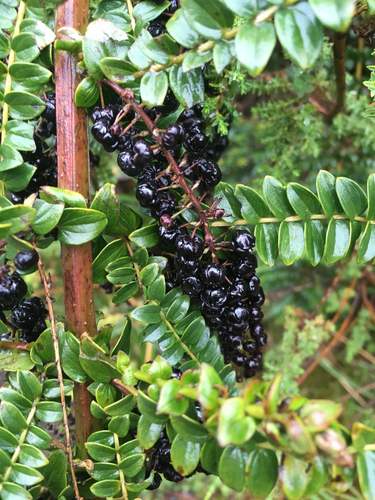
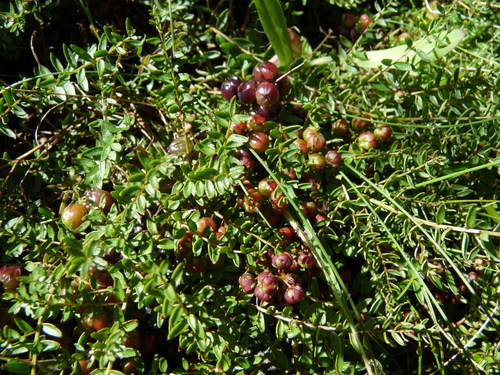
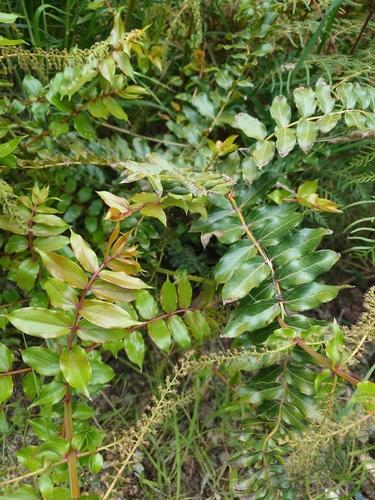
Coriaria arborea Linds. is a large shrub that bears pairs of long, glossy leaves on its branches, each leaf measuring 50–80 mm (2.0–3.1 in) long. Its flowers are wine-coloured, and they droop from spikes that can grow up to 300 mm (12 in) in length. After flowering, it produces black-coloured fruits. This species is endemic to New Zealand, and it is the most common Coriaria species found in the country. It typically becomes established on disturbed land. C. arborea acts as a host plant for multiple species of moth that are endemic to New Zealand: Izatha austera, I. churtoni, I. mesoschista, and I. peroneanella. The toxic compound tutin is present in all parts of the plant except the fleshy flower petals. This plant, commonly called tutu, has caused more cases of livestock poisoning than any other New Zealand plant. Poisoning of dogs and even two circus elephants has also occurred. Human poisoning has sometimes happened after people ate honey that came from bees that interacted with the plant. In 2014, a hiker in Auckland, New Zealand mistakenly chewed the asparagus-like young shoot of tutu while trying to taste supplejack. He did not swallow any of the plant because of its extremely unpleasant taste, but he still developed multiple tonic-clonic seizures within hours—one of which dislocated his arm—alongside labored breathing. Medical experts concluded he was very fortunate to survive the poisoning. A year later, he made a full recovery except for ongoing minor memory problems. Honey becomes contaminated with tutin when bees collect honeydew secreted by the passionvine hopper, an insect that feeds on tutu plants. Contaminated honey has occasionally led to hospitalization or even death of people who consumed it. The last recorded case of commercial honey poisoning from tutin was in 1974, when 13 people were poisoned. Since 1974, nine additional non-commercial cases have occurred, with the most recent being in 1991 in the Bay of Plenty and 2008 in the Coromandel. Drought periods increase the risk of this type of poisoning. Despite its high toxicity, Māori have used tutu for food: they consumed juice extracted from the plant's fleshy flower petals. Gathered berries were placed in specially woven baskets called pū tutu, lined with Toetoe flower heads that acted as a sieve to separate poisonous seeds from the squeezed juice. The extracted juice was used as a sweetener for foods such as fernroot, or boiled together with seaweed and left to set into a black jelly called Rehia.