About Coreopsis lanceolata L.
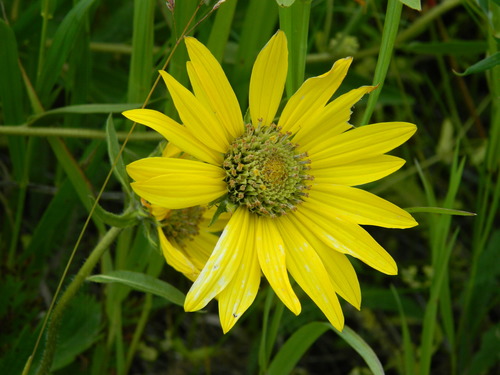
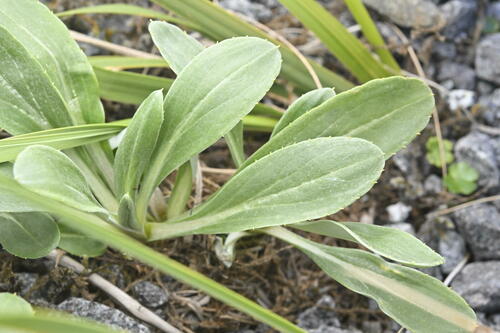
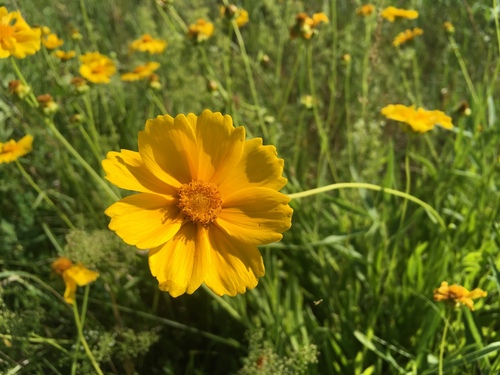
Coreopsis lanceolata L. is a perennial plant that sometimes grows to over 60 cm (2 ft) in height. It produces yellow flower heads one at a time at the top of a bare flowering stalk, and each head contains both ray florets and disc florets. Individual flowers measure 5–8 cm (2–3 in) across. Its basal leaves are typically narrow and lance-shaped, 5–15 cm (2–6 in) long with smooth edges, and have thin petioles that are 3–10 cm (1–4 in) long. Leaves located higher on the stem are sessile (lacking a petiole) and may be unlobed or pinnately lobed. Stem leaves grow in opposite arrangement and generally only appear on the lower half of the stem. After flowering, the ray florets develop into brown achenes that are 3 mm (0.1 in) long and 3 mm (0.1 in) across. This species is native to eastern and central United States, and has become naturalized in Canada, the western United States, Mesoamerica, South America, South Africa, and eastern Australia. In its natural conditions, it grows in open woodlands, prairies, plains, glades, meadows, and savannas. Its flowers bloom from April to June. Many types of insects, including bees, wasps, butterflies, moths, flies, and beetles, are drawn to the nectar and pollen this plant produces. Birds and small mammals eat its achenes. This plant can spread to form large colonies. In cultivation, Coreopsis lanceolata L. is useful for pollinator restoration in large urban cities, as it provides a food source for animals that drink its nectar and/or eat its seeds. Overwatering should be avoided, as this will cause the plant to flop over. Its spread can be controlled by growing it in containers, or by planting it in regularly mowed lawns. It requires very little maintenance, though removing spent blooms (deadheading) is beneficial. It prefers sandy, well-drained soil. Heavy clay soil holds moisture through winter months, which can kill many plant species. However, since Coreopsis lanceolata is rhizomatous (it has underground stems), it is well adapted to withstand both wet and dry extreme soil moisture conditions. Adding compost to heavy soil improves drainage, and this effect can also be achieved by creating a mounded planting bed that lets rainwater run off faster than the surrounding ground. It grows best in full sun, defined as 4–6 hours of direct sunlight per day.