About Coregonus clupeaformis (Mitchill, 1818)
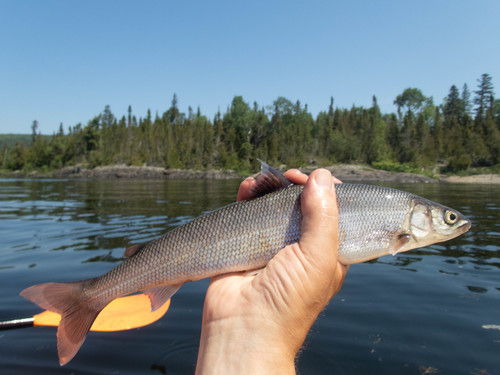
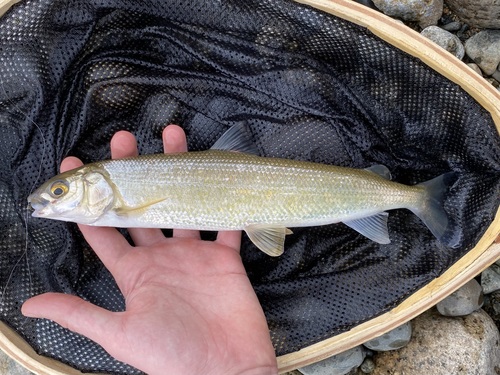
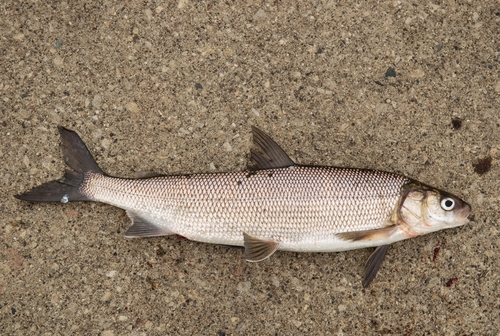
Lake whitefish, scientific name Coregonus clupeaformis (Mitchill, 1818), belong to the Coregoninae subfamily of the salmon family Salmonidae, and share a similar appearance with other whitefishes like the northern cisco (Coregonus artedi). Like all salmonids, they have an adipose fin. Unlike cisco, lake whitefish have a snout that overhangs their short lower jaw, placing their mouth in a slightly inferior position. This mouth shape lets them feed on lake bed bottoms, grab food particles from open water, or collect food from the water surface. In contrast, cisco have a short snout, and their lower jaw extends past the snout. Both cisco and lake whitefish can be told apart from mooneye by their small posterior dorsal adipose fin. However, during early life stages, cisco and lake whitefish cannot be distinguished by morphological traits alone, and genetic analysis is required for reliable species identification. Another distinctive trait of lake whitefish is the presence of two small flaps inside each nostril. Their typical coloration ranges from silver to white, with olive, pale-green, or brown tones on the dorsal area. Their ventral fins are white, and the tail has a dark posterior edge. Lake whitefish from inland lakes can grow to weigh more than 5 pounds (2,300 g). The largest lake whitefish caught on rod and reel weighed 15 pounds 6 ounces, caught from Clear Lake, Ontario, Canada on May 21, 1983 by Chris T. D. Webster, as recorded by the Fresh Water Fishing Hall of Fame in Hayward, Wisconsin. On average, adult lake whitefish weigh 4 pounds. They can reach a maximum length of 31 inches (79 cm), and most commonly grow to 20 inches (51 cm). Lake whitefish are cool-water fish. They live in a large number of inland lakes, and have been documented entering brackish waters. Their native range extends from Alaska and western Canada, to the Atlantic coastal drainage of Maine and New Brunswick, and north to Labrador. Lake whitefish spawn between September and January, at night, in water that is 2 to 4 meters deep. In autumn, mature lake whitefish move into shallow areas to lay their eggs on rubble and gravel shoals. They provide no parental care for their young, and the young hatch the following spring. In northwestern Canada, a large spawning migration enters the Athabasca Delta in late summer, moving upstream along the Athabasca River. The longest recorded movement of a tagged lake whitefish was 388 km (241 mi), traveling from Fort McMurray to the north shore of Lake Athabasca in Alberta, Canada.