About Cordyline banksii Hook.f.
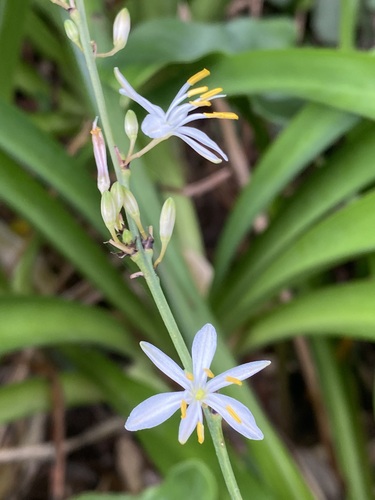
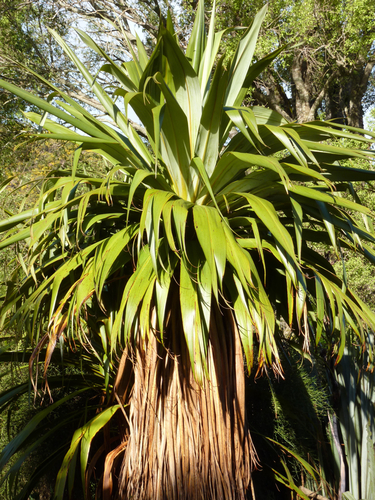
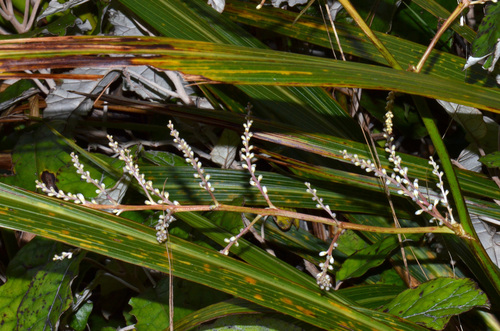
Cordyline banksii Hook.f., commonly known as tī ngahere, is a sparingly branched cabbage tree that grows up to 4 metres (13 ft) tall. Its leaves are lanceolate, or somewhat paddle-shaped, reaching up to 2 metres (6 ft 7 in) in length and 40–80 millimetres (1.6–3.1 in) in width. Leaves are widest at their midsection and droop downward from this point, with a prominent flat midrib running the full length of each leaf. The plant produces fruiting panicles that can grow up to 2 metres long. Its flowers are white and carry a pleasant scent. The globe-shaped fruits reach up to 5 millimetres (0.20 in) in diameter, and can be white, bluish-white, or blue. This species tolerates a wide variety of habitats. It is common in coastal, lowland, and lower montane forests of New Zealand’s North Island. In the South Island, it is widespread across the northern half and Westland, extending as far south as Haast. Occasional reported sightings in coastal Fiordland are unsubstantiated. It also grows occasionally in South Island subalpine regions. When growing in shrublands, it occurs alongside Cordyline pumilio, and may form hybrids with this species. C. banksii is easy to cultivate. Fresh seed germinates readily, and cuttings taken from stems, trunk, and new shoots root quickly. It is less common in cultivation than C. australis, but can still be purchased from many nurseries and garden centres, often sold as a purple-leaved cultivar. It is useful for growing on steep slopes or in poorly drained sites, and is hardy in USDA zones 10a and 11.