About Cordia sulcata A.DC.
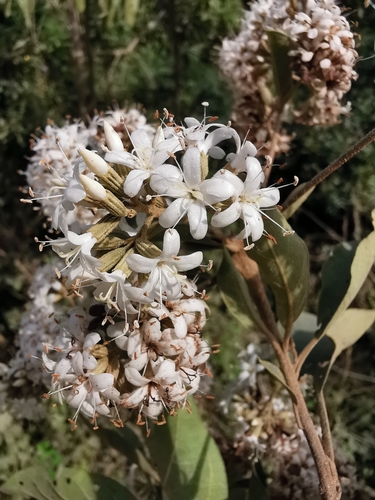
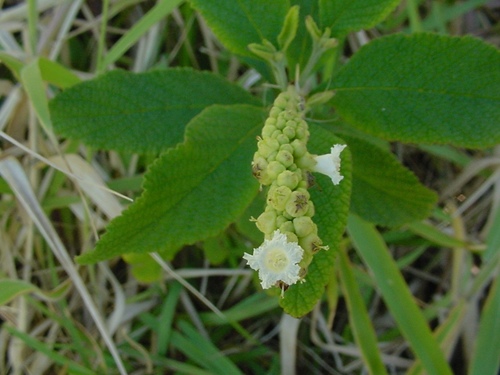
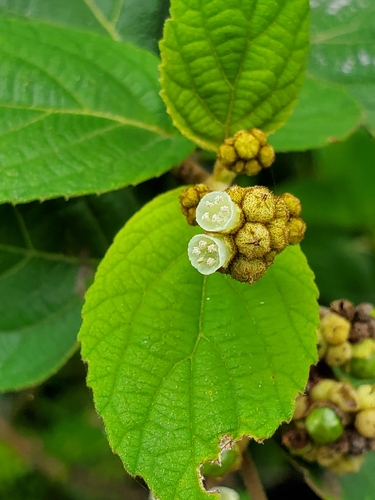
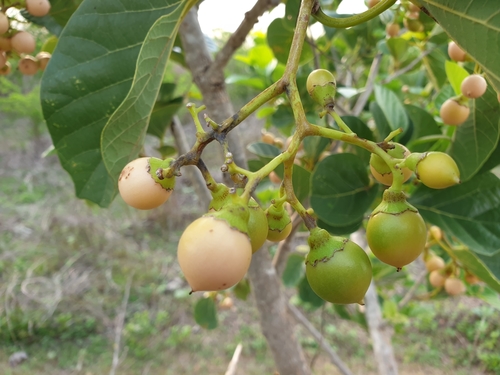
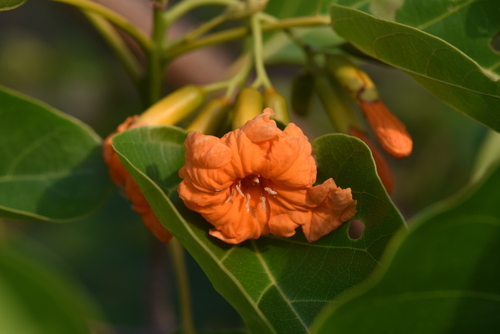
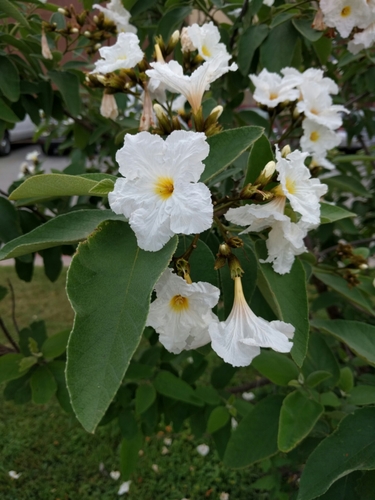
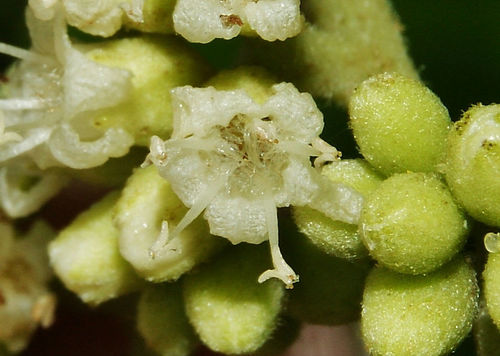
Cordia sulcata A.DC. grows as a small tree or large shrub, reaching up to around 20 meters (100 feet) in height. It produces simple, alternate leaves that are dark green on the upper surface, and rough and hairy on the lower surface. Its flowers are fragrant, cream-colored, and grow in branched, determinate, erect clusters; they are small and bowl-shaped. Ripe fruits of this species measure 1 centimeter (0.4 inches) across, are white with a waxy texture, and contain sticky pulp inside. C. sulcata occurs in humid subtropical areas of the Caribbean, where annual rainfall ranges between 1.3 and 3.0 meters (4 and 10 feet) and humidity is high. This species cannot tolerate shade, and its seedlings cannot survive under a closed forest canopy. It grows in soils formed from a range of parent rocks, including limestone, sedimentary rock, and volcanic rock including serpentine, and tolerates multiple soil properties, with soil texture varying from sandy to clay. It is pollinated by generalist pollinators such as bees, and its seeds are dispersed by birds that eat its fruits. Fruits are eaten mainly by birds, including Spindalis portoricensis; the sticky fruit pulp does not cause issues for these birds, and the fruit is a valuable food source for them. The wood of C. sulcata is soft and lightweight, so it is used to make barrels and boxes. It is also commonly used for fuel, charcoal, and poles. Mucilage, a viscous substance extracted from the tree's fruit, is used as glue and for maintaining dreadlocks. In the past, parts of this tree have been used in folk medicine, including to treat bronchitis and as a diuretic.