About Cordia subcordata Lam.
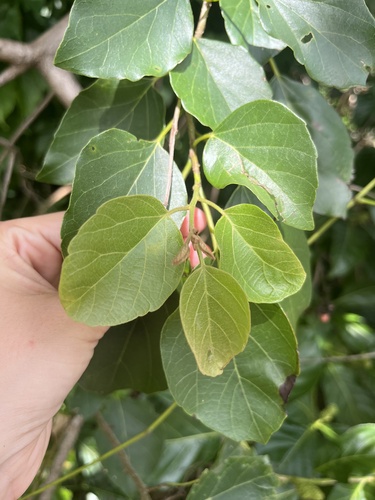
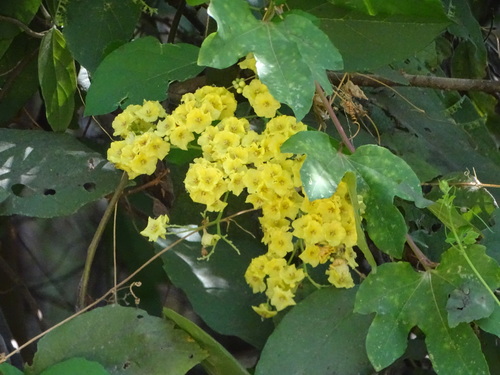
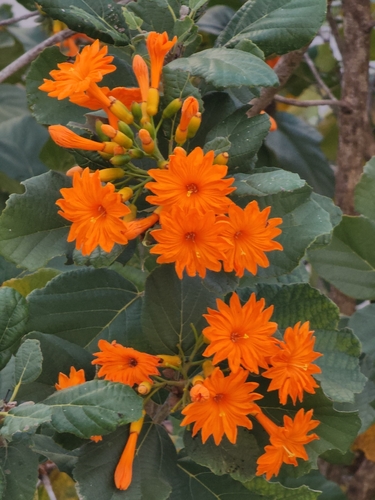
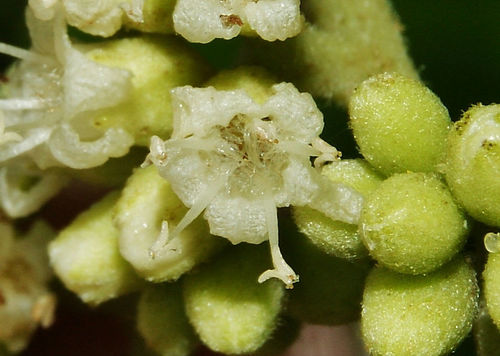
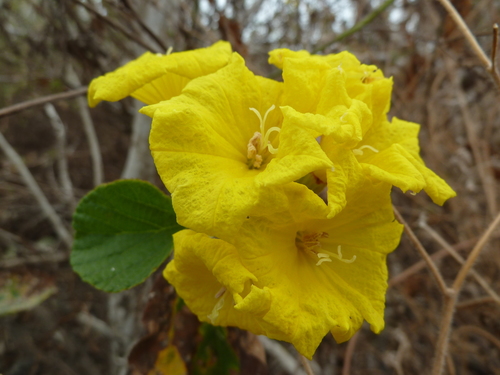
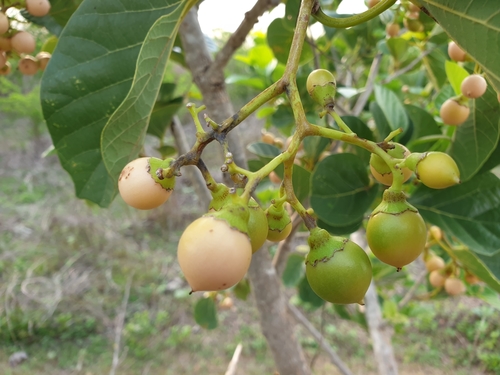
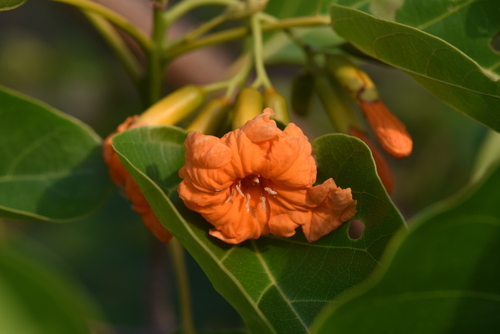
Cordia subcordata Lam. commonly reaches 7–10 m (23–33 ft) in height, and can grow as tall as 15 m (49 ft). It bears ovate leaves 8–20 cm (3.1–7.9 in) long and 5–13 cm (2.0–5.1 in) wide, covered in short hairs on their upper surface. This species has an extremely broad native range, extending from the east coast of Africa eastward across tropical Asia and Oceania all the way to Hawaii. Its wide distribution developed because fruit traits allowed it to successfully disperse across oceans. Before 2001, many experts considered C. subcordata to have been introduced to Hawaii by Polynesians, but subfossil evidence recovered from Makauwahi Cave on Kauai shows that this species was abundant in Hawaiian lowland forests long before humans arrived, confirming it is an indigenous species to Hawaii. C. subcordata grows along coasts from sea level up to 30 m (98 ft) in elevation, in areas that get 1,000–4,000 mm (39–157 in) of rainfall per year. It prefers neutral to alkaline soils with a pH between 6.1 and 7.4, including soils formed from basalt, limestone, clay, or sand. It can grow in a variety of soil textures: sand, sandy loam, loam, sandy clay loam, sandy clay, clay loam, and clay. It also grows on the margins of rocky shores and mangrove swamps. The edible seeds of C. subcordata have been used as food during times of famine. The tree’s wood has a specific gravity of 0.45; it is soft, durable, easy to work with, and resistant to termite damage. In ancient Hawaii, kou wood was used to make ʻumeke (bowls), general utensils, and ʻumeke lāʻau (large calabashes), because it did not leave an unpleasant taste in food. ʻUmeke lāʻau, which held 8–16 litres (2–4 gallons), were used to store and ferment poi. Because its wood burns easily, it is nicknamed the "kerosene tree" in Papua New Guinea. Its flowers were traditionally used to make lei, while leaves were used to produce a dye for kapa cloth and aho (fishing lines). Fijians harvest fibre for making baskets and garlands from the tree’s inner bark after soaking the bark in seawater. This species is used for carving in the western Solomon Islands, Vanuatu, Waya Island, and Tonga. On New Ireland, its wood is consistently used to build the ceremonial entrances of men’s houses.