About Coracina melanoptera (Rüppell, 1839)
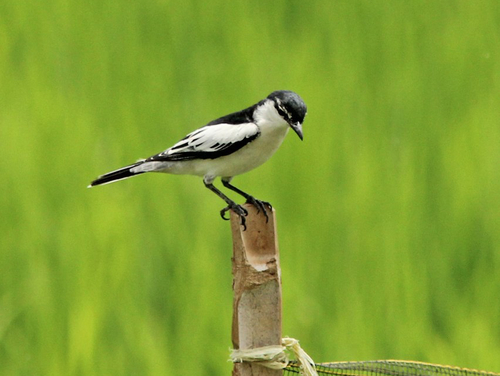
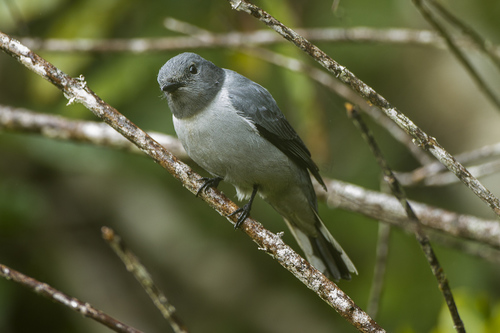
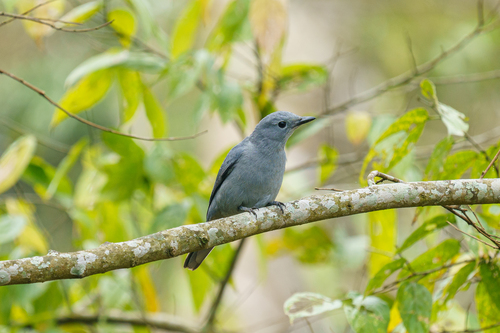
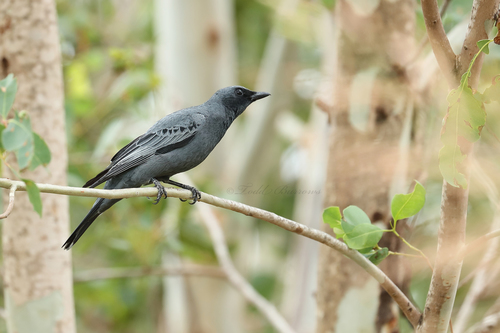
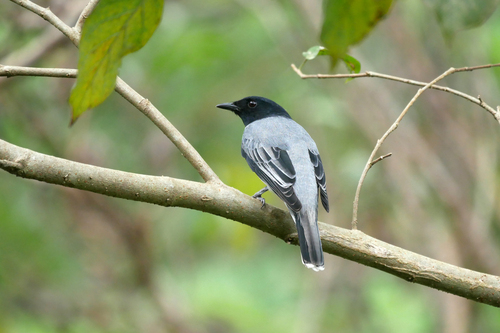
The Black-headed Cuckooshrike, with the scientific name Coracina melanoptera (Rüppell, 1839), is a slender 18–20 cm bird native to the Indian subcontinent, and it shows clear sexual dimorphism. Males have a dark slaty-grey hood, neck, and upper breast, which contrasts with their pale grey back and white belly. Their wings are blackish with grey edges, and their tail feathers have white tips. Females are duller in color, with brownish-grey upperparts, a whitish supercilium (eyebrow), heavily barred underparts, and a dark grey bill. This species is resident and partially migratory. It ranges across the Indian subcontinent, including India, Bangladesh, Sri Lanka, Nepal, and Bhutan, and extends into Myanmar. It lives in open dry-deciduous or semi-evergreen forests, secondary growth, bamboo patches, and is frequently found in urban gardens, orchards, and agricultural plantations, up to 2,100 meters in elevation, and it generally prefers lower altitudes. It is primarily distributed across India, from the Himalayan foothills in the north down to the Indian peninsula, including the states of Rajasthan, Gujarat, Maharashtra, and Kerala, with breeding populations present in Nepal and Sri Lanka. While most populations are resident, the species acts as a summer breeding visitor in the Himalayan foothills and North India, and individuals usually move to southern regions or lower altitudes during winter. It prefers open wooded habitats over thick, dense forests, and is common in scrub-jungle, wooded suburban areas, and mixed deciduous woodlands. The species' breeding season varies by location: it generally falls from April to May in South India and Sri Lanka, and from June to September in North India and Nepal. It builds a small, cup-shaped nest constructed from twigs, rootlets, and plant fibers, typically bound together with cobwebs. Nests are usually placed 2–8 meters high in the fork of a bare branch. Clutches contain 2–3 eggs, and both sexes take part in building the nest and share incubation duties.