About Coracina caesia (Lichtenstein, 1823)
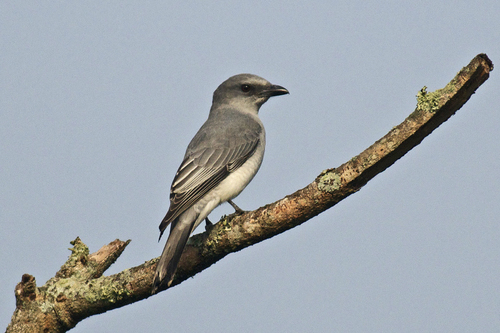
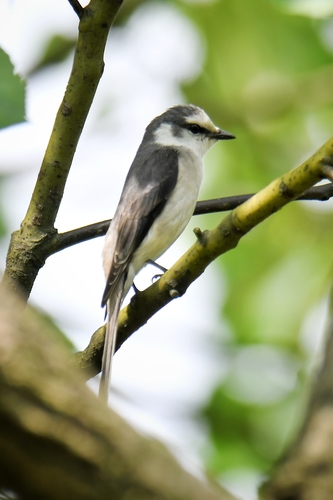
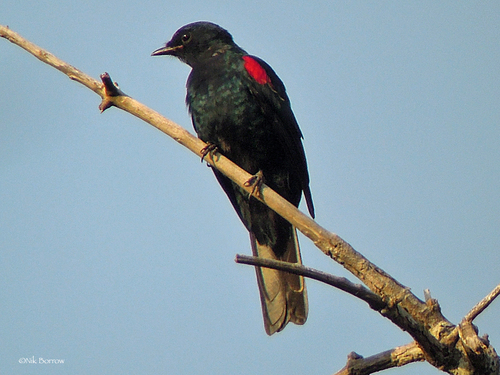
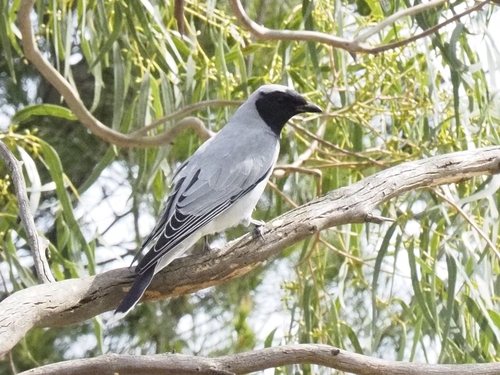
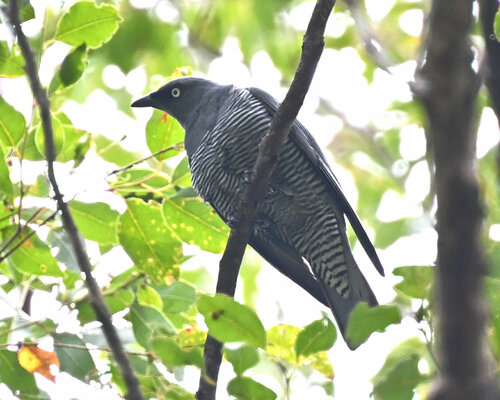
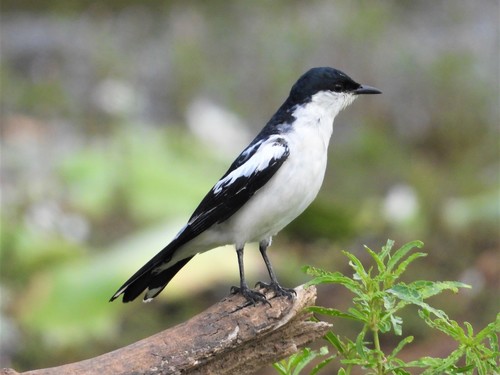
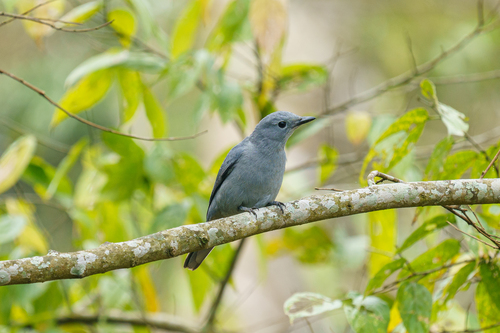
The grey cuckooshrike (Coracina caesia) is a medium-sized bird, with a body length of 25–27 cm (10–10.5 in) and a weight range of 53–68 g (1.9–2.4 oz). This species shows sexual dimorphism. Both males and females have a blue-grey head and body, large jet-black eyes surrounded by a thin white eye-ring, and black bills and legs. Males have a dark grey loreal patch, while females have grey loreal patches and a slightly lighter overall grey plumage. Juvenile grey cuckooshrikes are dark brown with grey-white barring on their upperparts, have white underparts marked with brown barring, and black tails with white edges on the tips; their flight feathers also have white edges.
The grey cuckooshrike's preferred habitats include Afromontane forests, lowland forests, coastal forests, and dense river-adjacent woodland. In winter, they have also been observed foraging in pine and wattle plantations, and in trees in small towns. In West Africa, they usually occur at elevations above 1,000 metres (3,300 ft); in Central and East Africa, they are typically found at 1,500–3,000 metres (4,900–9,800 ft), though they also frequent coastal areas below 900 metres (3,000 ft) in East Africa. In Zimbabwe and South Africa, they are found at 1,200 metres (3,900 ft) or lower.
Grey cuckooshrikes are largely resident, but do make post-breeding movements during the dry season. In Cameroon, movement to lower elevations after the breeding season has been recorded. In South Africa, the species moves from Northern highveld forests to lowveld forests, and is a frequent winter visitor to coastal areas of the Eastern and Western Cape.