About Copiapoa cinerea (Phil.) Britton & Rose
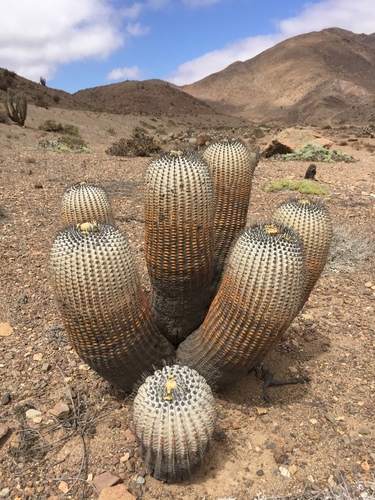
Copiapoa cinerea (Phil.) Britton & Rose is a globular, fleshy perennial cactus that grows into a columnar shape reaching up to 1 m (3.3 ft) tall and 20 cm (7.9 in) in diameter, with 30 ribs. A defining characteristic of this species is its white waxy cuticle, which gives wild plants a distinct white-grey color that inspired its specific epithet. This pale coloration protects the cactus from desiccation; cultivated specimens often have greenish epidermis instead. Its thorns vary in color across populations, but are typically black or dark brown in this species. Only mature, older plants produce offsets from the base. Yellow flowers grow at the top of the plant, reaching 2.5 cm (0.98 in) in diameter. The fruit develops and ripens hidden within wool at the top of the cactus, and is only visible once ripening is complete. This species is native to the Antofagasta region and coastal areas of northern Chile. Its native range is extremely arid, but receives frequent dense fog generated by cold Pacific Ocean currents; this fog occurs most often in early morning or late afternoon, at elevations between 500 and 850 m (1,640 and 2,790 ft). The species is currently classified as Least Concern (LC) on the IUCN Red List of Threatened Species. Copiapoa cinerea is slow growing and difficult to cultivate, due to high risk of rotting. Grafting is a common solution to this issue, and the species rarely flowers when grown in cultivation. To thrive, it requires well-drained soil and a sunny location, with protection from overly intense summer sun. During summer, it needs light, regular watering, with the soil drying out fully between waterings. During winter, it must be kept warm at a minimum temperature of 8 °C, and kept completely dry.