About Copernicia prunifera (Mill.) H.E.Moore
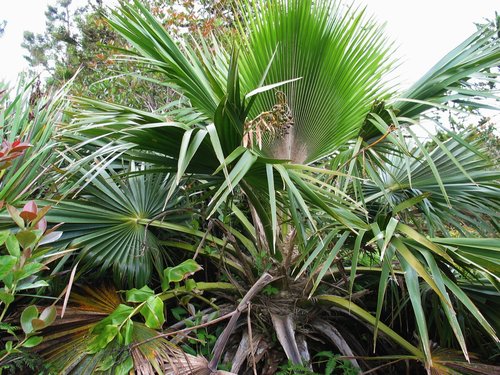
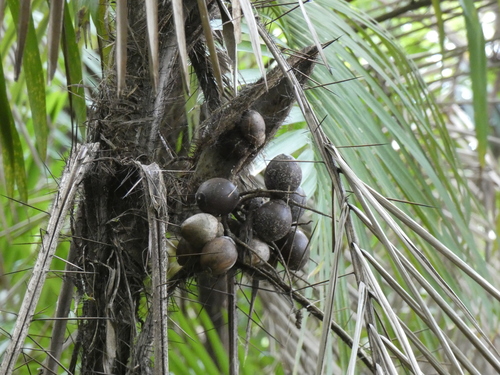
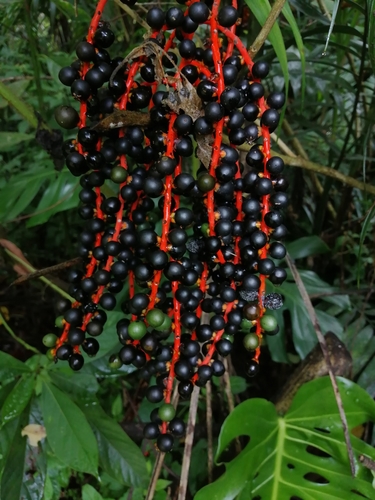
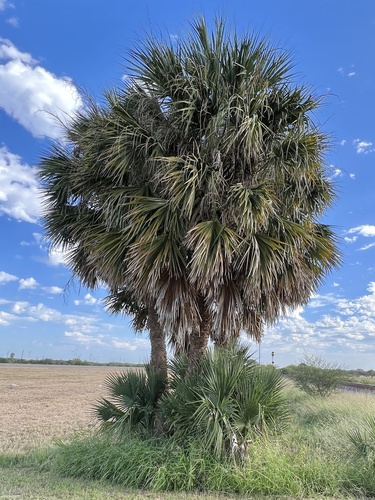
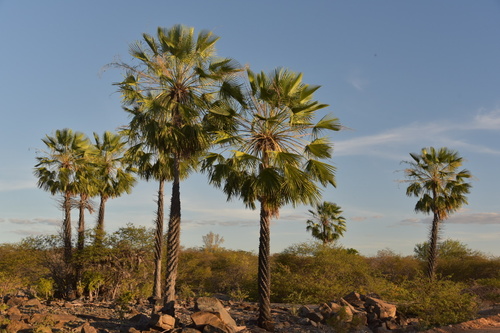
Copernicia prunifera, also known as carnauba palm, can reach up to 20 meters in height, with a trunk that averages 25 cm in diameter. It grows a circular crown, and produces 1.5-meter-long fan-shaped leaves. It bears bisexual flowers, followed by small, round black fruits measuring 2.5 cm across. This palm can live up to 200 years. While it tolerates drought very well, it has a high water requirement for active growth. It grows best in soils with a slightly saline composition. Carnauba palms are social plants that grow in groups called carnaubais, located in flood zones or near rivers. Taxonomically, this species belongs to the subfamily Coryphoideae, tribe Corypheae, and subtribe Livistoninae. This palm is the source of carnauba wax, which is harvested from the waxy natural coating on the surface of its leaves. Its fruits and pith are edible, its leaves have a variety of uses, and its wood is used as a construction material. The plant's fruits can be used as feed for cattle, donkeys, goats, and pigs, or processed into jelly for human consumption. The fruit pulp is extracted and dried to make carnauba flour, which is widely consumed by local native people. Edible cooking oil can also be extracted from the plant's edible seeds. Roasted fruits can be ground and brewed to make a drink that is used as a coffee substitute.