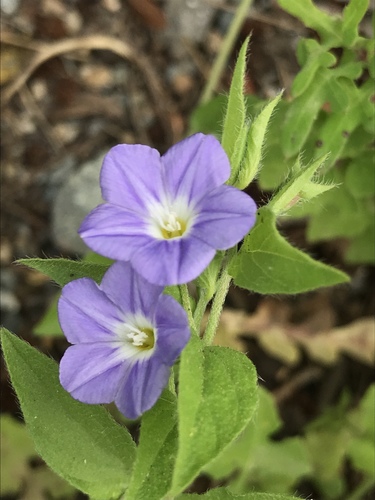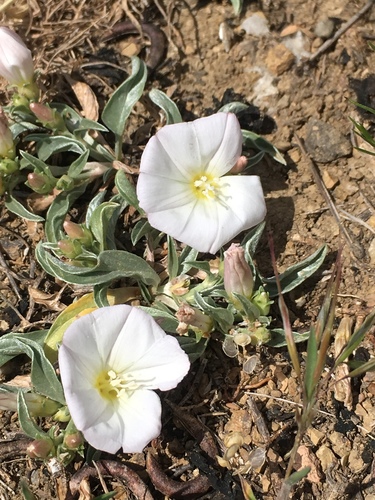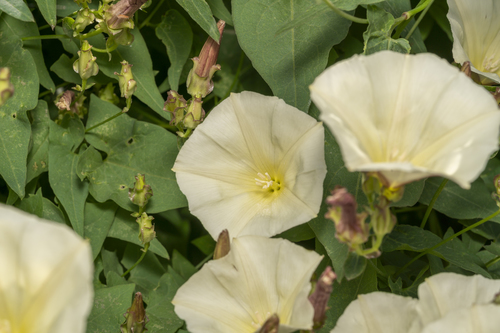
About Convolvulus scammonia L.
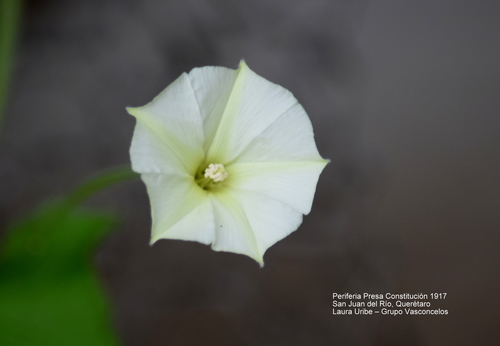
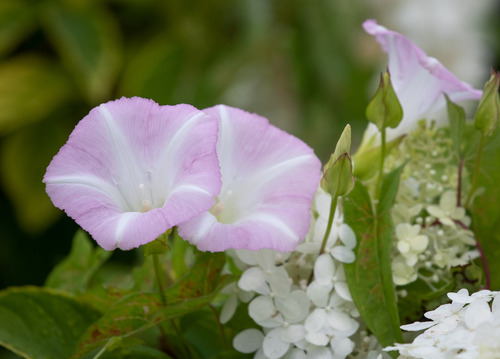
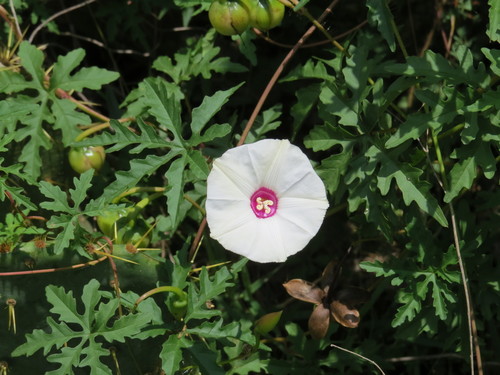
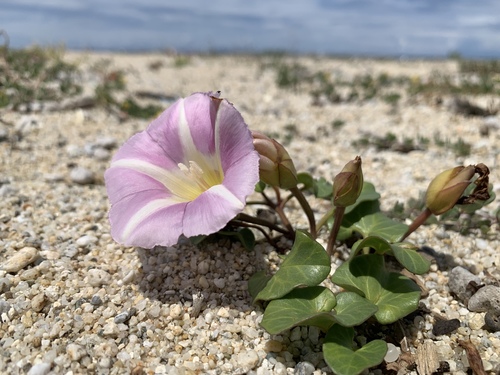
Convolvulus scammonia, commonly called scammony, is a bindweed native to eastern Mediterranean basin countries. It grows in bushy waste areas, with a range stretching from Syria in the south to Crimea in the north, and extending west to the Greek islands; it does not occur in northern Africa or Italy. It is a twining perennial plant. Its flowers are similar to those of Convolvulus arvensis, it has irregularly arrow-shaped leaves, and a thick, fleshy root. A cathartic resinous tincture called scammoniae resina is obtained from the plant's dried root via digestion with ethanol, and this tincture has been used in traditional medicine. When consumed, the resin is inactive until it moves from the stomach into the duodenum, where it contacts bile. A chemical reaction occurs between the resin and the taurocholate and glycocholate in bile, which converts it into a powerful purgative. In high doses, this substance becomes a violent gastrointestinal irritant. Scammony kills both roundworms and tapeworms, and is especially effective against roundworms, so it was used as an anthelmintic. The plant's principal bioactive component is the lipid glycoside scammonin, which is also known as jalapin, with the molecular formula C34H56O16.