About Conus victoriae Reeve, 1843
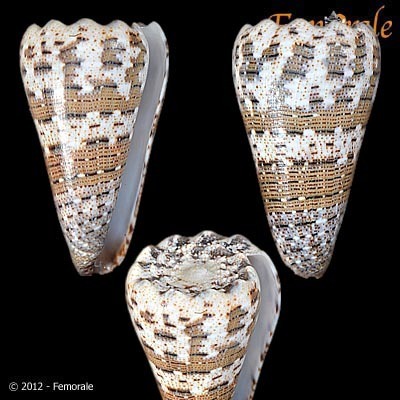
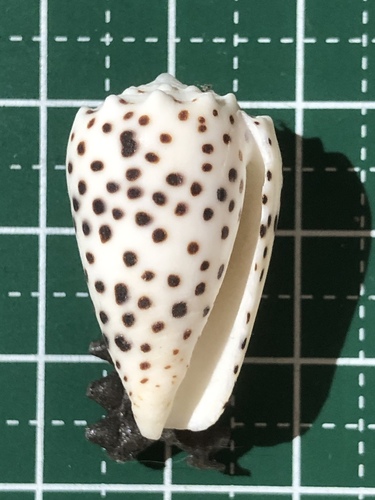
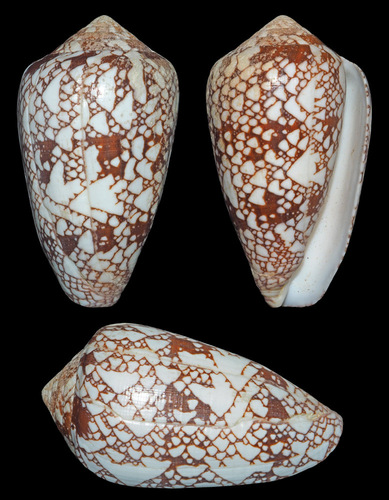
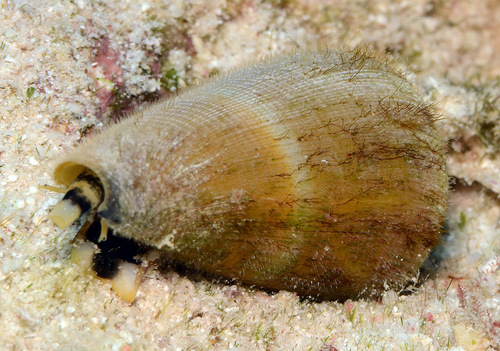
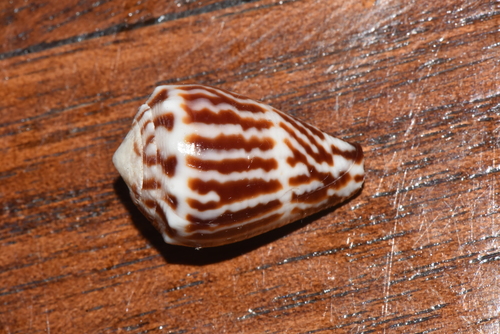
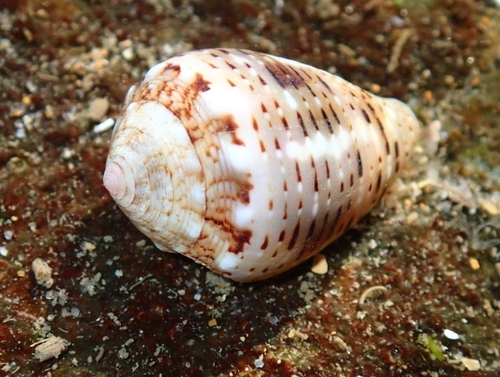
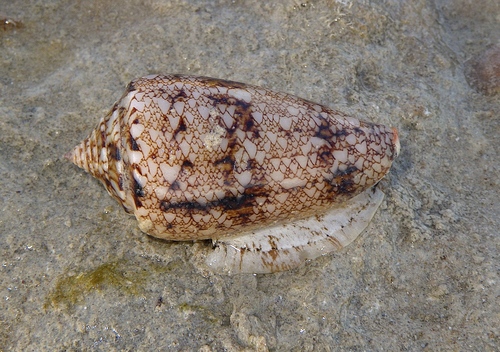
The shell of Conus victoriae Reeve, 1843 ranges in size between 35 and 94 mm (1.4 and 3.7 inches). This species is a mollusc-eating (molluscivore) cone snail, and is possibly related to Conus textile. It can be distinguished from Conus textile by its reticulations: the reticulations of Conus victoriae are mostly smaller and pale-colored, and contrast strongly with bands of very dark chocolate-colored longitudinal stripes. These reticulations are also more or less covered with violaceous clouds. One component of this species' venom, alpha conotoxin Vc1.1 (also called ACV1), has been shown to be a potent analgesic in animal pain tests, and is a potential replacement for morphine for the treatment of neuropathic pain. The biology of this cone snail species has been extensively studied, with research focusing particularly on the embryonic development of its venom apparatus, the expression of the venom gland proteome, and the role of the venom bulb in delivering venom components to the radulae. This marine species is endemic to Australia, where its range extends from Broome, Western Australia north to the mouth of the Victoria River in the Northern Territory, the location where Reeve first discovered the species in 1843.