About Conus textile Linnaeus, 1758
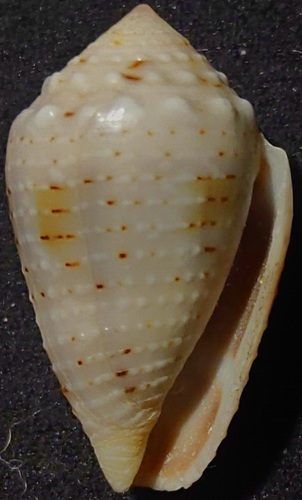
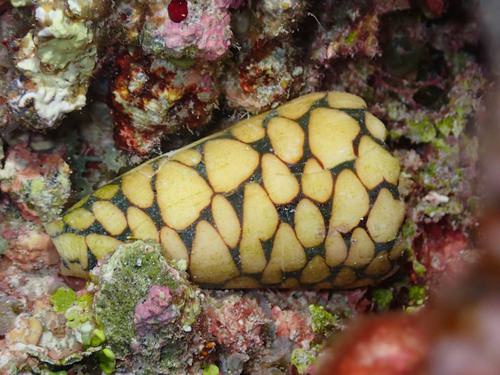
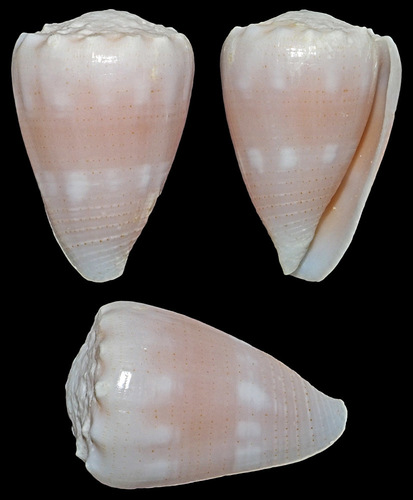
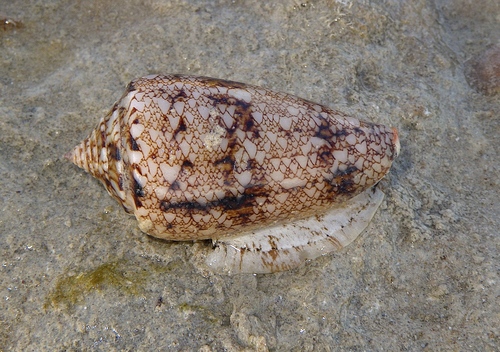
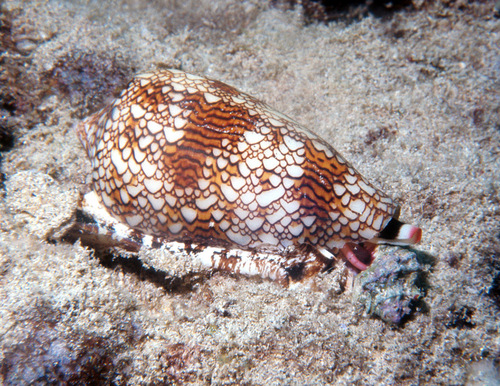
Adults of this species typically reach a shell length of 9 cm to 10 cm (3.5 in to 3.9 in), with a maximum recorded shell length of 15 cm (5.9 in). The shell has a yellowish brown base color, covered in undulating longitudinal brown lines interrupted by irregularly placed triangular white spaces. These white spaces are crowded together at the shell's shoulder, base, and middle, forming distinct bands. The spire shares this same patterning, and the aperture of the shell is white. Conus textile Linnaeus, 1758 is distributed across the Red Sea, the tropical Indo-Pacific, the Indian Ocean from eastern Africa to Hawaii, New Zealand, French Polynesia, and the Australian states and territories of New South Wales, Northern Territory, Queensland, and Western Australia. In Australia, this species is most common in northern Queensland, but sightings have become increasingly frequent further south in New South Wales, a shift linked to warmer ocean temperatures from climate change. This species can be found in estuaries, on rocky shores, and in rockpools. During the day, it is usually buried in sand, and it emerges at night to feed. Females lay several hundred eggs at once, which hatch after roughly 16 to 17 days. After hatching, larvae drift in ocean currents for approximately 16 days, then settle on the ocean floor. At the time of settlement, larvae measure around 1.5 mm (0.06 in) in length.