About Contopus lugubris Lawrence, 1865
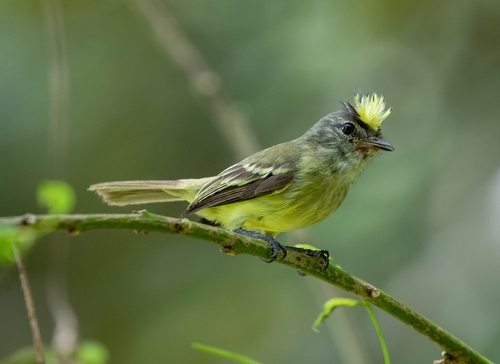
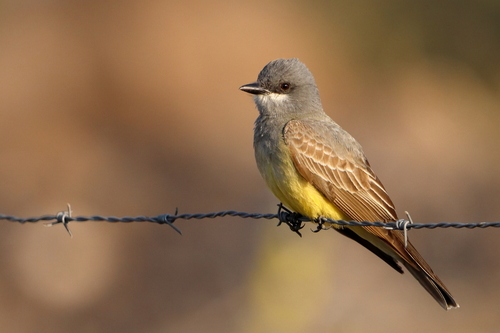
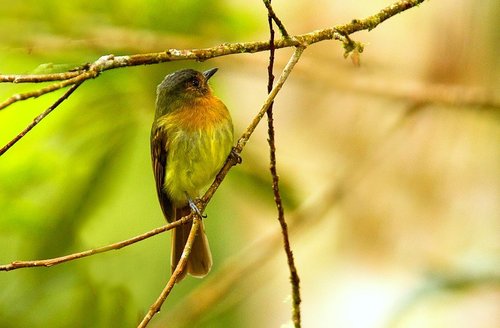
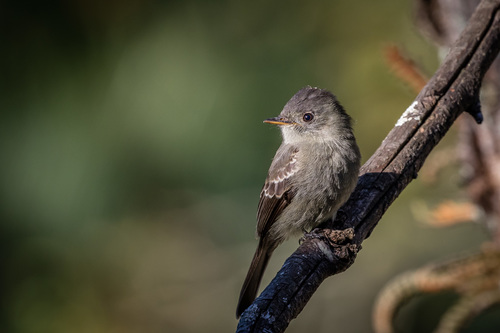
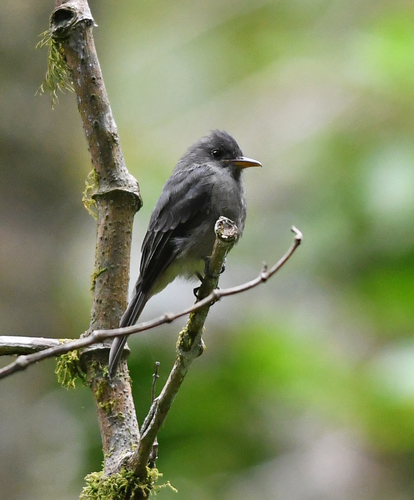
The dark pewee (Contopus lugubris, scientific name Contopus lugubris Lawrence, 1865) is a small passerine bird belonging to the tyrant flycatcher family. It is endemic to the Talamancan montane forests of Costa Rica and western Panama. This large, dark pewee occurs at altitudes between 1250 m and 2150 m in wet mountain forests, especially at forest edges and clearings, as well as in adjacent semi-open areas with tall trees. Its nest is a broad, thick-walled saucer shape built from mosses and lichens, lined with plant fibres. The nest is positioned 5–18 m high, placed across a tree branch. Eggs of this species have not been formally described, but we know the female builds the nest, lays exactly two eggs, and incubates the eggs for 15–16 days until hatching. The adult dark pewee measures 26.5 cm in length and weighs 23 g. Its upperparts are sooty-grey, and are darkest on the bird's prominently crested crown. The wings and tail are blackish; the wings have grey feather edges and a faint weak wing bar. The throat is pale grey, most of the remaining underparts are a paler olive-grey than the back, and the lower belly is yellowish. Males and females have similar plumage. Young dark pewees are browner on their upperparts and have rufous fringes on their wing feathers. When not breeding, dark pewees are solitary. They perch on high watchpoints, from which they sally out to catch flying insects, then return to the same exposed perch. This is a conspicuous species. It has an incessant loud whip call, and a repetitive fred-reek-fear song. It will aggressively defend its nest against larger species, including the emerald toucanet.