About Conradina grandiflora Small
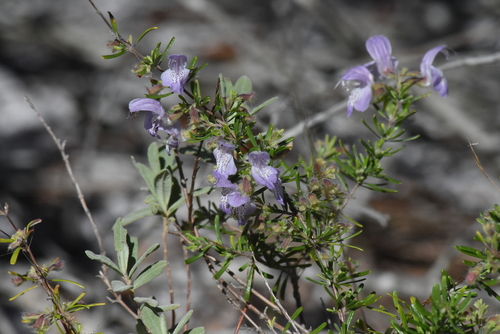
Conradina grandiflora Small is a species of flowering plant in the mint family, with common names largeflower false rosemary and large-flowered rosemary. This species is endemic to Florida, United States, where it occurs exclusively on the Atlantic Coastal Ridge. Its native range spans across Brevard, Broward, Dade, Highlands, Indian River, Martin, Osceola, Palm Beach, Polk, St. Lucie, and Volusia Counties in Florida. This aromatic shrub reaches a maximum height of around 1.5 meters, though some individuals can grow as tall as 2 meters. Its branches terminate in twigs covered in pale hairs. The leaves are hairy, glandular, needle-like, and grow up to 1.5 centimeters long. Each flower has a hairy calyx of pointed sepals with a maroon tinge. The flower corolla is approximately 2 centimeters long, with a funnel-shaped throat and a hairy, lipped mouth. It is lavender in color, marked with darker lavender spots. This species produces the largest flowers of any member of the genus Conradina, and it can flower year-round. Conradina grandiflora grows on dunes and other landforms with deep, sandy soils, most often near the coast. Its typical habitat is Florida scrub, and it is common in remaining intact remnants of this scrub habitat. It is well-adapted to a regime of frequent fires. It cannot tolerate shade, and requires periodic fire to maintain an open, sunny habitat. It is commonly associated with sand pine (Pinus clausa), Lyonia, Ilex, Ceratiola, Polygonella, Opuntia, and various species of scrub oak. There are approximately 64 known occurrences of this plant. The main threat to the species is loss of Florida scrub habitat, which is being cleared for housing development, commercial development, and the establishment of citrus groves. It holds a threatened status in the state of Florida, but is not federally listed as threatened or endangered.