About Conotrachelus posticatus Bohem., 1837
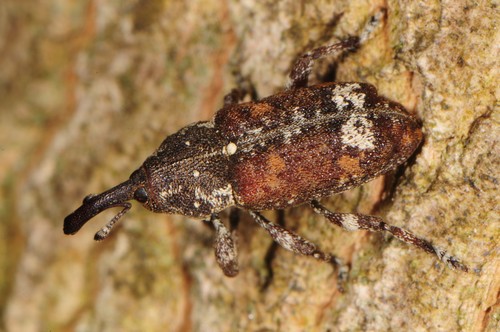
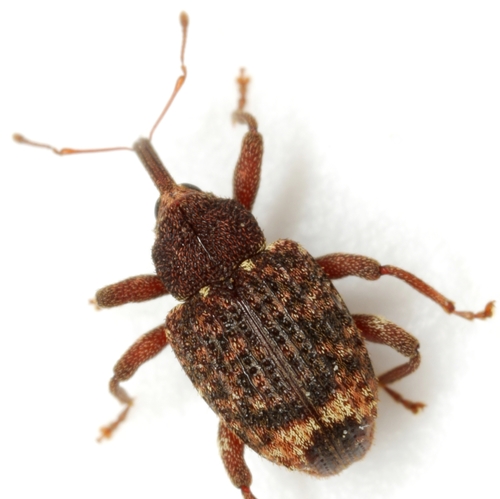
Conotrachelus posticatus is widespread across North America, ranging from Minnesota to Texas, and can be found as far south as Panama. Its head is described as densely punctate. The species has an elongated snout that resembles an elephant's trunk, which bears a chewing mouthpart at its tip for processing food. Body coloration of C. posticatus ranges from brown to black; adults are specifically described as dark reddish-brown. Both larval and adult C. posticatus feed on acorns, and acorns also serve as nursery habitat for the species' larvae. Females lay their eggs inside oak seeds, and larvae feed within the seed tissue. C. posticatus breeds in the acorns of nine different oak species, and females often deposit their eggs in already damaged acorns. The larval stage lasts between 10 and 30 days. As adults, this weevil spends its second winter under leaf litter on the ground. Before winter, after chewing into an acorn seed, the insect hides under the soil to escape predators. C. posticatus is closely related to C. naso, sharing similarities in both geographic range and egg-laying behavior. The association between C. posticatus and acorns can damage oak trees, so predators of the weevil reduce this threat to oaks. C. posticatus produces sound via a stridulatory mechanism: it scrapes elytral stridulitrum against plectra to generate sound frequencies. There are clear differences between the stridulations of C. posticatus and other species in its genus. Individual C. posticatus can produce stridulations at a range of different speeds and frequencies. Agitation or rough handling will trigger sound production in this beetle.