About Conolophus subcristatus (Gray, 1831)
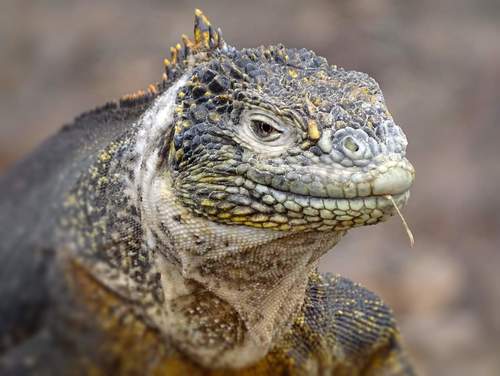
Charles Darwin, who observed Galápagos land iguana (Conolophus subcristatus), described the species as ugly animals yellowish-orange on the underside and brownish-red above, with a singularly stupid appearance from their low facial angle. This species is one of the largest lizards in the world, growing 0.9 to 1.5 m (3–5 ft) long and reaching a maximum body weight of 13 kg (29 lb), with size varying by the island a individual comes from. As cold-blooded animals, Galápagos land iguanas raise their body temperature by basking on volcanic rock and other dark-colored stones that naturally absorb solar heat. At night, they sleep in burrows to conserve the body heat they have absorbed. These iguanas share a symbiotic relationship with birds: the birds remove parasites like ticks from the iguanas, giving the iguanas relief while providing the birds with food. Galápagos land iguanas reach sexual maturity between eight and fifteen years of age, with the age of maturity varying by island. Mating season also differs between islands. Shortly after mating, females migrate to sandy areas to nest, laying between 2 and 20 eggs in a burrow approximately 50 cm (20 in) deep. The eggs hatch between 90 and 125 days after laying. On South Plaza Island, the territories of marine iguanas and Galápagos land iguanas overlap, and the two species sometimes interbreed to produce hybrid iguanas that show a mix of features from both parent species. Most interbreeding occurs between male marine iguanas and female land iguanas. In spite of the long separation between the two lineages, and that these are distinct species belonging to different genera, hybrid offspring are viable, though they are most likely sterile.