About Conocybe rugosa (Peck) Watling
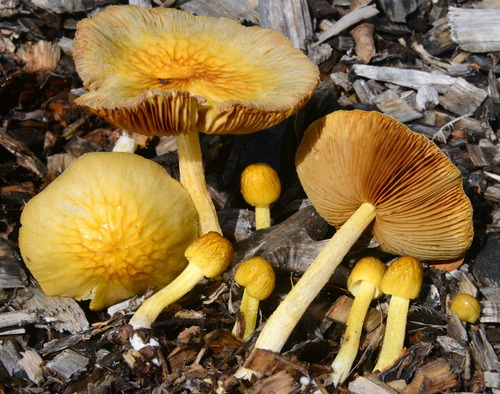
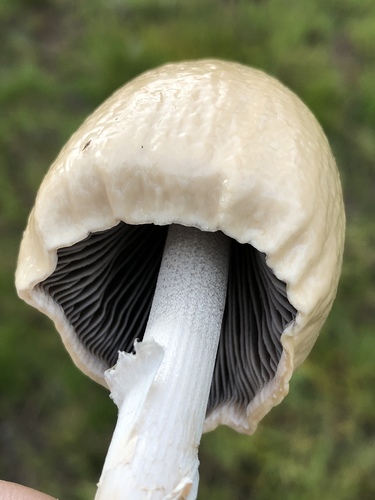
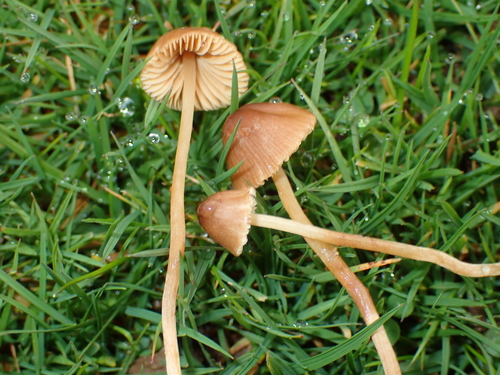
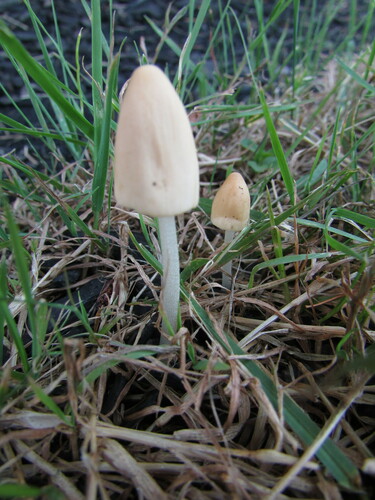
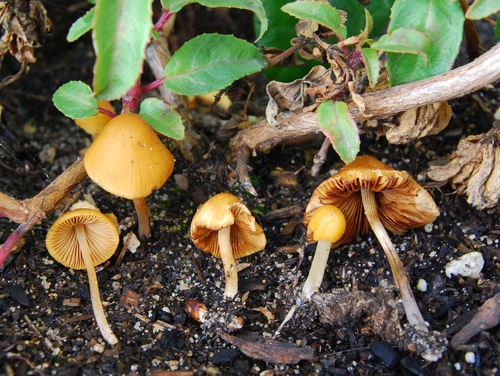
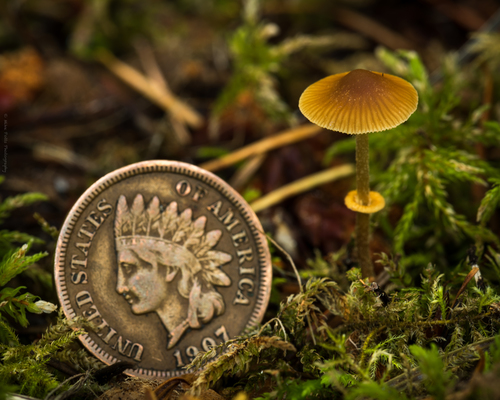
Conocybe rugosa has a conical cap that expands into a flat shape, and usually has an umbo. The cap is less than 3 cm across, with a smooth brown surface, and its margin is often striate. Its gills are rusty brown, closely spaced, and adnexed. The stalk is 2 mm thick, 1 to 6 cm long, smooth, and brown, with a prominent, movable ring. The spores of this species are rusty brown, and identification of the species is often difficult without a microscope. This species grows in woodchips, flowerbeds, and compost piles. It has been recorded in Europe, Asia, and North America, and is especially common in the Pacific Northwest. This species is deadly poisonous. Its fruiting bodies contain alpha-amanitin, a cyclic peptide that is highly toxic to the liver, and this toxin is responsible for many deaths from mushroom poisoning involving species in the genera Amanita and Lepiota. Conocybe rugosa is sometimes mistaken for species of the genus Psilocybe.