About Condylura cristata (Linnaeus, 1758)
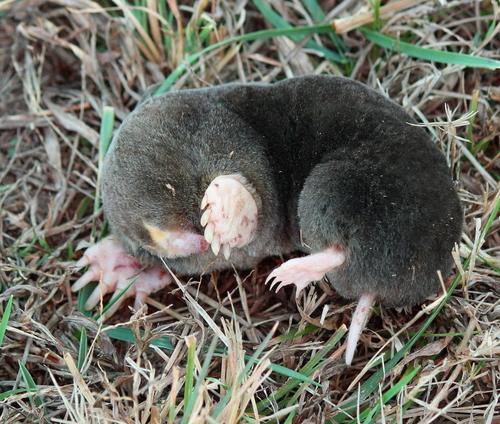
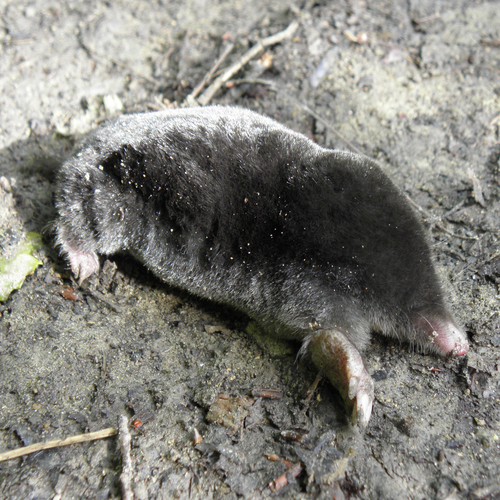
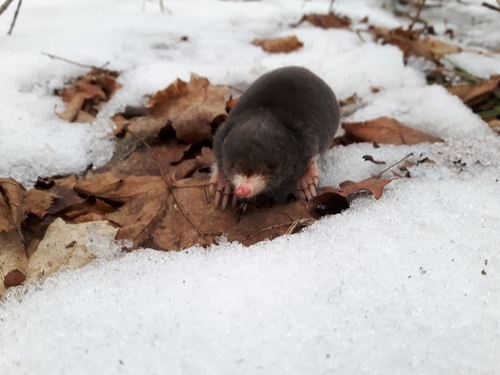
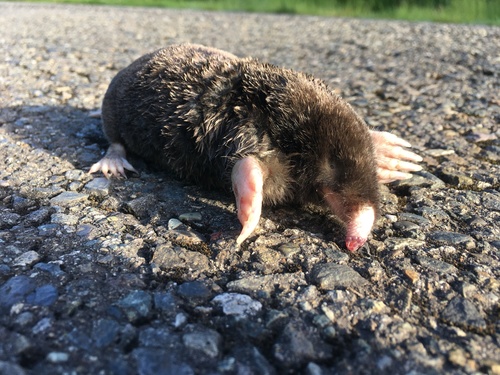
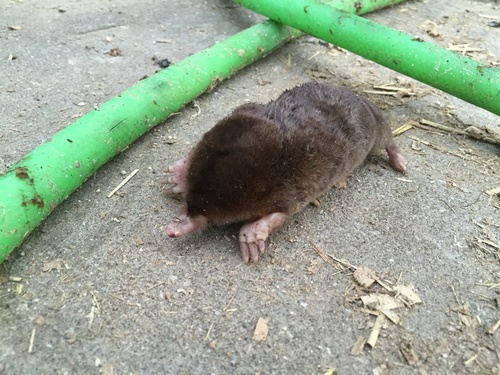
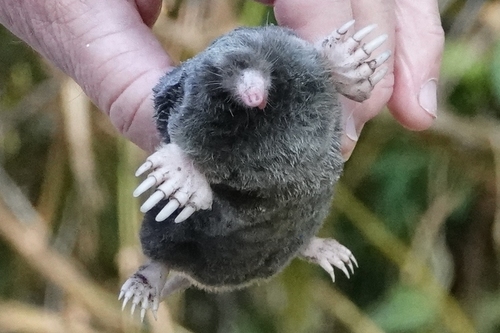
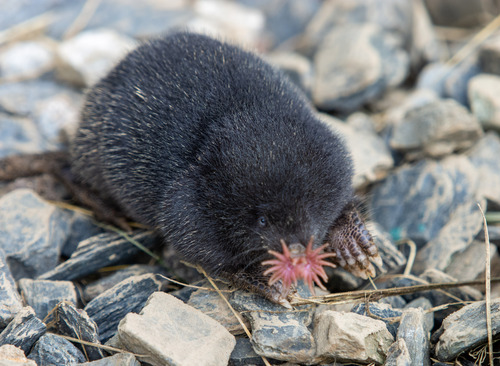
The star-nosed mole (Condylura cristata) is a small semiaquatic mole that lives in moist, low elevation areas of northeastern North America. It is the only living member of the tribe Condylurini and the genus Condylura. This hamster-sized mole has over 25,000 tiny sensory receptors in specialized touch organs called Eimer's organs, which it uses to navigate its surroundings. It is possible that these organs allow it to detect seismic wave vibrations. The star-nosed mole's nose is roughly 1.5 cm (0.59 in) in diameter, with Eimer's organs spread across 22 appendages on the snout. Eimer's organs were first documented in the European mole in 1872 by German zoologist Theodor Eimer. While other mole species also have Eimer's organs, theirs are not as specialized or numerous as those of the star-nosed mole. Because the star-nosed mole is functionally blind, scientists long suspected its distinctive snout evolved to detect electrical activity from prey animals. To date, there is little to no empirical evidence to support this hypothesis. This species' nasal star and teeth appear to be primarily adapted to hunt and eat extremely small prey. A study published in the journal Nature named the star-nosed mole the fastest-eating mammal. It can identify and consume an individual food item in as little as 120 milliseconds, with an average time of 227 milliseconds. Its brain can determine if prey is edible in approximately eight milliseconds, a speed that reaches the known limit of neuron processing speed. Star-nosed moles can also smell underwater. They do this by exhaling air bubbles onto objects or scent trails, then inhaling the bubbles to pull scents back into the nose. Star-nosed moles primarily live in wet lowland habitats. Their diet consists of small invertebrates, including aquatic insects such as caddisfly, midge, dragonfly, damselfly, crane fly, horsefly, predaceous diving beetle, and stonefly larvae, alongside terrestrial insects, worms including earthworms, leeches, and other annelids, mollusks, aquatic crustaceans, small amphibians, and small fish. While they prefer wet, poorly drained areas and marshes, star-nosed moles have occasionally been found in dry meadows far from water, and have been recorded at elevations as high as 1,676 m (5,499 ft) in the Great Smoky Mountains. The star-nosed mole is a strong swimmer and can forage along the bottoms of streams and ponds. Like other moles, it digs shallow surface foraging tunnels, which often open out underwater. It is active both day and night, and stays active through the winter; individuals have been observed tunneling through snow and swimming in ice-covered streams. Compared to other talpid moles, the star-nosed mole is particularly skilled at thermoregulation, and can maintain a high body temperature across a wide range of external conditions. This ability lets it thrive in cold aquatic environments. Little is currently known about this species' social behavior, but researchers suspect it is colonial. Mating occurs in late winter or early spring. Females produce one litter of typically four to five young in late spring or early summer, but can produce a second litter if the first is not successful. At birth, each offspring is around 5 cm (2 in) long, hairless, and weighs roughly 1.5 g (0.053 oz). All of their sensory structures including eyes, ears, and the nasal star are sealed at birth; these structures open and become functional around 14 days after birth. Offspring become independent after about 30 days, and reach full maturity at 10 months. Known predators of the star-nosed mole include red-tailed hawks, great horned owls, barn owls, screech owls, foxes, weasels, minks, various skunks and other mustelids, large fish such as northern pike, and domestic cats.