About Condylactis aurantiaca (Delle Chiaje, 1825)
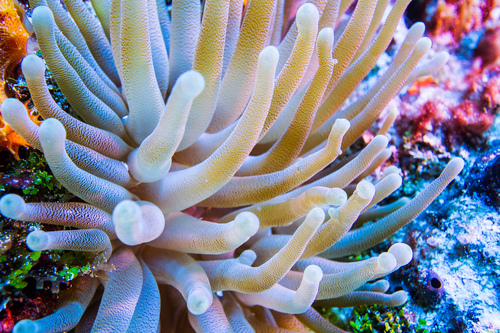
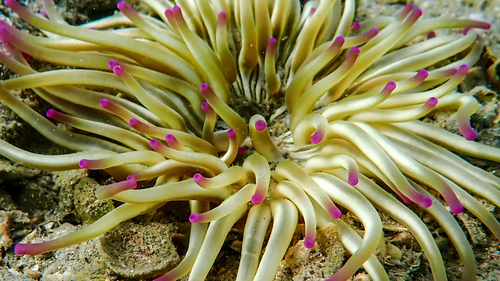
This species, Condylactis aurantiaca, has a translucent white column marked with white spots, growing to about 7 centimetres (2.8 in) in diameter. Its oral disc can reach 12 centimetres (4.7 in) across, and the total full diameter when its tentacles are spread out is approximately 30 centimetres (12 in). Fully developed individuals usually have five whorls of tentacles, for a total of 96 tentacles. Each tentacle is around 8 centimetres (3 in) long, and ranges in colour from green to yellow, sometimes with a greyish tint. Tentacles often feature bands of white and other colours, and have purple tips. The mouth, located at the centre of the oral disc, is purplish. Condylactis aurantiaca is found exclusively in the Mediterranean Sea, at depths of up to 80 metres. It attaches its base to a rock, stone, or shell, and keeps its column immersed in sediment, most commonly sand or gravel. Like other sea anemones, this species uses its tentacles, which are covered in numerous stinging cells called cnidocytes, to catch and kill prey. After capturing prey, the tentacles move the food to the anemone's mouth. This sea anemone reproduces during spring and summer. It can release gametes into the water, where fertilization occurs and the gametes develop into planula larvae. Alternately, it can retain gametes inside its body cavity, brooding the larvae there until the following spring. The shrimp species Periclimenes aegylios may live in symbiosis with this sea anemone.