About Condica capensis (Guenée, 1852)
Scientific name: Condica capensis (Guenée, 1852)
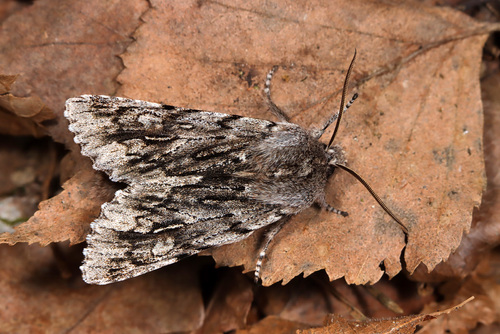
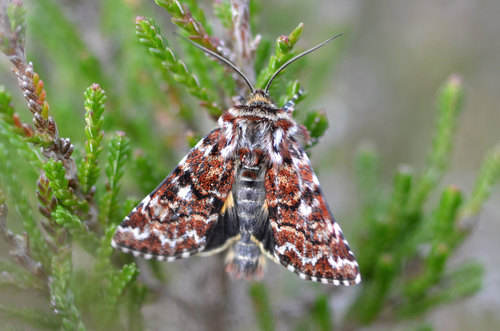
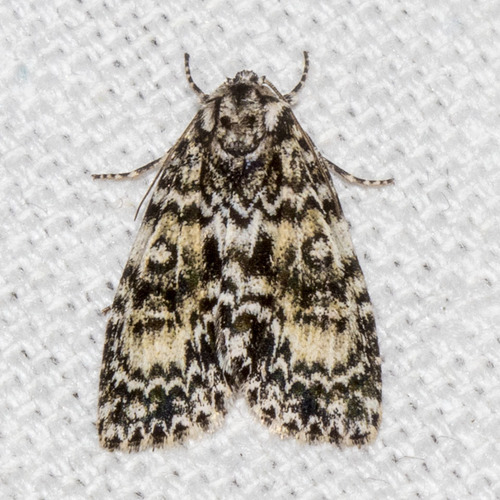
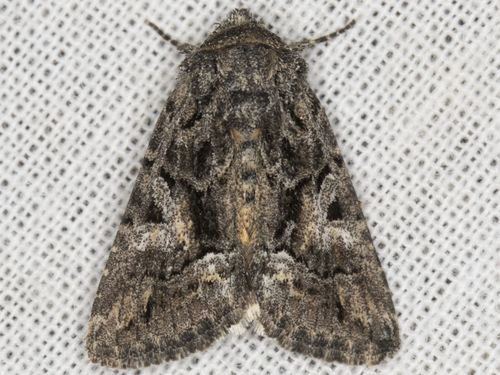
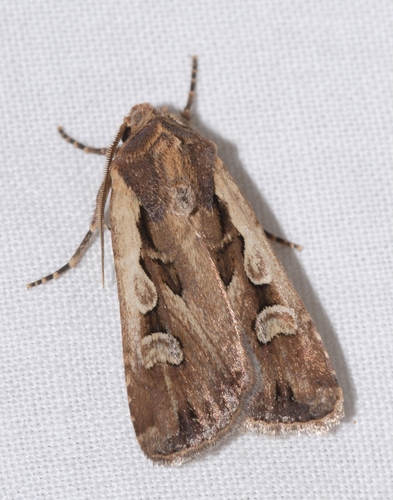
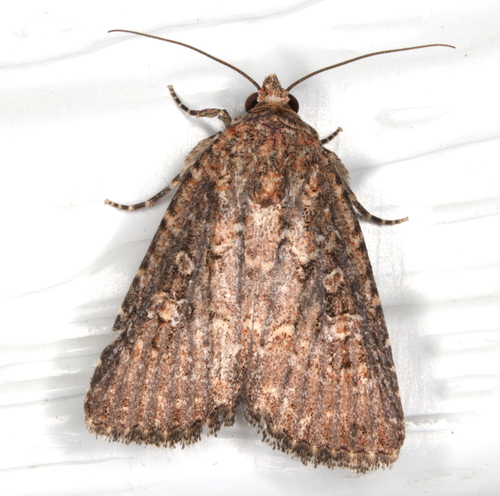
Forewing: The base color is rufous, overlaid with fuscous. It is dusted with grey along the costa, below and beyond the lower angle of the cell, and along the termen. All veins are dark. The inner and outer lines are conversely lunulate-dentate; the teeth of the lines are marked by black and white points, and the lunules are yellow. The subterminal line is whitish and dentate, preceded by small tooth-shaped black spots. The claviform stigma is small and outlined in black. The orbicular stigma is small, constricted at the middle, with a brown center and a pale ring. The reniform stigma has a yellowish center in its upper half and a white center in its lower half; this lower lobe is surrounded by small white dots outlined in black.
Hindwing: The base color is dull white, with the veins and termen suffused with brown. In females, the entire hindwing is brown. Larva: The body is smooth and pale green, with the anal segment humped. It has a series of purplish brown dorsal and lateral blotches dappled with white, and a sublateral series of white dots. Pupa: The body is greenish, with reddish segmental incisions. The wingspan of the adult moth ranges from 28 to 36 mm.