About Concholepas concholepas (Bruguière, 1789)
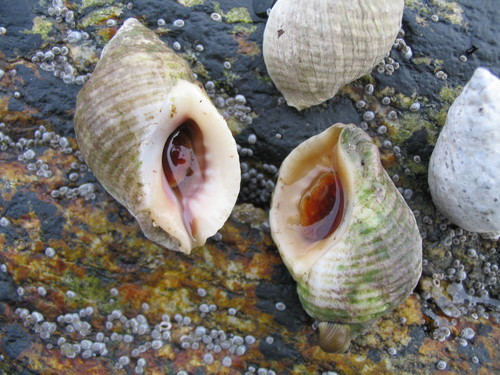
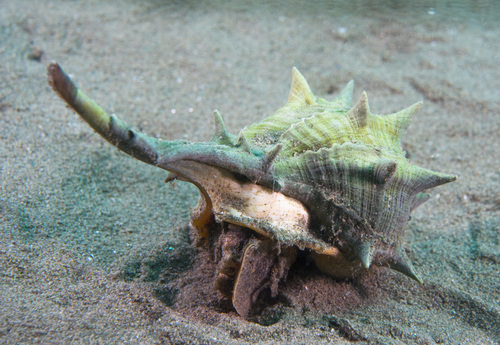
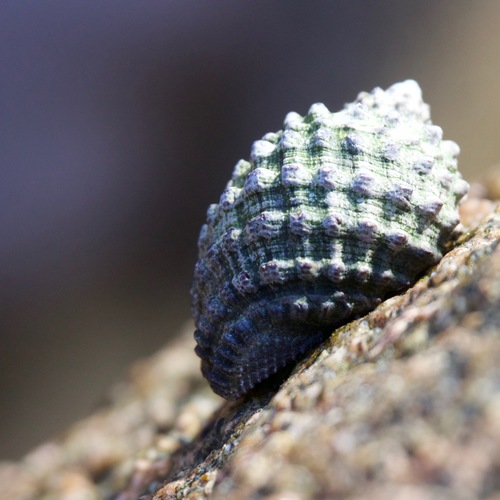
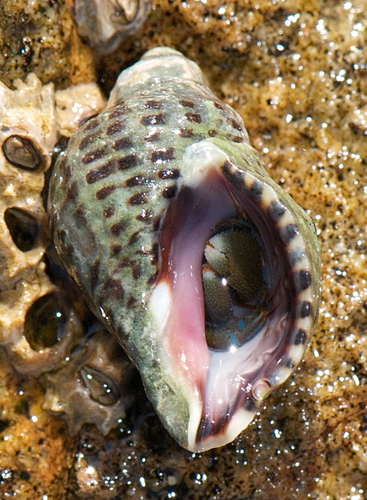
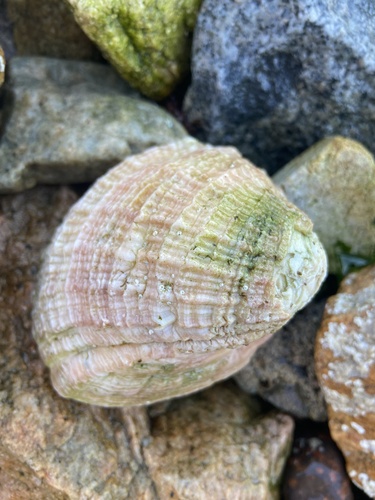
Concholepas concholepas, first described by Bruguière in 1789, has a thick, slightly oval shell that ranges in color from white-brown to purple-grey. It has very few whorls, giving it an overall shape resembling a Phrygian cap. The outer surface of the shell bears strong lamellose ribs that are both radial and circular-concentric. Its overall shape is similar to that of an abalone, and it has a much larger aperture than other muricids. When turned upside down, this species, commonly called loco, cannot hide completely inside its shell, so it no longer has a functional need for an operculum. Instead, it uses its strong muscular foot to remain attached to surfaces. The shell is composed of calcite, with an inner layer made of aragonite. In Chile, the empty shells of this species are used as ashtrays. Concholepas concholepas is a benthic predatory species that lives on rocky substrates in temperate waters, ranging from sea level down to 40 meters in depth. It feeds primarily on mytilids, including Semimytilus algosus and Perumytilus purpuratus, and barnacles such as Chthamalus scabrosus. Geographically, its distribution extends from Lobos de Afuera in Peru to Cape Horn in Chile, and it is also found around the Juan Fernández Islands. For human use, Concholepas concholepas is a traditional ingredient in Chilean cuisine, and it is commercially sold worldwide as a delicacy. It is often misleadingly marketed under the name "Chilean abalone"; true abalones are herbivorous gastropods, while Concholepas concholepas is a carnivorous muricid. Due to its high economic value and its ecological role as a top predator, it is the most extensively studied marine invertebrate species in Chile. The hemocyanin found in Concholepas concholepas blood has demonstrated immunotherapeutic effects against bladder and prostate cancer in preliminary research. In a 2006 study, mice were primed with Concholepas concholepas material before MBT-2 bladder tumor cells were implanted. Treated mice showed a significant antitumor response, including prolonged survival, reduced tumor growth, lower tumor incidence, and no observed toxic effects. The shells of Concholepas concholepas have been identified as a potential climate proxy for climate change research. Large accumulations of this species’ fossil shells exist in Pleistocene coastal terraces. Reliable climate indicators are particularly scarce for ancient cold seas, so research on Concholepas concholepas shells could provide valuable data for reconstructing the long-term evolution of cold sea surface temperatures, and may also help reconstruct the historical record of the El Niño Southern Oscillation (ENSO). In 2023, Concholepas concholepas was named Mollusc of the Year, winning the global public competition for the title.