About Commelina tuberosa L.
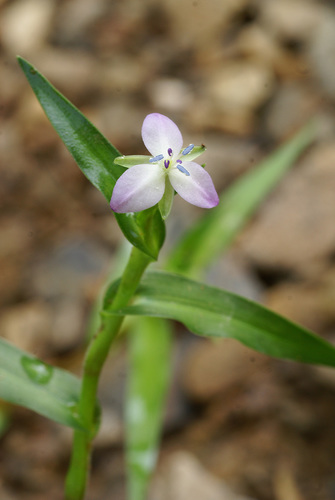
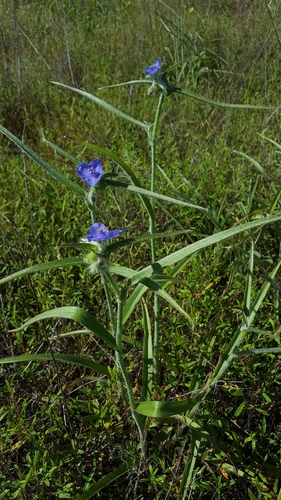
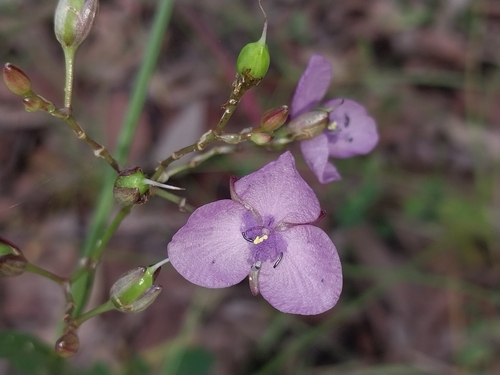
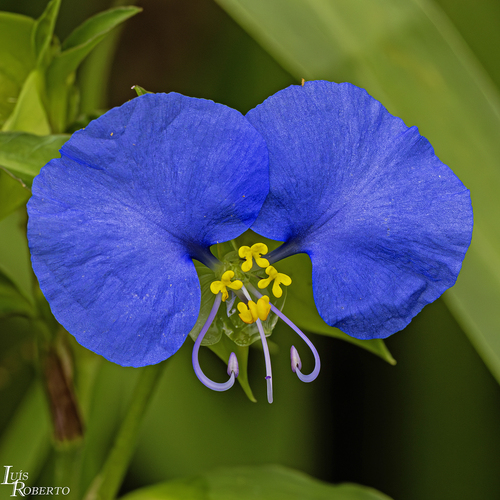
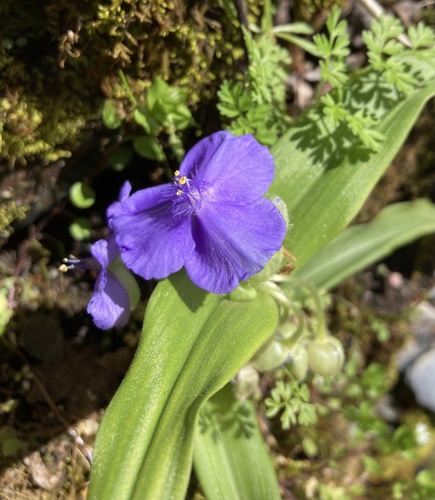
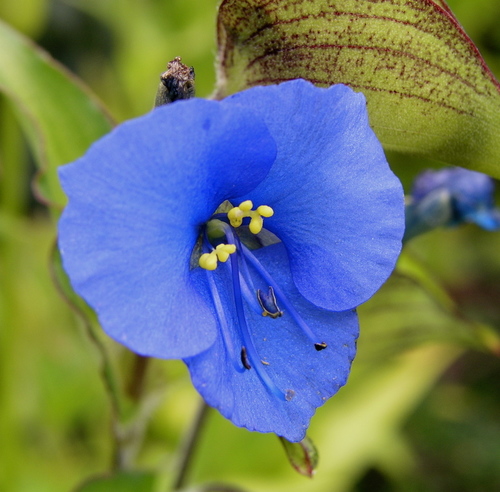
Commelina tuberosa L. is an herbaceous perennial plant in the dayflower family, native to Mexico and grown globally as an ornamental plant. Key identifying features of this species include purple-splotched spathes with free margins, equal-sized bright blue petals, tuberous roots, and lower cymes that bear between four and ten flowers. In its native wild habitat, C. tuberosa grows in moist fields, open forests, and pine-oak forests. Some sources, such as the Flora Mesoamericana, treat Commelina coelestis, Commelina dianthifolia, and Commelina elliptica as part of this single species. When these plants are classified as separate species, the group is commonly called the "Commelina tuberosa complex". In horticulture, these plants are usually treated as separate entities due to their differing growth habits and leaf shapes. When separated, C. tuberosa itself is a low-growing species with long narrow leaves. The Coelestis Group is a cultivar group of Commelina tuberosa grown for ornamental use. Ornamental cultivated plants of this species grow 50 cm (20 in) tall and 100 cm (39 in) wide, and flower during the summer and autumn. As a warm temperate plant, it cannot tolerate temperatures below −5 °C (23 °F). In regions with cooler winters, the tubers must be lifted and stored over the winter months. This species grows best in a sheltered garden spot with full sun or partial shade.